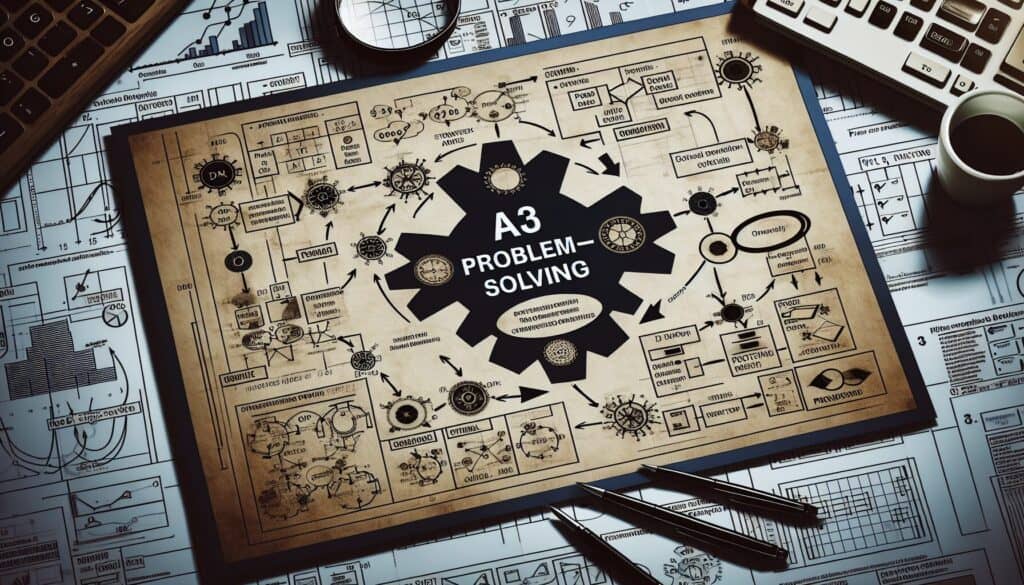
A3 Thinking finds its applications across various sectors including manufacturing, healthcare, and software development, particularly within organizations that prioritize Lean methodologies. For instance, in manufacturing, A3 reports can be utilized to tackle production inefficiencies by analyzing workflow bottlenecks and developing targeted solutions, while in healthcare, these reports can help streamline patient care processes by identifying root causes of delays in treatment. The methodology is most effective during the problem identification phase, where teams can collaboratively articulate issues and devise a common understanding before moving into solution development. Participants typically include cross-functional team members, project managers, and stakeholders who bring diverse perspectives to the table, which enhances collaboration and ensures that all aspects of a problem are addressed. The A3 report structure provides a clear framework that guides teams through systematic analysis and encourages the use of data-driven decision-making, which can lead to sustainable improvement initiatives. With ongoing follow-up and results tracking, organizations can establish standard practices that integrate lessons learned, promoting a continuous improvement culture that values learning and adaptability among team members. The clarity of communication inherent in A3 reports serves as a mentoring tool that allows less experienced team members to efficiently grasp problem-solving techniques from their peers, thereby building a stronger foundation for future projects.
该方法的关键步骤
明确界定背景和问题陈述。.
利用相关指标分析当前状况。.
设定要实现的具体目标或目标条件。.
使用适当的技术进行根本原因分析。.
根据找出的根本原因提出对策。.
制定详细的应对措施实施计划。.
建立监测结果的后续流程。.
记录经验教训,规范成功做法。.
专业提示
尽早让跨职能团队参与进来,以增强解决问题的多元化视角。.
利用 data visualization methods, like flowcharts or graphs, to clarify current conditions and root cause analysis.