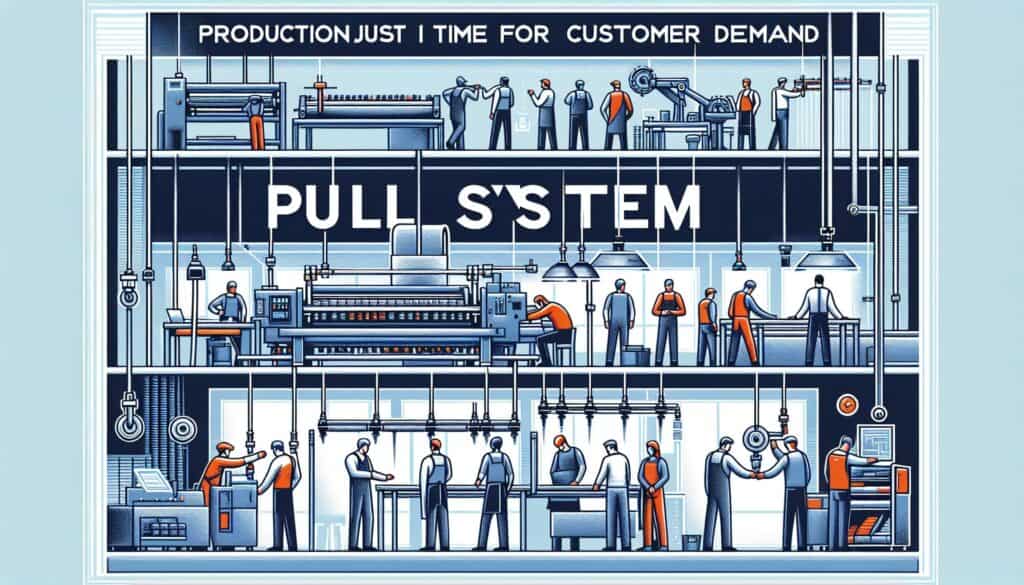
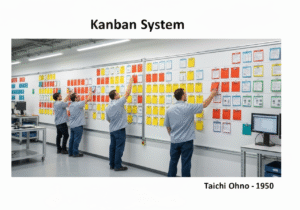
一个 精益生产 principle where downstream activities signal their needs to upstream activities. Work is "pulled" through the system based on actual demand, often using tools like 看板 卡
The Pull System methodology is prominently utilized in various industries such as automotive, electronics, and consumer goods, where customer demands fluctuate and need accurate synchronization with production processes. This approach is particularly effective during the production phase where ongoing assessment of consumer need dictates the pace of manufacturing, thereby facilitating a more agile response to market changes. Participants in this methodology typically include cross-functional teams that engage in transparent communication, allowing for real-time data sharing and decision-making based on actual consumption rather than forecasts. For example, in the automotive industry, manufacturers often employ Kanban boards to visualize workflow and inventory status, ensuring that components are replenished as they are used, thereby minimizing excess stock and associated carrying costs. By encouraging workers on the assembly line to signal when parts are needed, organizations can ensure that they are only producing what is required by the next step in the process. This not only enhances operational efficiency but also contributes to a culture of continuous improvement where feedback loops inform adjustments in production strategy. Tools such as 价值流图 often accompany the Pull System to identify and eliminate waste, fostering an environment of continuous refinement. Such methodologies have been integral in enhancing customer satisfaction by optimizing lead times and increasing product availability without the burden of overproduction.