Product Design, Manufacturing & Innovation Resources
家 » 高温切割机制

高温切割机制

1950
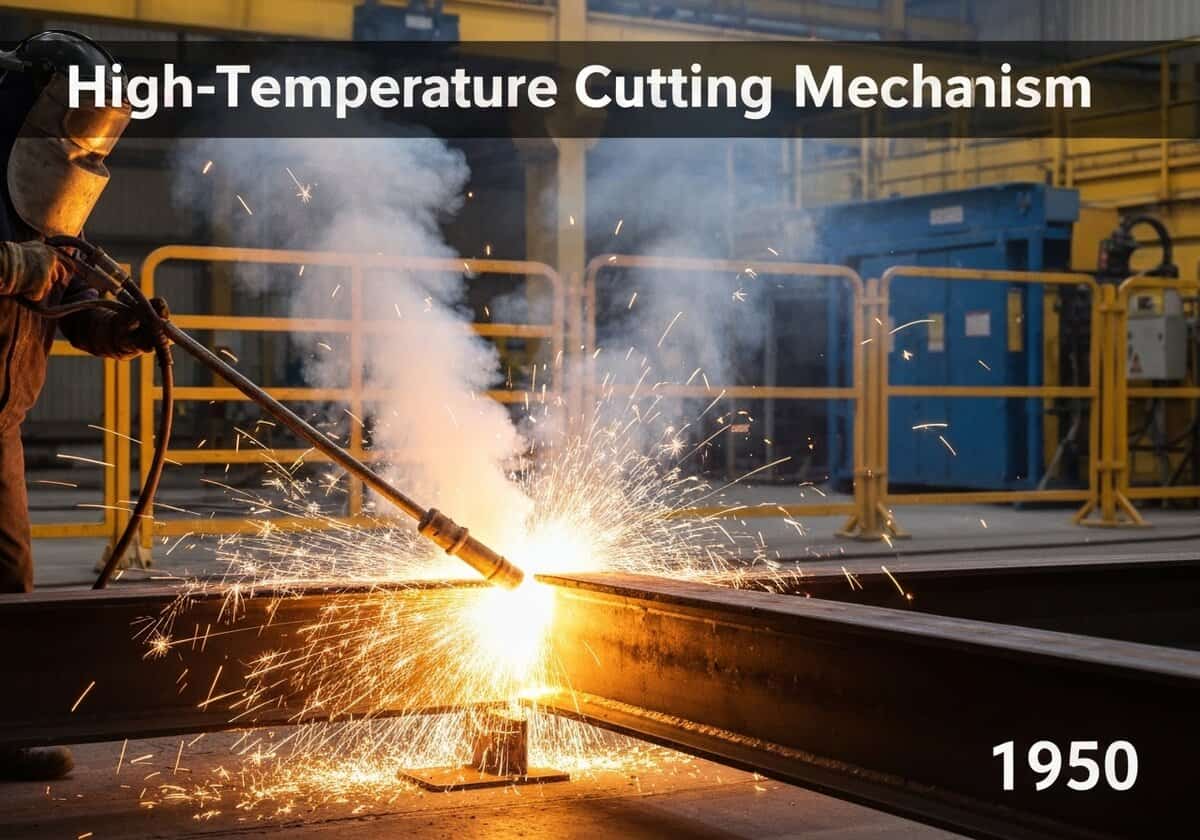
Thermal lance cutting through steel in industrial thermodynamics application.

(图片仅供参考)

一个 thermal lance achieves temperatures of 3,500 °C to 4,500 °C, far exceeding conventional torches. This intense heat does not just melt the target material. The jet of pure oxygen also causes rapid oxidation of the material itself, effectively making it part of the fuel source. This combined melting and burning action allows it to cut through thick steel, concrete, and rock.


The efficacy of the thermal lance stems from its ability to generate extreme temperatures locally. While an oxy-acetylene flame reaches about 3,500 °C, the burning of iron in pure oxygen within the lance can push the reaction temperature towards 4,500 °C. This is due to the highly exothermic nature of iron oxidation. When this superheated jet of molten iron, iron oxide, and unreacted oxygen strikes a target, multiple processes occur simultaneously. On a steel target, the lance provides the activation energy and an oxygen-rich environment to ignite the target steel itself, which then undergoes the same exothermic oxidation as the lance. This creates a self-propagating cut. When used on concrete, the mechanism is different. The intense heat melts the silica ([latex]SiO_2[/latex]) components of the aggregate and cement, which have melting points around 1,700 °C. The steel rebar within the concrete is oxidized and cut as described before. The high-pressure gas stream then expels the molten silicate slag and molten steel, clearing the kerf. The process is less of a ‘cut’ and more of a controlled, high-speed erosion via thermal and chemical attack. The addition of aluminum or magnesium wires to the lance’s core can further increase the reaction temperature, enhancing its effectiveness on materials with very high melting points or thermal conductivity.

UNESCO Nomenclature: 2210
– Thermodynamics

类型

化学过程

中断

重大的

用法

广泛使用

前体

  • 了解热力学和热传递
  • 耐火材料和耐高温材料的开发
  • 了解铁及其氧化物的化学性质
  • invention of pressure regulators for handling compressed gases
  • 喷气推进和流体动力学的基本原理

应用程序

  • 破坏银行金库和安全设施
  • 核电站退役时切割反应堆压力容器
  • 硬岩地质岩心取样
  • 拆除桥梁和其他大型基础设施
  • 超大金属物体的废料处理

专利:

NA

潜在创新理念

  • 基于喷枪的稀有金属 3D 打印
  • 用于科学研究的深海喷口模拟
  • 紧急通道快速隧道掘进技术
  • 通过控制熔化和再凝固对硬化材料进行表面处理
  • 用于钻探地外岩层的行星探索工具
  • 高速废金属回收处理器
  • 用于反器材应用的武器化版本
  • 用于在铸模中创建复杂通道的铸造工具
  • 能够穿透凝固熔岩的火山研究探测器
  • 用于远距离安全拆除化学或核设施的拆除工具
Related to: thermic cutting, oxidation, slag, exothermic, high temperature, concrete cutting, steel oxidation, melting point, silica, kerf.

历史背景

高温切割机制

1947
1950
1950
1950
1950
1950
1950
1940
1950
1950
1950
1950
1950
1950
1957

(如果日期未知或不相关,例如“流体力学”,则提供其显著出现的近似估计)

第十年 周年纪念日

只有注册会员才能免费获取完整尺寸的图片和下载内容。

> 登录 <