Product Design, Manufacturing & Innovation Resources
घर » उच्च तापमान काटने की क्रियाविधि

उच्च तापमान काटने की क्रियाविधि

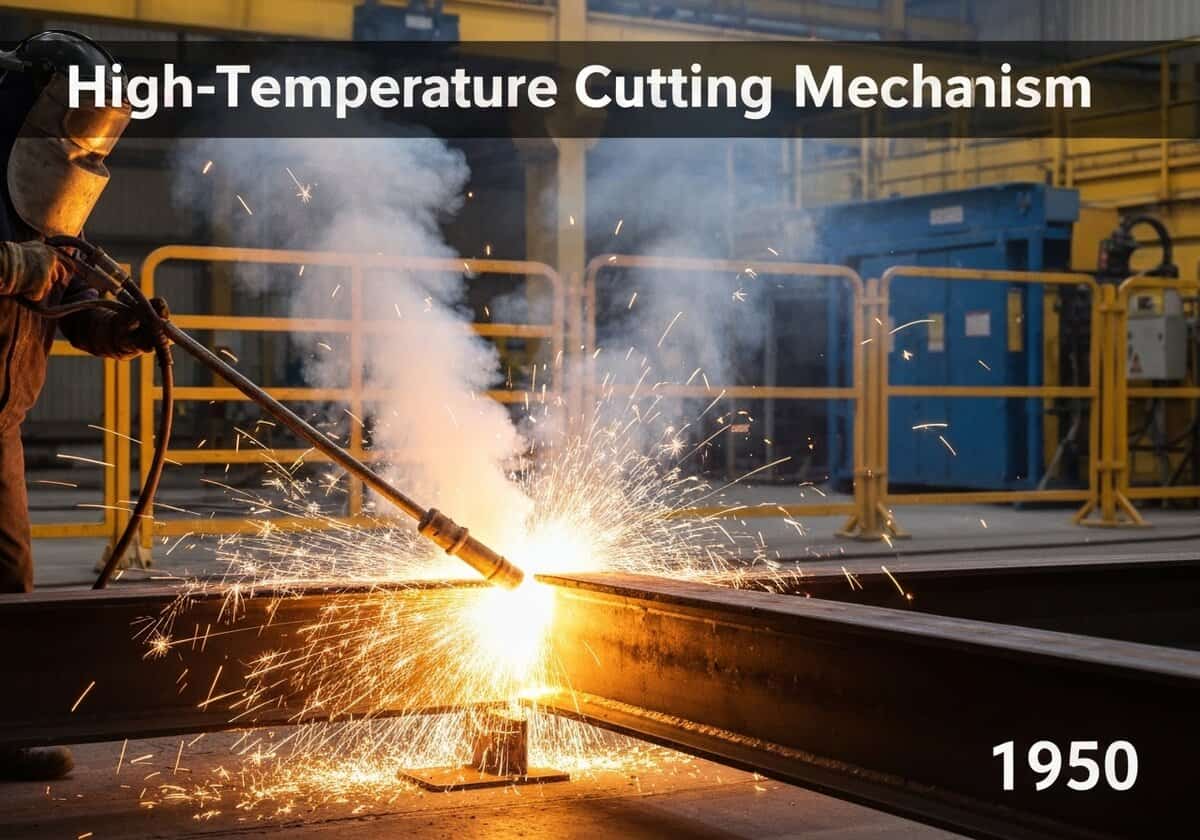
1950
Thermal lance cutting through steel in industrial thermodynamics application.

(यह छवि केवल उदाहरण के लिए बनाई गई है)

A थर्मल लांस यह टॉर्च 3,500°C से 4,500°C तक का तापमान प्राप्त कर सकती है, जो पारंपरिक टॉर्चों से कहीं अधिक है। यह तीव्र ऊष्मा न केवल लक्ष्य सामग्री को पिघलाती है, बल्कि शुद्ध ऑक्सीजन की धारा से सामग्री का तीव्र ऑक्सीकरण भी होता है, जिससे वह प्रभावी रूप से ईंधन का हिस्सा बन जाती है। पिघलने और जलने की इस संयुक्त क्रिया के कारण यह मोटी स्टील, कंक्रीट और चट्टान को भी काट सकती है।


The efficacy of the थर्मल लांस stems from its ability to generate extreme temperatures locally. While an oxy-acetylene flame reaches about 3,500 °C, the burning of iron in pure oxygen within the lance can push the reaction temperature towards 4,500 °C. This is due to the highly exothermic nature of iron oxidation. When this superheated jet of molten iron, iron oxide, and unreacted oxygen strikes a target, multiple processes occur simultaneously. On a steel target, the lance provides the activation energy and an oxygen-rich environment to ignite the target steel itself, which then undergoes the same exothermic oxidation as the lance. This creates a self-propagating cut. When used on concrete, the mechanism is different. The intense heat melts the silica ([latex]SiO_2[/latex]) components of the aggregate and cement, which have melting points around 1,700 °C. The steel rebar within the concrete is oxidized and cut as described before. The high-pressure gas stream then expels the molten silicate slag and molten steel, clearing the kerf. The process is less of a ‘cut’ and more of a controlled, high-speed erosion via thermal and chemical attack. The addition of aluminum or magnesium wires to the lance’s core can further increase the reaction temperature, enhancing its effectiveness on materials with very high melting points or thermal conductivity.

UNESCO Nomenclature: 2210
ऊष्मागतिकी

Type

रासायनिक प्रक्रिया

व्यवधान

संतोषजनक

उपयोग

व्यापक उपयोग

शगुन

  • ऊष्मागतिकी और ऊष्मा स्थानांतरण की समझ
  • उच्च तापमान सहन करने में सक्षम दुर्दम्य पदार्थों और सामग्रियों का विकास
  • लोहे और उसके ऑक्साइडों के रासायनिक गुणों का ज्ञान
  • आविष्कार pressure regulators for handling compressed gases
  • जेट प्रणोदन और द्रव गतिकी के बुनियादी सिद्धांत

आवेदन

  • बैंक वॉल्ट और सुरक्षित सुविधाओं में सेंध लगाना
  • परमाणु निरस्त्रीकरण में रिएक्टर दबाव पात्रों को काटना
  • कठोर चट्टान में भूवैज्ञानिक कोर नमूनाकरण
  • पुलों और अन्य बड़े बुनियादी ढांचों का विध्वंस
  • बड़े आकार की धातु की वस्तुओं का स्क्रैप प्रसंस्करण

पेटेंट:

NA

संभावित नवाचार विचार

  • lance-based 3d printing with exotic metals
  • deep-sea vent simulation for scientific research
  • rapid tunneling technology for emergency access
  • surface treatment for hardening materials through controlled melting and re-solidification
  • planetary exploration tool for drilling into extraterrestrial rock formations
  • high-speed scrap metal recycling processor
  • weaponized versions for anti-materiel applications
  • foundry tool for creating intricate channels in casting molds
  • volcano research probe capable of penetrating solidified lava
  • demolition tool for safely dismantling chemical or nuclear facilities from a distance
संबंधित विषय: तापीय कटाई, ऑक्सीकरण, स्लैग, ऊष्माक्षेपी, उच्च तापमान, कंक्रीट कटाई, इस्पात ऑक्सीकरण, गलनांक, सिलिका, केर्फ।

ऐतिहासिक संदर्भ

उच्च तापमान काटने की क्रियाविधि

1947
1950
1950
1950
1950
1950
1950
1940
1950
1950
1950
1950
1950
1950
1957

(यदि तिथि अज्ञात है या प्रासंगिक नहीं है, उदाहरण के लिए "द्रव यांत्रिकी", तो इसके उल्लेखनीय उद्भव का एक अनुमानित आंकड़ा प्रदान किया गया है)

नवीनतम परिवर्धन

शीर्ष पोस्ट और लेख

शीर्ष मूल उपकरण

10वां वर्ष सालगिरह

पंजीकृत सदस्यों के लिए पूर्ण आकार की छवियाँ और डाउनलोड 100% निःशुल्क उपलब्ध हैं।