Product Design, Manufacturing & Innovation Resources
Lar » Mecanismo de corte em alta temperatura

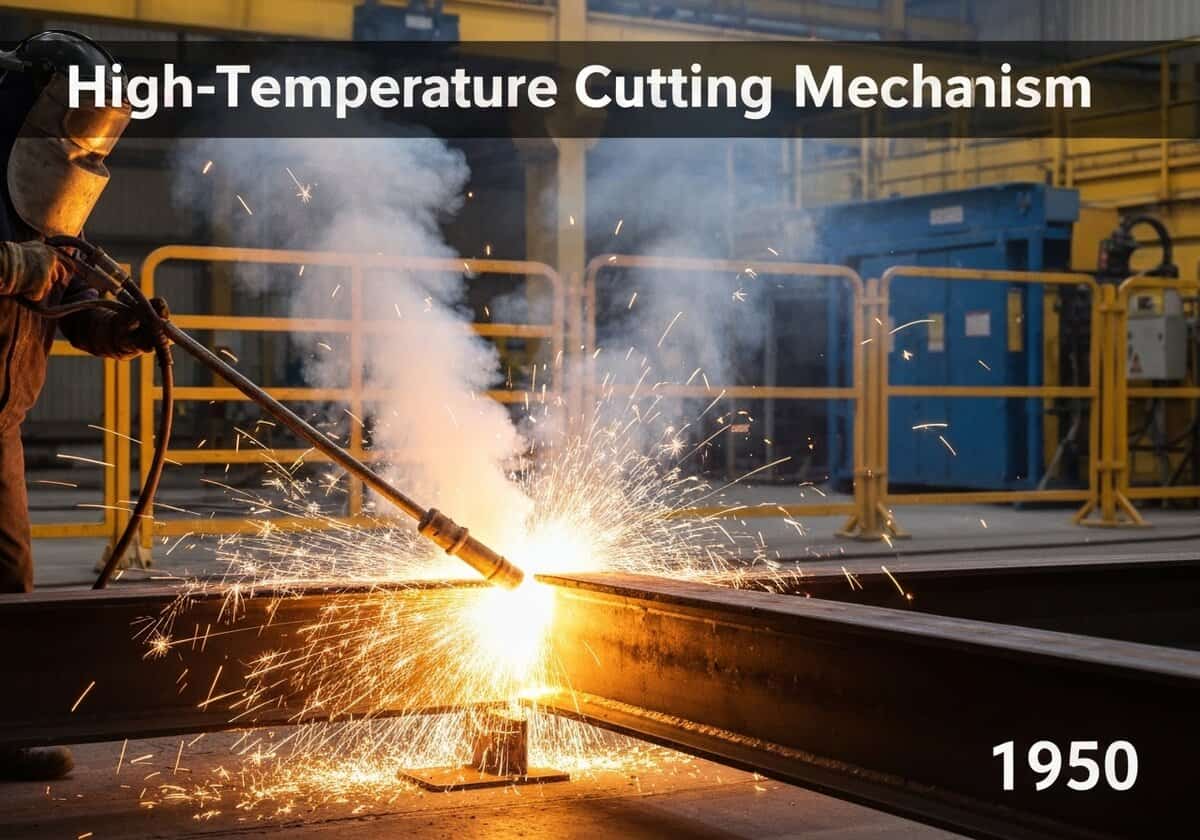
Mecanismo de corte em alta temperatura

1950
Lança térmica cortando aço em uma aplicação de termodinâmica industrial.

(Imagem gerada apenas para fins ilustrativos)

UM lança térmica Atinge temperaturas de 3.500 °C a 4.500 °C, muito superiores às dos maçaricos convencionais. Esse calor intenso não apenas derrete o material alvo, como o jato de oxigênio puro também causa a rápida oxidação do próprio material, tornando-o efetivamente parte da fonte de combustível. Essa ação combinada de fusão e combustão permite que ele corte aço espesso, concreto e rocha.

The efficacy of the lança térmica stems from its ability to generate extreme temperatures locally. While an oxy-acetylene flame reaches about 3,500 °C, the burning of iron in pure oxygen within the lance can push the reaction temperature towards 4,500 °C. This is due to the highly exothermic nature of iron oxidation. When this superheated jet of molten iron, iron oxide, and unreacted oxygen strikes a target, multiple processes occur simultaneously. On a steel target, the lance provides the activation energy and an oxygen-rich environment to ignite the target steel itself, which then undergoes the same exothermic oxidation as the lance. This creates a self-propagating cut. When used on concrete, the mechanism is different. The intense heat melts the silica ([latex]SiO_2[/latex]) components of the aggregate and cement, which have melting points around 1,700 °C. The steel rebar within the concrete is oxidized and cut as described before. The high-pressure gas stream then expels the molten silicate slag and molten steel, clearing the kerf. The process is less of a ‘cut’ and more of a controlled, high-speed erosion via thermal and chemical attack. The addition of aluminum or magnesium wires to the lance’s core can further increase the reaction temperature, enhancing its effectiveness on materials with very high melting points or thermal conductivity.

UNESCO Nomenclature: 2210
Termodinâmica

Tipo

Processo Químico

Interrupção

Substancial

Uso

Uso generalizado

Precursores

  • Compreensão da termodinâmica e da transferência de calor
  • Desenvolvimento de refratários e materiais capazes de suportar altas temperaturas.
  • conhecimento das propriedades químicas do ferro e seus óxidos
  • invenção de pressure regulators for handling compressed gases
  • Princípios básicos da propulsão a jato e da dinâmica dos fluidos

Aplicações

  • arrombamento de cofres bancários e instalações de segurança
  • corte de vasos de pressão de reatores no descomissionamento nuclear
  • Amostragem de testemunhos geológicos em rocha dura
  • demolição de pontes e outras grandes infraestruturas
  • processamento de sucata de objetos metálicos de grandes dimensões

Patentes:

NA

Ideias de Inovação Potencial

  • lance-based 3d printing with exotic metals
  • deep-sea vent simulation for scientific research
  • rapid tunneling technology for emergency access
  • surface treatment for hardening materials through controlled melting and re-solidification
  • planetary exploration tool for drilling into extraterrestrial rock formations
  • high-speed scrap metal recycling processor
  • weaponized versions for anti-materiel applications
  • foundry tool for creating intricate channels in casting molds
  • volcano research probe capable of penetrating solidified lava
  • demolition tool for safely dismantling chemical or nuclear facilities from a distance
Relacionado a: corte térmico, oxidação, escória, exotérmico, alta temperatura, corte de concreto, oxidação do aço, ponto de fusão, sílica, largura do corte.

Contexto histórico

Mecanismo de corte em alta temperatura

1947
1950
1950
1950
1950
1950
1950
1940
1950
1950
1950
1950
1950
1950
1957

(Caso a data seja desconhecida ou irrelevante, por exemplo, "mecânica dos fluidos", é fornecida uma estimativa aproximada de seu surgimento notável)

10º ano aniversário

Imagens em tamanho real e downloads estão disponíveis apenas, 100% gratuitos, para membros registrados.