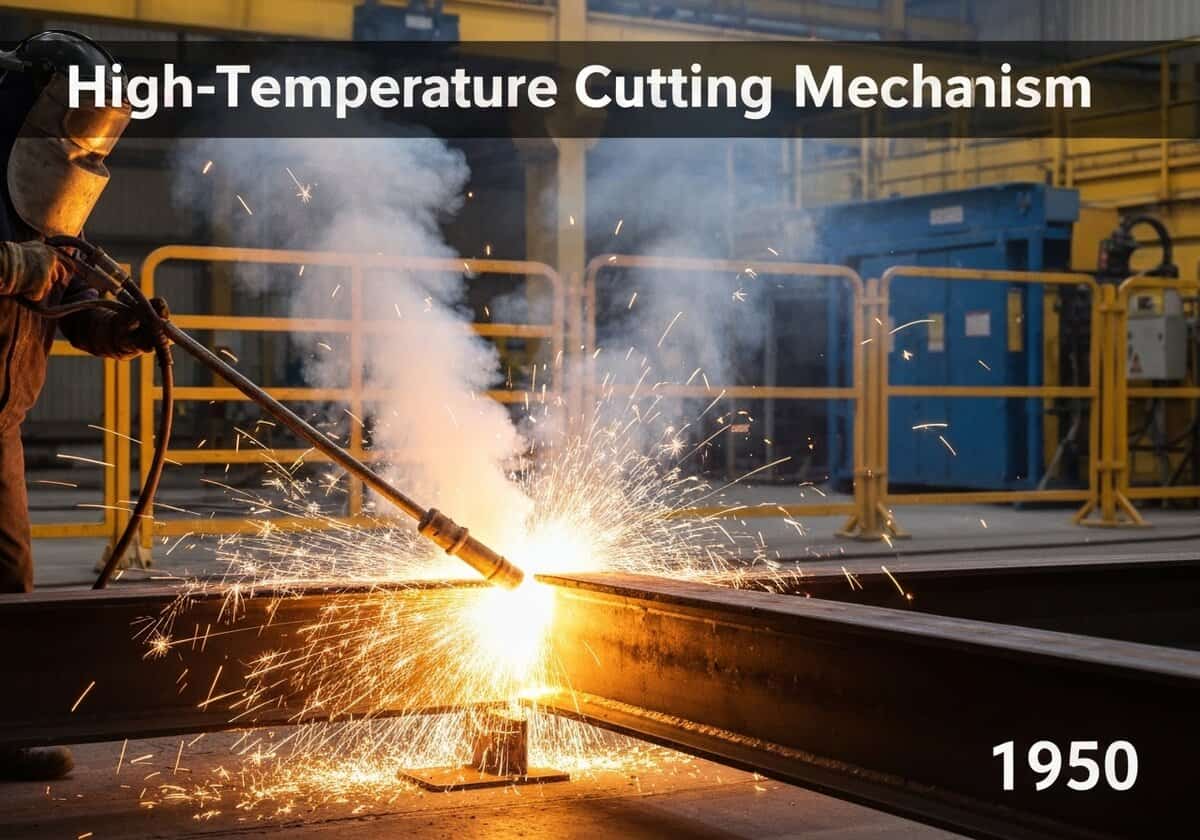
에이 열 랜스 이 제품은 기존 토치보다 훨씬 높은 3,500°C에서 4,500°C에 달하는 고온을 구현합니다. 이처럼 강력한 열은 대상 재료를 녹이는 데 그치지 않고, 순수 산소 제트를 분사하여 재료를 급속도로 산화시켜 연료로 활용합니다. 이러한 용융 및 연소 작용 덕분에 두꺼운 강철, 콘크리트, 암석까지 절단할 수 있습니다.


(설명을 위한 생성된 이미지입니다)
에이 열 랜스 이 제품은 기존 토치보다 훨씬 높은 3,500°C에서 4,500°C에 달하는 고온을 구현합니다. 이처럼 강력한 열은 대상 재료를 녹이는 데 그치지 않고, 순수 산소 제트를 분사하여 재료를 급속도로 산화시켜 연료로 활용합니다. 이러한 용융 및 연소 작용 덕분에 두꺼운 강철, 콘크리트, 암석까지 절단할 수 있습니다.
The efficacy of the 열 랜스 stems from its ability to generate extreme temperatures locally. While an oxy-acetylene flame reaches about 3,500 °C, the burning of iron in pure oxygen within the lance can push the reaction temperature towards 4,500 °C. This is due to the highly exothermic nature of iron oxidation. When this superheated jet of molten iron, iron oxide, and unreacted oxygen strikes a target, multiple processes occur simultaneously. On a steel target, the lance provides the activation energy and an oxygen-rich environment to ignite the target steel itself, which then undergoes the same exothermic oxidation as the lance. This creates a self-propagating cut. When used on concrete, the mechanism is different. The intense heat melts the silica ([latex]SiO_2[/latex]) components of the aggregate and cement, which have melting points around 1,700 °C. The steel rebar within the concrete is oxidized and cut as described before. The high-pressure gas stream then expels the molten silicate slag and molten steel, clearing the kerf. The process is less of a ‘cut’ and more of a controlled, high-speed erosion via thermal and chemical attack. The addition of aluminum or magnesium wires to the lance’s core can further increase the reaction temperature, enhancing its effectiveness on materials with very high melting points or thermal conductivity.
고온 절단 메커니즘
(날짜를 알 수 없거나 관련이 없는 경우, 예를 들어 "유체역학"의 경우, 주목할 만한 등장 시기를 대략적으로 추정하여 제공합니다.)

고화질 이미지 및 다운로드는 등록된 회원에게만 100% 무료로 제공됩니다.
> 로그인 <