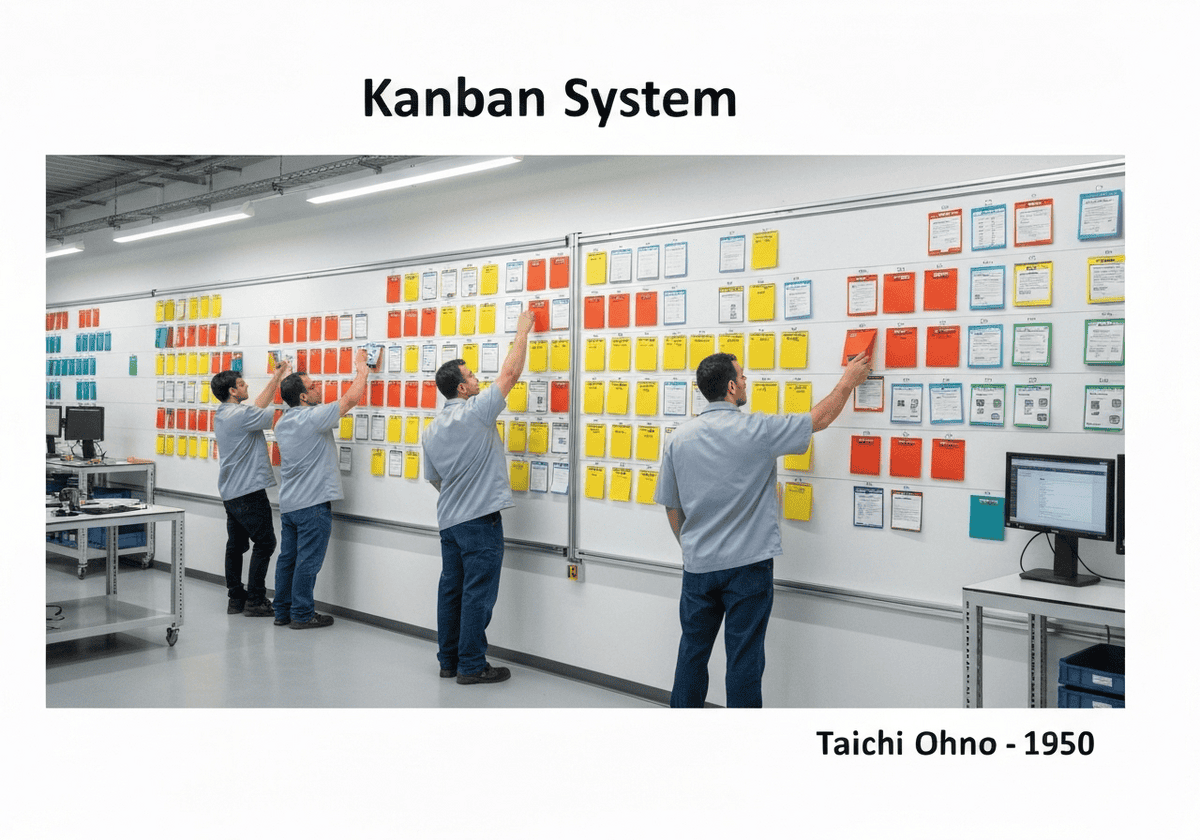
There are two main types of Kanbans: a Production Kanban, which authorizes the production of a new batch of parts, and a Withdrawal (or Conveyance) Kanban, which authorizes the movement of parts from one workstation to another. The number of Kanban cards in circulation for a particular part directly controls the maximum amount of inventory for that part in the system. By carefully managing the number of cards, managers can control the flow and reduce WIP. The system’s visual nature makes it easy for everyone to understand the status of work and identify bottlenecks. This simplicity and visual control are key to its effectiveness in creating a smooth, efficient production flow.