(图片仅供参考)
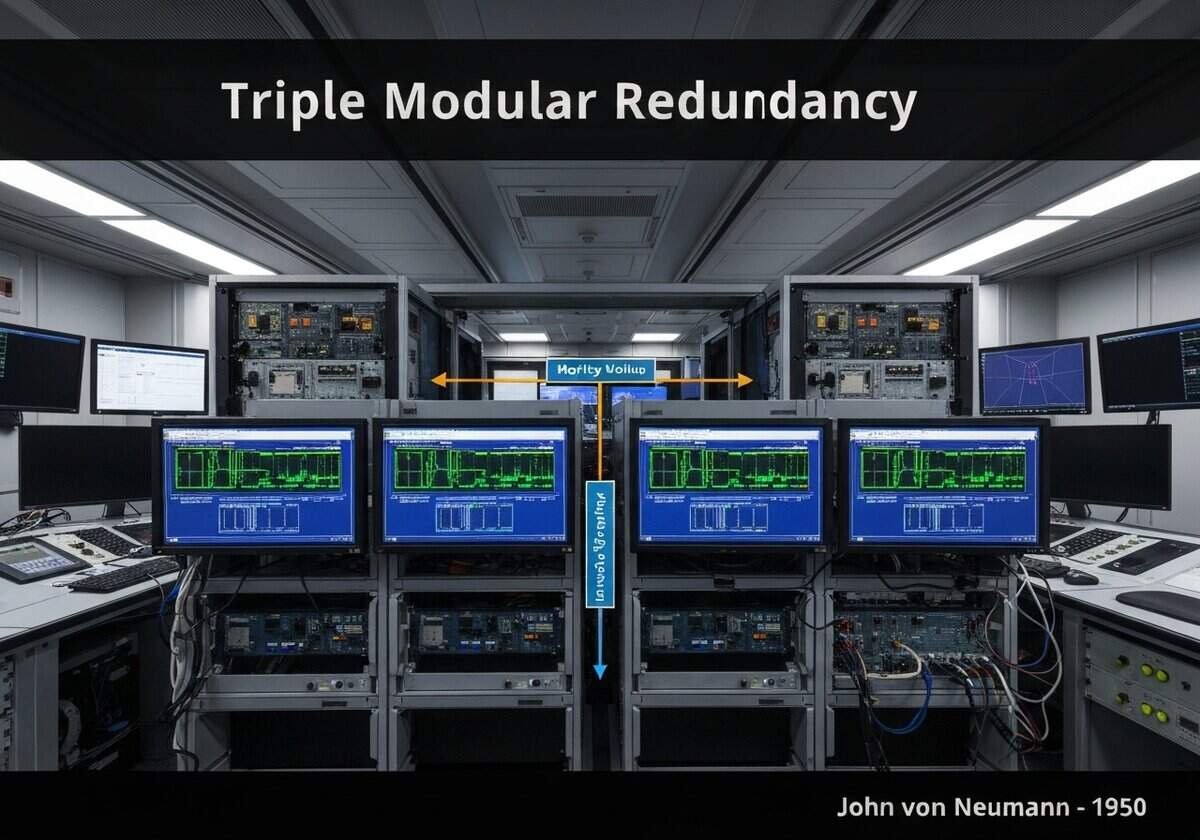
三重模块冗余(TMR)是一种硬件容错技术,它使用三个相同的模块并行执行相同的操作。它们的输出被送入一个多数投票电路。如果一个模块发生故障并产生错误输出,投票电路仍然能够根据其他两个模块的输出确定正确的输出,从而掩盖故障并确保系统持续运行。
三重模块冗余(TMR)是N模块冗余的经典示例,其中N=3。其核心思想是复制一个关键组件三次,并让它们同时处理相同的输入。然后,将这三个模块的输出结果传递给一个投票器。投票器实现多数投票功能;如果三个输入中至少有两个相同,则选择相同的值作为最终输出。这种机制有效地掩盖了任何一个模块的故障。例如,如果模块A、B和C分别输出1、1和0,则多数投票器将输出1。
TMR系统的可靠性不仅取决于模块,还取决于选民本身。
如果投票者失败,整个系统就会失败。
由于机器人流量被拦截(目前每天超过 4 万),此内容仅限社区成员查看。> 登录 > 或者 > 注册 < (100% 免费)即可访问此内容,以及所有其他受限内容和工具。
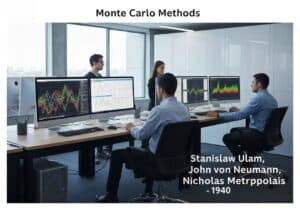
蒙特卡罗方法
蒙特卡罗方法是一类广泛的计算算法,它依赖于重复的随机抽样来获得数值结果。其基本思想是利用随机性来解决原则上可能是确定性的问题。当其他方法难以或无法使用时,蒙特卡罗方法通常被采用,尤其是在模拟复杂系统或积分高维函数时。
有限元方法
有限元法 (FEM) 是一种强大的数值方法,用于求解由偏微分方程描述的复杂工程和物理问题。它的工作原理是将连续域离散化为一组更小、更简单的子域,这些子域被称为“有限元”。这可以用于结构分析、传热、流体流动和电磁学等问题的近似数值解。
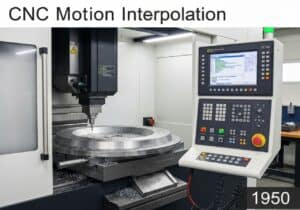
CNC运动插补
插补是 CNC 控制器内的计算过程,它生成一系列中间坐标点,以在编程的端点之间创建平滑路径。最基本的插补类型是用于直线的线性插补 (G01) 和用于圆弧的圆弧插补 (G02/G03)。这使得可以通过 G 代码程序中的简单几何命令来加工复杂的轮廓。
三重模块冗余(TMR)
马尔可夫链蒙特卡罗(MCMC)
马尔可夫链蒙特卡罗(MCMC)方法是一类用于从概率分布中采样的算法。它构建一个马尔可夫链,使其平衡分布或平稳分布为目标分布。经过大量步骤后,链的状态被用作目标分布的样本,从而可以计算积分和期望值。
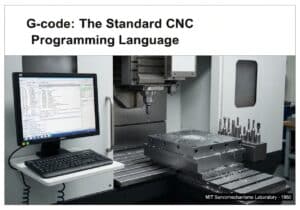
G-code:标准CNC编程语言
G 代码(正式名称为 RS-274)是用于控制 CNC 机床的最常用编程语言。它由一系列顺序命令组成,用于指示机床的定位、速度和特定操作。命令以字母地址开头;“G”表示运动准备命令(例如,G01 表示线性进给),而“M”表示辅助功能(例如,M03 表示主轴启动)。
自动定理证明(ATP)
自动定理证明(ATP)是计算机科学和数理逻辑的一个子领域,致力于使用计算机程序证明数学定理。ATP系统(或称证明器)运用逻辑推理,从一组公理和假设中推导出新的定理。它们与需要更多人工指导的证明辅助工具不同,尽管这两个领域存在显著的重叠。
贝叶斯因子
贝叶斯因子是两个竞争假设的边缘似然比值,通常指原假设([latex]M_1[/latex])与备择假设([latex]M_2[/latex])的比值。它量化了在观测数据[latex]D[/latex]条件下,某一假设相对于另一假设的支持程度。 其计算公式为:[latex]K = \frac{P(D|M_1)}{P(D|M_2)}[/latex]。当K值大于1时,表明数据更支持[latex]M_1[/latex]而非[latex]M_2[/latex]。.
可信区间
可信区间是贝叶斯统计中与频率学派置信区间相对应的概念。它基于后验概率分布,是一个包含特定概率参数的数值范围。 例如,参数\theta\的95%可信区间意味着:在给定数据和模型的条件下,\theta\的真实值有95%的概率位于该区间内。.
可靠性函数(生存函数)
可靠性函数 R(t)定义了系统或部件在指定时间 "t "内无故障地执行其所需功能的概率。对于故障率(λ)恒定的系统来说,它可以用指数分布来描述:[latex]R(t) = e^{-\lambda t}[/latex].该函数是预测产品寿命和性能的基础。
蒙特卡罗估计 Pi
蒙特卡罗方法的一个经典例子是估计 [latex]\pi[/latex] 的值。将半径为 [latex]r[/latex] 的圆嵌入边长为 [latex]2r[/latex] 的正方形中,它们的面积之比为 [latex]\frac\{pi r^2}{(2r)^2} = \frac\{pi}{4}[/latex]。在正方形内随机散布点,并计算落在圆内的 [latex]p[/latex] 的分数,就可以估算出:[latex]\pi (约 4p[/latex])。.
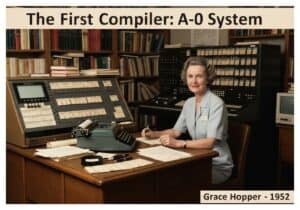
第一个编译器:A-0系统
A-0 系统由 Grace Hopper 于 1952 年创建,被广泛认为是第一个编译器。它将一系列由数学符号指定的子程序和参数翻译成机器码。这是从低级汇编编程向更高级、更抽象的编程语言转变的奠基性一步,使繁琐的手动代码翻译过程自动化。
西部电气规则(控制图中的统计检验)
这是一套用于检测休哈特控制图上非随机模式的四条决策规则,即使没有数据点超出3σ限值,也能指示过程失控。这些规则可以识别数据点的异常运行、趋势或聚集,这些异常表明存在特殊原因造成的变异。它们提高了控制图的灵敏度。
逻辑回归
针对分类因变量(通常为二进制因变量)的回归模型。它不是直接对结果进行建模,而是使用 logistic(sigmoid)函数对结果的概率进行建模。该模型将事件的对数概率预测为自变量的线性组合:[latex]/ln(\frac{p}{1-p}) = \beta_0 + \beta_1 x_1 + \dots + \beta_p x_p[/latex],其中 p 是事件的概率。.
OOP(编程)中的对象
(如果日期未知或不相关,例如“流体力学”,则提供其显著出现的近似估计)
只有注册会员才能免费获得 100% 的全尺寸图片和下载。.
> 登录 <