Product Design, Manufacturing & Innovation Resources
家 » PFAS 生物累积和生物放大

PFAS 生物累积和生物放大

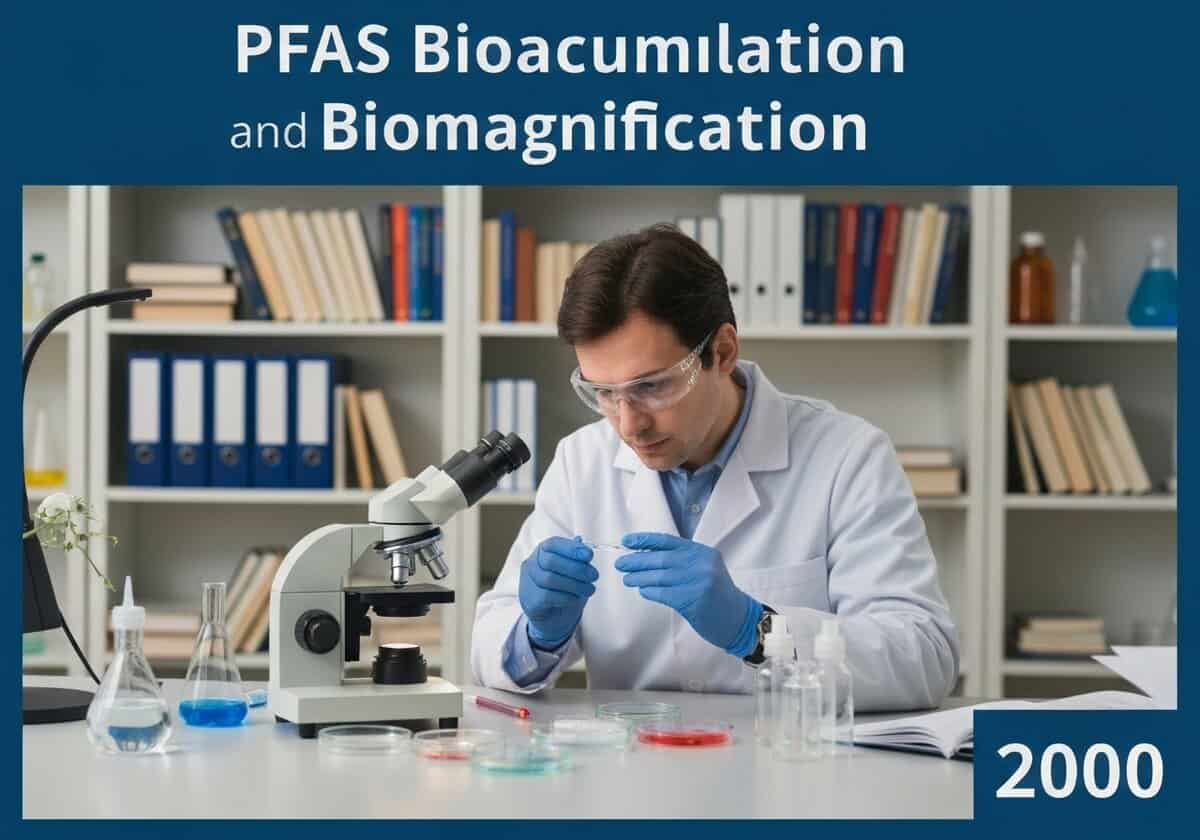
2000
Toxicologist analyzing fish samples for PFAS in a laboratory setting.

(图片仅供参考)

Unlike many persistent organic pollutants that accumulate in fatty tissues, long-chain PFAS like PFOA and PFOS primarily bind to proteins in the blood serum (e.g., albumin) and accumulate in well-perfused organs like the liver. This leads to bioaccumulation within an organism and biomagnification up the food chain, resulting in higher concentrations in apex predators, including humans.
The environmental behavior of long-chain PFAS is distinct from classical persistent organic pollutants (POPs) like PCBs or DDT. While traditional POPs are lipophilic (fat-loving) and accumulate in adipose tissue, the amphiphilic nature of PFAS (having both a hydrophobic/lipophobic tail and a hydrophilic head) dictates a different biological fate. The charged functional group (e.g., carboxylate in PFOA or sulfonate in PFOS) interacts with proteins. Specifically, these compounds bind to serum albumin in the blood and fatty acid-binding proteins within cells. This protein-binding mechanism facilitates their transport throughout the body and leads to accumulation in protein-rich tissues and organs with high blood flow, such as the liver, kidneys, and blood itself. Because they are not easily metabolized or excreted, their biological half-life in humans can be several years. This persistence within a single organism is the basis for bioaccumulation. As organisms are consumed by others higher up the food web, the concentration of PFAS increases at each trophic level, a process known as biomagnification. This is why top predators like polar bears, dolphins, and humans often exhibit the highest levels of PFAS contamination.

UNESCO Nomenclature: 2512
– Toxicology

类型

Biological Process

中断

Incremental

用法

广泛使用

前体

  • 了解食物网和营养级
  • 开发分析化学技术(例如 LC-MS/MS)来检测生物组织中的低浓度化学物质
  • 生物累积的概念是利用早期的污染物如滴滴涕和汞建立起来的
  • 药物蛋白结合研究

应用程序

  • 制定鱼类消费公共卫生建议
  • 限制全氟辛烷磺酸排放的环境法规(例如《斯德哥尔摩公约》)
  • 生物监测项目追踪人类暴露水平
  • 预测健康风险的毒理学模型

专利:

NA

潜在创新理念

  • genetically engineered microbes that express proteins with high affinity for pfas to aid in bioremediation
  • nanoparticle-based ‘sponges’ that mimic serum proteins to capture pfas from water
  • 基于 CrisPR 的生物传感器可检测由 PFA 积累引起的细胞应激
  • 与pfas竞争蛋白质结合位点以加速排泄的药物
  • food chain models incorporating pfas protein-binding kinetics for more accurate 风险评估
  • 先进的透析过滤器专门设计用于去除血液中的蛋白质结合pfas
  • 合成食品添加剂,在肠道中结合 PFA,防止其吸收
  • 利用无人机对野生动物进行组织采样,用于大规模生物放大研究
  • 器官芯片技术研究pfas在人体肝脏和肾脏模型中的积累和毒性
  • 基于分子结构预测新化学物质生物累积潜力的人工智能算法
Related to: bioaccumulation, biomagnification, pfas, pfoa, pfos, toxicology, persistent organic pollutants, serum albumin, environmental fate, food chain.

历史背景

PFAS 生物累积和生物放大

1990
1990
1990
2000
2006
1990
1990
1990
1993
2001-09-01

(如果日期未知或不相关,例如“流体力学”,则提供其显著出现的近似估计)

第十年 周年纪念日

只有注册会员才能免费获取完整尺寸的图片和下载内容。

> 登录 <