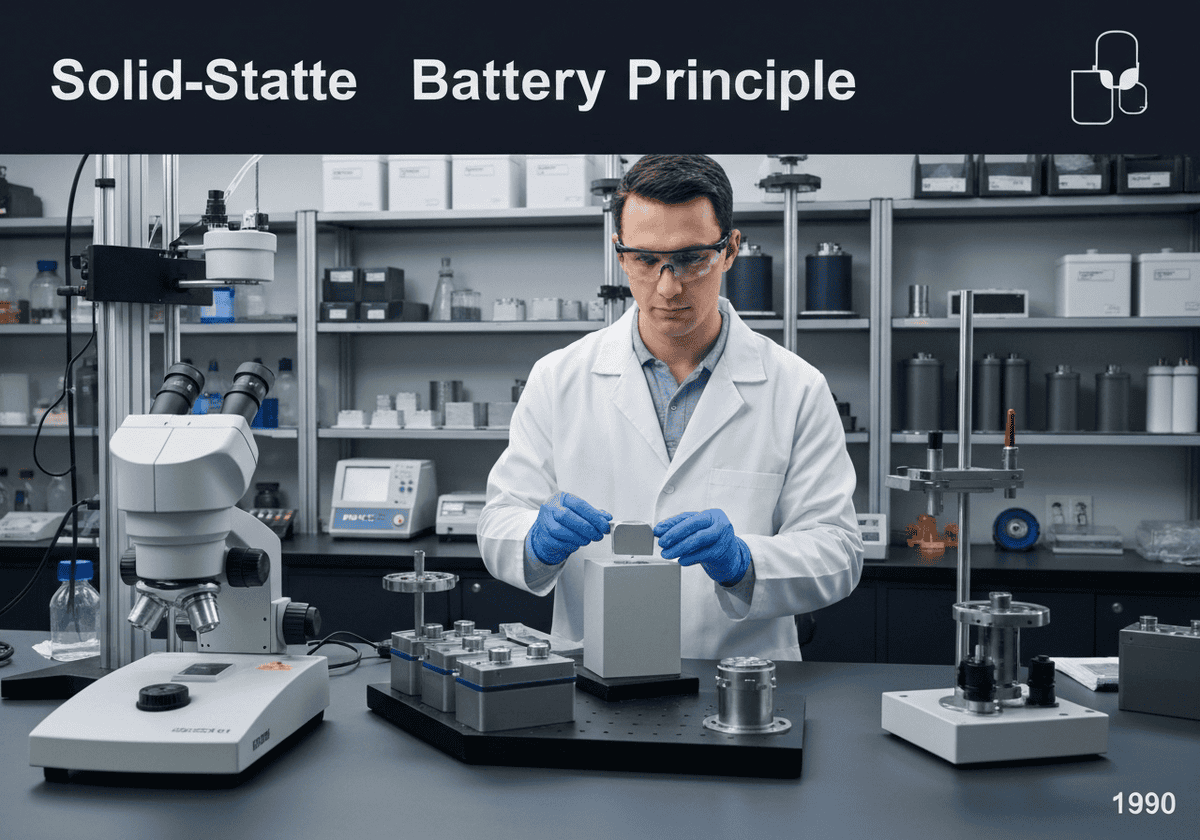
The core innovation of a solid-state battery is the solid electrolyte. This component must fulfill the challenging dual role of being an excellent conductor for ions while being a perfect electrical insulator to prevent internal short circuits. Researchers are exploring several classes of materials, including inorganic crystalline ceramics (e.g., garnet-type LLZO – Li₇La₃Zr₂O₁₂), amorphous glassy ceramics, and solid 聚合物.
主要动机是安全。传统做法 锂离子电池 use flammable organic liquid electrolytes, which can leak and catch fire in cases of damage or malfunction, a phenomenon known as thermal runaway. A solid, non-flammable electrolyte inherently mitigates this risk. Beyond safety, the solid electrolyte is a key enabler for next-generation anode materials. The ultimate anode is pure 锂 metal, which offers the highest theoretical energy density. However, in liquid electrolytes, lithium metal tends to form needle-like structures called dendrites during charging. These dendrites can grow across the separator, short-circuit the cell, and cause a fire.