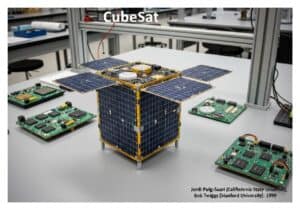
This model created a new market segment for ‘launch brokers’ or ‘aggregators’. These companies act as intermediaries, purchasing a large slot on a rocket (like an Atlas V, Falcon 9, or PSLV) and then selling smaller portions of that capacity to numerous small satellite operators. They handle the complex logistics of payload integration, documentation, and mechanical/electrical interfacing with the launch vehicle. The development of standardized deployers, such as the CubeSat P-POD, was a critical enabler for this model, allowing dozens of satellites to be integrated safely and efficiently. While ridesharing offers low costs, the trade-off is a lack of control over the destination orbit and launch timing, which has in turn spurred the development of dedicated small satellite launch vehicles.