“O futuro pertence àqueles que se preparam para ele hoje.” – Malcolm X
No mundo tecnológico acelerado de hoje, tomar uma decisão importante é fundamental. roteiro tecnológico para desenvolvimento de produto é fundamental. É como um mapa que guia a inovação e alinha os projetos aos seus objetivos. Através de um roteiro tecnológicoAs empresas têm uma visão ampla, identificando metas importantes e a melhor forma de utilizar os recursos.
Isso ajuda a definir prioridades e a tomar decisões inteligentes. Analisaremos as melhores maneiras de criar esse roteiro. Ele ajudará a sua tecnologia a se integrar perfeitamente ao seu trabalho para um maior sucesso.
Principais conclusões
- Os roteiros tecnológicos incluem vários tipos, como roteiros de planos de projeto, roteiros de produtos e roteiros de plataformas.
- Um bom roteiro tecnológico possui metas SMART e cronogramas definidos. Gráfico de Gantt, marcos importantes e verificações de riscos.
- Criar uma estratégia significa definir objetivos estratégicos, verificar a tecnologia atual, envolver as partes interessadas e escolher em que trabalhar primeiro.
- Para manter um roteiro útil, é necessário trabalho em equipe entre os departamentos e atualizações constantes.
O que é um roteiro tecnológico no desenvolvimento de produtos?
UM roteiro tecnológico Orienta empresas no uso da tecnologia para atingir seus objetivos. Ajuda-as a se concentrarem em projetos tecnológicos relevantes, evitarem o desperdício de recursos e aproveitarem novas oportunidades tecnológicas.
Definição e Propósito
É um plano que demonstra como uma empresa utilizará a tecnologia para atingir seus objetivos. Esse roteiro facilita o planejamento tecnológico, alinhando projetos de tecnologia com as metas e investimentos da empresa. Um plano claro aprimora o envolvimento das partes interessadas e orienta escolhas de investimento em tecnologia mais assertivas.
Tipos de roteiros tecnológicos
Existem muitos tipos de roteiros tecnológicos, cada um com um foco específico:
- Roteiros de produtos: São estratégias de curto prazo, com uma visão de 6 a 12 meses. Seu objetivo é se adaptar rapidamente às mudanças do mercado e dos clientes.
- Roteiros técnicos: Abrangendo um período de 1 a 3 anos, eles detalham as etapas para alcançar as metas tecnológicas da empresa. Isso garante o bom uso dos recursos e o compartilhamento da visão tecnológica.
- Roteiros da plataforma: Eles planejam o desenvolvimento e a integração de plataformas tecnológicas essenciais na estrutura tecnológica da empresa.
- Roteiros de aplicação: Eles planejam o ciclo de vida e as atualizações de softwares essenciais para os negócios.
- Roteiros de sistemas de TI: Eles se concentram no planejamento de grandes sistemas, como CRM e ERP. Garantem que esses sistemas deem suporte a atividades importantes da empresa.
The different roadmaps help manage tech debt by planning for updates and improvements. This keeps the tech stack stable and growable. They also link tech equipes with company goals, aiding in smart tech and architecture choices.
O alinhamento estratégico proporcionado por um roteiro tecnológico permite que as organizações se adaptem de forma eficiente às novas tendências tecnológicas e às demandas do mercado.
| Tipo de roteiro | Período de tempo | Foco |
|---|---|---|
| Roteiro do produto | 6 a 12 meses | Necessidades do cliente e tendências de mercado |
| Roteiro Técnico | 1 a 3 anos | Recursos, habilidades e tecnologias |
| Roteiro da Plataforma | Variável | Desenvolvimento e integração de plataformas-chave |
| Roteiro de Aplicação | Variável | Ciclo de vida e atualizações de software |
| Roteiro de Sistemas de TI | Variável | Principais sistemas e suas funcionalidades |
Um roteiro tecnológico sólido é crucial para um planejamento tecnológico eficaz. Ele oferece suporte a uma abordagem passo a passo para alcançar metas digitais, tanto para projetos de curto quanto de longo prazo. É a base da estrutura tecnológica de uma empresa, guiando-a através dos avanços tecnológicos e do crescimento estratégico.
Avaliação das capacidades atuais da fábrica
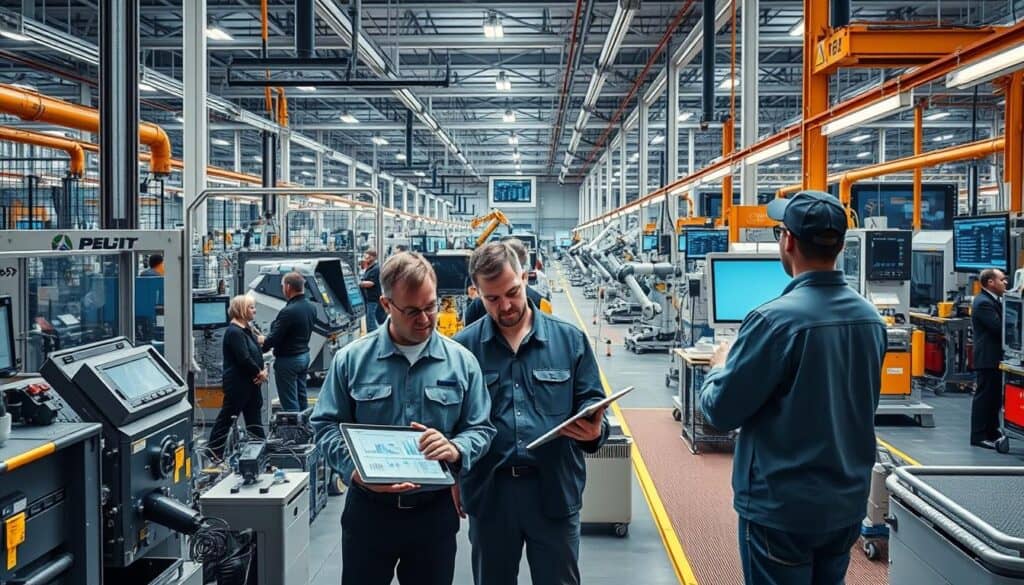
É fundamental avaliar as capacidades da sua fábrica para se preparar para os avanços tecnológicos futuros. Isso envolve examinar seus sistemas e equipamentos atuais, ajudando a identificar pontos fortes e áreas que precisam ser aprimoradas.
Realização de uma auditoria tecnológica
Uma auditoria tecnológica é crucial para compreender o estado atual da tecnologia. Ela exige o levantamento dos seus sistemas, a verificação das suas funções e a identificação de pontos fracos. Um relatório da Deloitte de 2023 indica que 86% dos líderes do setor manufatureiro acreditam que a tecnologia de fábricas inteligentes impulsionará a competitividade nos próximos anos. Isso demonstra a importância de uma avaliação tecnológica completa, garantindo que sua fábrica esteja preparada para uma transformação digital.
A transição de um modelo tradicional de trabalho manual para um modelo digital exige planejamento estratégico. Requer investimento em novas tecnologias e, frequentemente, a mudança da cultura organizacional. Essas etapas dependem de inovação contínua e tecnologias avançadas como análise de dados, inteligência artificial e aprendizado de máquina.
| Estágio | Características | Exemplos |
|---|---|---|
| Palco tradicional | Processos manuais, métodos tradicionais | Configurações básicas de fabricação |
| Estágio emergente | Começando a usar tecnologia digital | Gestão digital de inventário, automação básica |
| Etapa Digital em Primeiro Lugar | Inovação constante, uso de tecnologia avançada | IA, aprendizado de máquina em processos |
Entrevistas e pesquisas com usuários
A transição entre os estágios de maturidade digital também depende do aprendizado com o feedback do usuário. Isso proporciona insights em tempo real sobre o impacto da tecnologia e aponta o que precisa ser aprimorado. Especialistas do setor afirmam que a transformação digital não se resume apenas a novas tecnologias. Trata-se de um plano detalhado que atenda às necessidades operacionais e dos usuários.
Defining Project and Future Manufacturing Plant Goals
In today’s world, it’s key to define your project goals and the aims of your future manufacturing plant clearly. By setting SMART goals, your projects become specific, measurable, achievable, relevant, and time-bound. These goals must align with your organization’s overall strategy.
Setting SMART Goals
Creating SMART goals means carefully looking at what your manufacturing can now do and what it will need to do. Goals need to be clear to provide a roadmap. They must include ways to measure success, be achievable, fit with the wider business aims, and have deadlines. This method ensures goals help your strategy and are practical.
Aligning with Strategic Objectives
Aligning with strategic objectives is crucial for turning plans into real results. By matching your goals with the business’s main aims, your efforts are more united. This makes departments work better together, helps use resources well, and tackles key areas like keeping the business going, making processes automatic, and updating systems.
Setting project goals in line with strategy helps manage changes and surprises. It makes your organization more flexible and strong.
| Key Areas | Objectives |
|---|---|
| Strategy and Systems Assessment | Align business and system goals, support growth or cost reduction |
| Segurança cibernética | Ensure data protection and business continuity |
| Business Continuity | Maintain operations during disruptions, market pivots |
| Process Automation and Improvement | Increase efficiency, reduce operational costs |
Investing Resources in Research rather than in Current Development
Putting money into research and current development keeps companies ahead. They must manage resources well. This means balancing new ideas with improving what they already have. A crucial part of this is investing smartly in technology. Funds should go to projects with great promise.

Balancing Innovation and Improvement
Managing resources well means finding a middle ground. It’s about funding tech that’s cutting-edge and improves existing processes. Take the infrastructure bill as an example. It put $9.5 billion into clean hydrogen and $10 billion into captura de carbono. These projects mix new tech with upgrades, showing a strategic approach to innovation.
Resource Allocation
Deciding which projects get money is key in planning tech investments. It’s about judging their potential payoff and how important they are. For instance, $12 billion is going towards advanced nuclear reactors. Also, the National Science Foundation will get $3.5 billion for research and upgrades. Allocating resources this way helps companies grow sustainably.
Dealing with challenges like shifting goals and focusing too much on resources can be improved. It requires an integrated tech roadmap. This starts with setup and is followed by refinement. Here, managers choose priorities that fit the company’s strategy. They also check if they have everything needed to succeed. This organized strategy in managing resources can spark efficient, impactful innovations.
Creating a Technology Planning Framework
Building a strong technology planning estrutura is key for success. It helps align tech efforts with the goals of the organization. At the same time, it ensures resources are used well and stakeholders stay involved.
Componentes principais
A good planning framework has clear goals, and identifies needs for resources and training. Goals must be SMART: specific, measurable, achievable, relevant, and time-bound. This makes sure everyone knows the purpose behind tech projects.
Identifying new system capabilities and noting potential risks are critical steps. This complete view helps predict challenges and improve efficiency. It aids in boosting productivity across various departments.
Best Practices
Following best practices for roadmap creation is vital for a strong technology framework. It’s important to include different teams in making the roadmap. Such collaboration sparks innovation and links tech strategies to business goals.
 It keeps communication clear and ensures everyone is on the same page. Laying out a release schedule, prioritizing tasks, and setting a timeline are key for success.
| Benefits | Descrição |
|---|---|
| Clear Direction | Provides a strategic framework for guiding technology initiatives, enhancing business processes. |
| Resource Allocation | Enables effective allocation of resources by prioritizing projects based on impact and feasibility. |
| Risk Mitigation | Outlines potential risks and dependencies, facilitating proactive management and risk mitigation. |
| Stakeholder Engagement | Encourages input and buy-in from cross-functional teams, fostering collaboration and alignment. |
| Evaluation and Adaptation | Utilizes performance metrics for continuous evaluation and adaptation of the roadmap. |
Stakeholder Engagement and Collaboration
Effective stakeholder engagement is key for tech roadmap development. It involves different groups like top bosses, IT experts, and users. This means everyone understands the plans and feels they have a part in them.
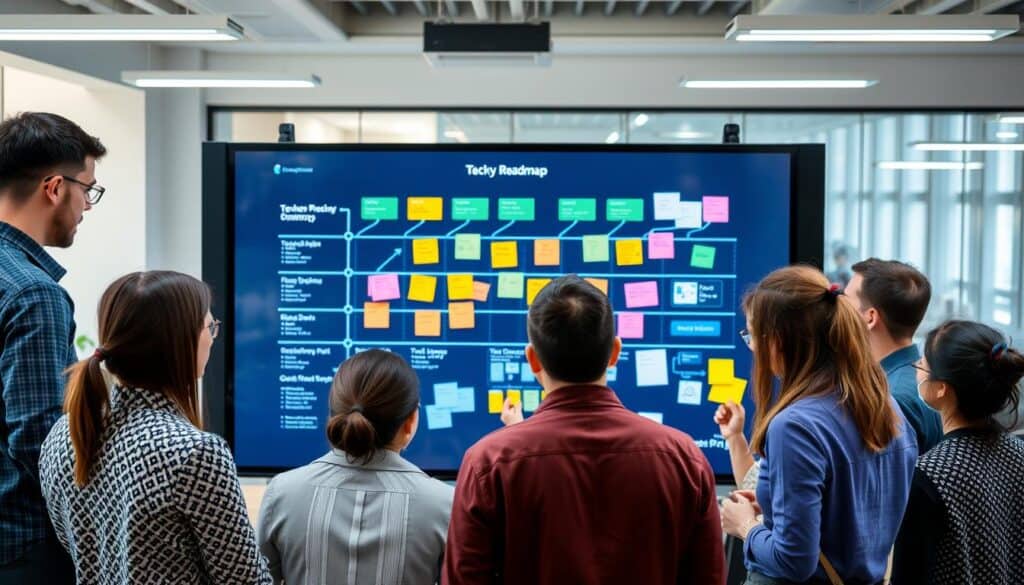
A good technology roadmap is like a guide. It shows what needs to be done and why, in line with the company’s goals. It talks about the tech we have, our aims, plans, progress, resources, challenges, and timelines. This way, everyone involved knows what’s expected and works together well.
Asking for ideas from the team helps make the roadmap suit their needs. This makes the plan better and more likely to succeed in bringing change.
| Benefits of stakeholder engagement | Detalhes |
|---|---|
| Alignment with Business Objectives | Ensures technology initiatives are in line with strategic goals. |
| Enhanced Collaboration | Facilitates input from diverse teams for a more comprehensive roadmap. |
| Resource Efficiency | Promotes optimal allocation of resources and minimizes duplicate efforts. |
| Improved Communication | Ensures all stakeholders are aware of their roles and the roadmap’s direction. |
It’s vital to share the tech roadmap with everyone involved. Break down the goals so they’re clear and measurable. Use KPIs to see how things are going. Tech roadmaps are crucial for meeting the company’s big picture goals, making sure tech investments help us reach our vision.
Developing a Timeline for Implementation
Creating a realistic timeline is key to a successful technology plan. It’s important to look at several factors to make a good timeline. This includes checking resource availability, market trends, and what the organization needs.
Factors to Consider
When making a timeline, you need to think about:
- Resource Availability: It’s critical to know what human, financial, and tech resources are available to meet deadlines.
- Market Conditions: Understanding current and upcoming market trends can help adjust the timeline to grab opportunities and avoid risks.
- Organizational Priorities: The timeline should match the organization’s goals to ensure the tech plan helps the business.
Using Gantt Charts
Gantt charts are great for showing the project schedule. They make it easy to see project steps and how they depend on each other. Here’s why Gantt charts are helpful:
| Benefits | Detalhes |
|---|---|
| Clear Visualization | Gantt charts show the project timeline clearly, helping everyone understand key moments and how tasks are linked. |
| Enhanced Communication | With Gantt charts, teams can share the project schedule clearly, making sure all understand the plan. |
| Realistic Scheduling | Gantt charts allow for making schedules that really fit with available resources and timelines, avoiding impossible deadlines. |
Using Gantt charts helps in planning and managing tech projects better. They support a more organized and clear way of working. This approach minimizes problems and supports steady progress and growth.
Prioritizing Technology Initiatives
It’s key to get technology initiatives in order for a great tech roadmap. We’ll look at how to weigh both the impact and the effort needed. We’ll also consider the risks. Picking the right projects to start with helps make sure we’re going for the ones that help most.
Impact vs. Effort
It’s crucial to match each initiative’s impact with the effort it requires. We need to see how these efforts help achieve business goals and better the tech setup.
- High Impact, Low Effort: these projects are top priority. They offer big benefits for little input.
- High Impact, High Effort: these need more resources but are worth it for their alignment with company goals.
- Low Impact, Low Effort: these can wait or be scheduled for later.
- Low Impact, High Effort: requires lots of work for minimal returns. Think carefully before committing resources here.
Risk Assessment
Assessing risks along with impact and effort is key. Understanding potential hurdles lets us plan how to overcome them. This way, we can keep projects on track and aim for success.
| Risk Factor | Descrição | Mitigation Strategy |
|---|---|---|
| Technical Challenges | Potential technical hurdles that could delay implementation. | Thorough testing and flexible project plans. |
| Resource Constraints | Limited human or financial resources to execute the project. | Effective resource allocation and continuous monitoring. |
| Market Changes | Shifts in market conditions that affect project relevance. | Dynamic and responsive roadmap adjustments. |
Using these methods for picking initiatives and managing risks helps shape doable tech roadmaps. It tackles IT problems while improving the tech setup for success in both strategy and operation.
Monitoring and Adapting the Technology Roadmap
Keeping a technology roadmap up to date is crucial for success. Using project tracking tools is key. These tools give teams immediate updates. This lets them change the roadmap quickly as needed.
Project Tracking Tools
Tools like Jira, Asana, or Trello are great for watching technology projects closely. They make it easy to update everyone on progress. And they help make sure tasks are clearly assigned.
They come with Gantt charts and can track milestones. This keeps teams focused on near and far-off goals.
| Período de tempo | Descrição |
|---|---|
| Short-term | Projects planned for the next few months to a year. |
| Medium-term | Initiatives scheduled for one to three years. |
| Long-term | Tech initiatives spanning beyond three years. |
Adjusting for Changes
Being able to adapt is key in adaptive planning. Technology and business change fast. So, technology roadmaps need regular updates. Using project tracking tools helps teams shift things like resources and goals with ease.
Teams should check on milestones and possible risks often. It’s also smart to keep talking to stakeholders. This way, the roadmap stays relevant and useful.
Summary of Technology Roadmap Best Practices
To create a successful technology roadmap, focusing on technology planning excellence is key. Organizations should follow key best practices to build an effective roadmap strategy.
Setting clear goals is crucial. It’s important to outline goals, timelines, key milestones, and performance metrics. By matching these goals with business objectives, firms can link their vision to practical plans in the roadmap.
Starting with a detailed current state assessment helps identify tech needs. This includes looking at current systems, processes, and tech setups. Engaging stakeholders through interviews and surveys adds valuable insights.
Being flexible in planning is vital. Roadmaps should list projects by importance, urgency, and doability. It’s essential to think about using money, people, and tech wisely. Including strategies for handling risks, like laying out plans for problems and monitoring, is also key.
Employing strong tools like Jira makes managing the roadmap easier. These tools help by providing visual guides, focusing on objectives, and allowing for quick changes. Also, updating the roadmap regularly keeps it current with new trends or needs.
| Elemento | Descrição |
|---|---|
| Goal Setting | Defines clear objectives, timelines, milestones, and performance metrics aligned with strategic business goals. |
| Current State Assessment | Evaluates existing systems, processes, and technology stack for comprehensive understanding. |
| Stakeholder Engagement | Gathers input through interviews, workshops, surveys, and questionnaires for a well-rounded perspective. |
| Resource Allocation | Consideration of financial, human, and technological resources for project implementation. |
| Gestão de Riscos | Includes risk identification, mitigation strategies, contingency planning, and performance monitoring. |
| Project Tracking Tools | Utilizes tools like Jira for visual roadmaps, real-time visibility, and agile planning. |
| Regular Reviews and Updates | Ensures the roadmap remains dynamic and responsive to changing business needs. |
Following these best practices helps companies build a strong technology planning excellence. This leads to smarter tech investments and uses.
Conclusão
In our fast-paced tech world, having a good technology roadmap is key. It helps plan out our tech needs in line with the best standards. This plan makes sure we use our resources well, boosting our work and new ideas.
Creating this roadmap starts with a detailed tech check and setting clear, smart goals. Each step is vital for bringing in new tech smoothly. It helps everyone understand why we’re spending on new tech. This unity is key for getting the support needed to meet our goals.
With set timelines and costs, companies can plan better. This makes sure everyone moves together in a well-thought-out way towards tech changes.
Tech roadmaps look at the big and small picture, making them useful on many levels. Keeping them up-to-date lets companies stay on track with their tech and business plans. It leads to smarter choices and lets everyone do their best, pushing growth and new ideas.
Leituras e métodos complementares
- Strategic planning: SWOT Analysis (Strengths, Weaknesses, Opportunities, Threats), Scenario Planning
- Change management: Kotter’s 8-Step Process, ADKAR Model
- Market analysis: PESTLE Analysis, Porter’s Five Forces
- Ciclo de vida do produto Management (PLM): stage-gate process, lean product development
- Business model innovation: Business Model Canvas, proposta de valor projeto
- Digital transformation: Digital Maturity Model, Cloud Computing Integration
- Trend analysis: PEST Analysis (Political, Economic, Social, Technological)
Perguntas frequentes
What is a technology roadmap in product development?
A technology roadmap is a strategic plan that uses tech to meet business goals. It spots tech opportunities while preventing wasted resources. This keeps companies agile and focused.
What types of technology roadmaps exist?
Many types of technology roadmaps are used, such as project plan and product roadmaps. Others include platform, technical, and application roadmaps. Each type has a special focus to help industries and companies succeed.
How does one conduct a technology audit?
To do a technology audit, start with a list of your tech systems. Check what they do well and what they don’t. This helps you know what tech you have and plan tech improvements.
Why are user interviews and surveys important in tech audits?
User interviews and surveys give feedback directly from end-users. They highlight how technology performs and where it can get better. This makes sure your tech plans are on the right track.
How should resources be allocated between innovation and current development?
Balancing resources means looking at what your operations need now and what innovations could bring. Choose projects that offer both value and align with your strategy. This way, you support existing services while exploring new ideas.
What are the key components of a technology planning framework?
A solid tech planning framework has clear milestones, resource plans, and measures of success. It’s also important to work with teams from different areas to get a variety of ideas and support.
How can stakeholder engagement be ensured in tech roadmap development?
To get everyone involved in tech planning, hold workshops and interviews. Work together. This approach builds a shared commitment and ensures the tech roadmap works for everyone.
How can technology initiatives be prioritized?
Deciding what tech to focus on means looking at how much effort something needs versus its potential benefits. Identifying risks up front helps you tackle challenges early on.
How important is ongoing monitoring in a technology roadmap?
Constantly watching how things are going with your tech roadmap is key. Using tools to track progress lets you adjust to new tech, business shifts, or changes in what customers want.
Glossário de termos utilizados
Conversion Rate (CR): A taxa de conversão é a porcentagem de visitantes de um site ou página de destino que concluem uma ação desejada, como fazer uma compra ou se inscrever em uma newsletter, calculada dividindo-se o número de conversões pelo número total de visitantes.
Customer Relationship Management (CRM): um sistema para gerenciar as interações de uma empresa com clientes atuais e potenciais, utilizando análise de dados para melhorar as relações comerciais, aumentar a retenção de clientes e impulsionar o crescimento das vendas.
Enterprise Resource Planning (ERP): Uma solução de software que integra os principais processos de negócios, incluindo finanças, RH, manufatura e cadeia de suprimentos, em um sistema unificado para otimizar as operações, melhorar a precisão dos dados e aprimorar a tomada de decisões em toda a organização.
Key Performance Indicator (KPI): Um valor mensurável que demonstra a eficácia com que uma organização está atingindo seus principais objetivos de negócios, frequentemente usado para avaliar o sucesso no alcance de metas.
Product Lifecycle Management (PLM): a systematic approach to managing a product's lifecycle from inception, through engineering design and manufacturing, to service and disposal, integrating people, processes, data, and technology to improve product quality, reduce time to market, and enhance collaboration across stakeholders.
Specific Measurable Achievable Relevant Timely (SMART): Uma estrutura para definir objetivos que sejam claros, quantificáveis, alcançáveis, alinhados com metas mais amplas e com prazo definido, facilitando o planejamento eficaz e a avaliação do progresso.