Have you ever asked yourself what leads to successful personal changes? The ADKAR model was created by Jeff Hiatt of Prosci in 1996. This method focuses on the importance of managing changes one step at a time at a personal level. It has become a key strategy for leaders working through difficult changes.
النقاط الرئيسية
- The ADKAR model includes five key elements: Awareness, Desire, Knowledge, Ability, and Reinforcement.
- Effective in diverse sectors, particularly in healthcare, finance, and technology.
- This model addresses both emotional and practical aspects of change.
- Leaders play a vital role in ADKAR model implementation and success.
- Emphasis is placed on progress tracking through metrics and key performance indicators (KPIs).
- The model encourages continuous monitoring and reinforcement post-implementation to maintain momentum.
Understanding the ADKAR Model
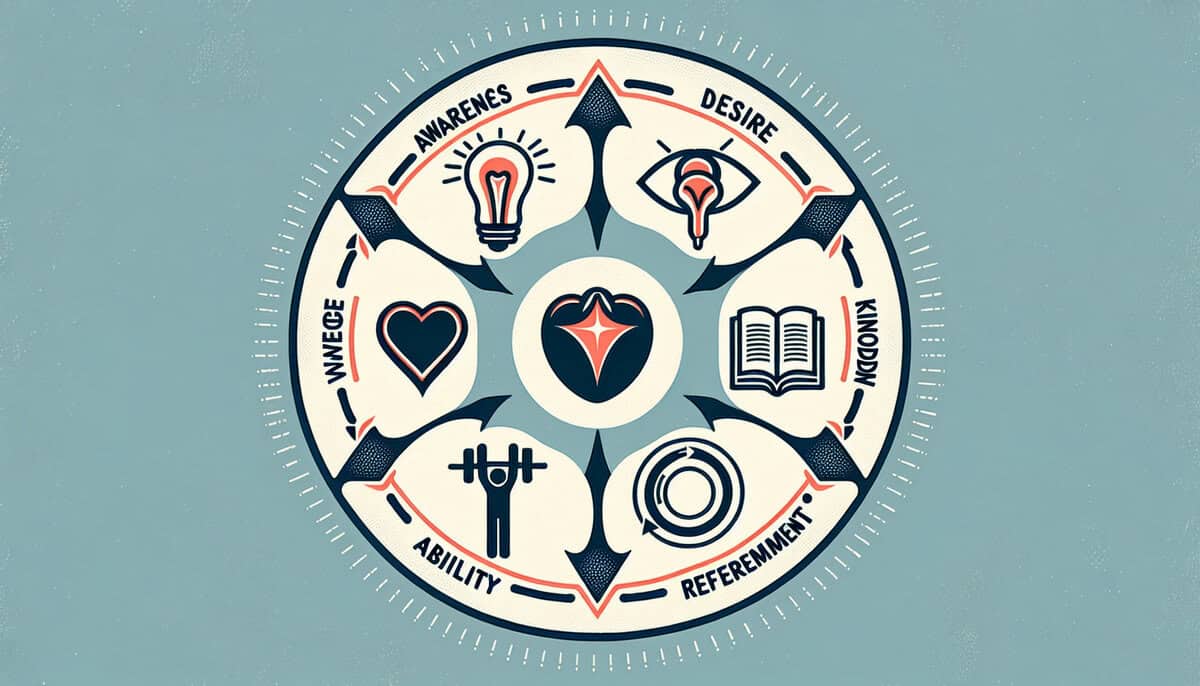
The ADKAR Model, made by Prosci, is a top tool for managing change. It outlines a clear path to guide people and organizations through changes. This method has five key steps: Awareness, Desire, Knowledge, Ability, and Reinforcement. They help ensure a smooth and successful change.
This model is great at handling the human aspects of change. It helps employees smoothly shift into new roles or use new technologies. This makes ADKAR useful for various changes, like tech updates or adapting to new cultures.
ADKAR is known for being flexible. It works well in any department, such as HR, IT, or Operations. It’s useful for different changes like mergers or adopting new technology. Plus, it fits any size project, from single people to the whole company.
ADKAR focuses on managing the human side of change and helping employees adapt to new processes, technologies, and roles. — Prosci
ADKAR differs from other models like Kotter’s 8-Step Process because it focuses on individuals. This reduces pushback and makes adoption quicker. One key to its success is making sure people understand why change is needed. This shows the importance of the Awareness step.
- Awareness: understanding the need for change.
- Desire: wanting to participate in and support change.
- Knowledge: knowing how to change.
- Ability: implementing the necessary skills and behaviors.
- Reinforcement: sustaining the change.
The ADKAR Model shines by focusing on what each person goes through during change. It deals with personal challenges and what motivates people at each step. Because of this attention to detail, ADKAR works well across many industries and types of change.
Key Elements of the ADKAR Change Management Model
Each part is crucial for a successful change strategy in various fields, including USAID work and partnerships.
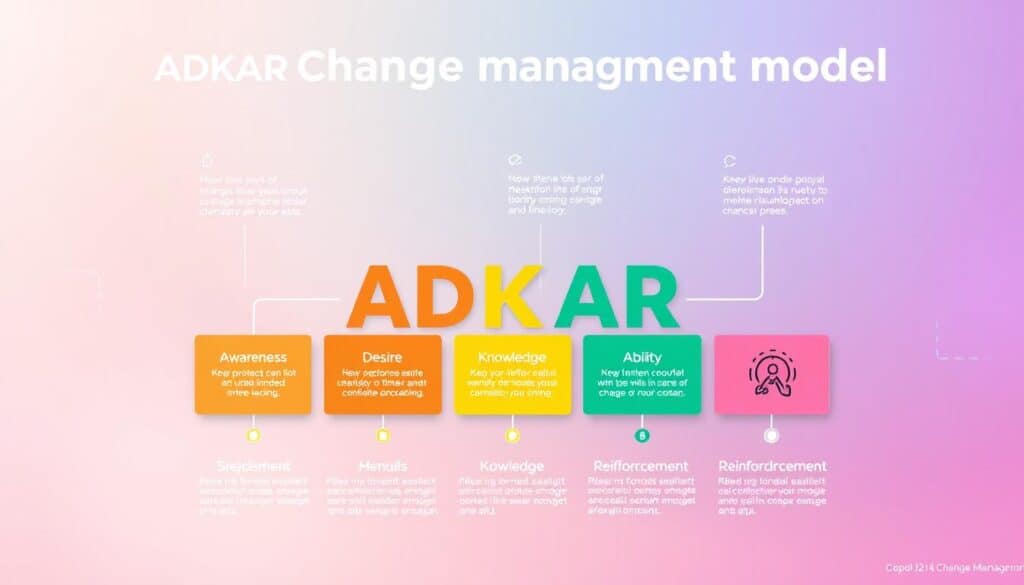
- Awareness: recognizing the Need for Change is essential. It’s about openly communicating the need for change, to build understanding. A study showed over 40% use ADKAR to gauge their change efforts.
- Desire is about building the drive to support change. Change leaders aim to spark this desire among workers and those involved. The study found ADKAR effective, with 32% saying it’s somewhat effective and 66% finding it extremely so.
- Knowledge means giving people the skills and info they need. It involves teaching tailored to everyone’s roles and responsibilities. This way, the awareness phase is strengthened by continual learning.
- Ability is about applying skills and overcoming challenges. It’s crucial that everyone can put what they know into practice. Leaders note individuals reach ADKAR goals at different times, showing the personalized touch in this phase.
- Lastly, reinforcement ensures changes stick through ongoing support and encouragement. The ADKAR Model spots resistance, helping leaders to deal with it for lasting success.
All these elements lead to a organized method. This helps everyone adapt to changes effectively. By using the ADKAR Model, organizations can spot and tackle resistance, making it a strong strategy for managing change.
The rest of this article is reserved for members
To limit scraping bots (currently 40,000 hits per day!),
we had to restrict access to full articles and tools to registered members only.
to access all the rest.
التعليمات
What is the ADKAR Model in change management?
The ADKAR Model is created by Prosci. It’s a guide for handling changes through five steps: Awareness, Desire, Knowledge, Ability, and Reinforcement. This method focuses on how each person experiences change. It works well in many industries.
How does the ADKAR Model address resistance to change?
The ADKAR Model helps reduce resistance to change by considering how changes worry or scare employees. It includes employees in the change process. This makes them more likely to support the change.
What are the key elements of the ADKAR Model?
The ADKAR Model’s main 5 points are: Awareness (realizing the need for change), Desire (wanting to be part of the change), Knowledge (learning how to make the change happen), Ability (using what you learn to change), Reinforcement (keeping the change going by encouraging it).
What are the benefits of using the ADKAR Model?
Using the ADKAR Model brings many benefits such as: employee engagement (getting employees involved means they’re more likely to support the change), mitigating resistance (reduces people’s worries and fears about new things), effective training (proper training helps employees learn and adopt new ways), or sustained change (keeping up support makes sure changes last).
External Links on Social and Professional Change Management
المعايير الدولية
(حرك الرابط لرؤية وصفنا للمحتوى)
مسرد المصطلحات المستخدمة
Key Performance Indicator (KPI): قيمة قابلة للقياس توضح مدى فعالية المنظمة في تحقيق الأهداف التجارية الرئيسية، وغالبًا ما تستخدم لتقييم النجاح في الوصول إلى الأهداف.