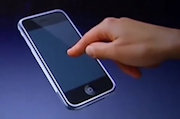
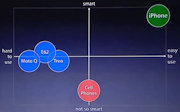
스티브 잡스의 수많은 명언 중에서도 이 말은 제품 출시 역사에 길이 남을 명언이 되었고, 심지어 패러디까지 생겨났지만, 이 말에는 단순한 소통 기법 이상의 의미가 담겨 있습니다. 우리가 여기서 다루고자 하는 것은 바로 사내 브레인스토밍을 통한 제품 구상과 이후 시장 논리 전개 사이의 일관성입니다. 현대적인 방법론에서 제품 개발은 간단히 말해 이러한 과정을 아우르는 것입니다.
상징적인 제품 소개
또는
내부 연구 개발(R&D) 결과를 영업에 활용하는 방법
진정한 현대식 사내 연구 개발팀을 갖추고 있습니다. 마케팅 팀 브레인스토밍과 비슷하지만, 이번에는 마케팅 목적으로 사용되는 공개(및 상업적) 브레인스토밍입니다.
참고: 국가에 따라 경쟁사 제품의 이름을 명시적으로 언급하며 비교하는 것은 위험할 수 있습니다. 혹은 의도적으로 입소문 마케팅을 시작하기 위해 만들어진 것일 수도 있습니다. 어쨌든, 진행하기 전에 주장을 다시 한번 꼼꼼히 확인하거나 변호사와 상의하십시오. | ![]() ![]() ![]() |

자, 이제 상징적인 영상을 보여드리겠습니다.
그의 유명한 말로 마무리하자면
"그리고 우리는 그걸 특허냈죠."
Apple’s Marketing Strategies
Did you know Apple Inc. is the world’s second-largest company by market size? Forbes confirms this. Apple’s marketing strategies have firmly established it as a tech industry leader. For ten years, Apple has won the CMO Survey Award for Marketing Excellence.
About 24% of U.S. iPhones are sold directly by Apple. This shows how important their sales channels are. Apple focuses on middle- to upper-class customers who value innovation and quality. They are known in over 150 countries, showing their wide influence.
Apple’s marketing success comes from its vast product 생태계. This includes Macs, iPhones, iPads, Apple Watches, and services like Apple Pay and Apple TV+. They use both traditional and digital marketing to stay relevant. Apple’s focus on custom campaigns and promotions builds strong customer loyalty.
Let’s dive deeper into how Apple’s pricing, market understanding, and focus on customer happiness drive its success. These factors have kept Apple at the top in the global market.
Key Marketing Approaches Apple Uses
Apple leads in tech thanks to smart marketing. It has an approach that fully reaches and keeps customers. Here are its main marketing moves.
Multichannel Marketing Model
Apple develops a strong marketing model across many channels. It blends traditional and digital media well. This lets it connect with a wide audience.
The company mixes online and offline ways to sell goods like iPhones and MacBooks. This approach highlights apple digital marketing. It uses social media and emails to get tech fans.
적을수록 좋다
Apple’s ‘Less Is More’ idea drives its marketing as its product design. It aims for simplicity and minimalism.
Ads tell stories with great visuals and a clean look, letting product features shine.
Visuals are key, making products memorable and forging emotional bonds. Apple social media marketing makes these bonds stronger. It boosts customer loyalty.
Understanding the Target Market
Apple knows its target market well. It focuses on well-off, tech-loving young adults. These folks want quality and new tech, matching Apple perfectly.
According to Business Research Methodology, Apple eyes urban, rich people in creative fields. Apple’s marketing speaks to this crowd, making gadgets a must-have.
Apple also aims to provide value and keep prices premium. It uses 순추천지수(NPS) (NPS) to measure happiness. This helps target marketing to strengthen customer ties.
- Targeting the right markets and audience is key for creating valuable user experiences.
- Simplicity and finesse in design significantly impact the brand.
- Emotion in advertising helps connect with the audience.
- 그만큼 less is more approach in advertising content creation is effective.
- Building an international brand value through quality and minimal design differentiates Apple based on 사용자 경험 and design features.
Apple’s Marketing Success and Brand Positioning
Apple has become a top brand by mastering certain skills. It’s known for luxury, exclusivity, and innovation. Its success comes from strategies that make its value clear worldwide. Apple’s items are pricey which matches their premium brand image. This approach helped Apple’s worth jump from $700 billion in 2014 to almost $3.2 trillion later.

Apple is known worldwide, being in over 100 countries. Its stores across the globe boost its fame and face-to-face contact. Despite competition from Samsung and Google and privacy worries, Apple stays on top.
Apple’s ads focus on certain groups of people. Teens are big on Apple, liking products such as iPods, iPhones, and Macs. This early bond leads to lifelong loyalty and a strong fanbase. The 19-25 age group also loves using iTunes and Apple Pay, showing how Apple targets different ages.
| Key Element | 세부 사항 |
|---|---|
| Global Presence | Over 100 countries |
| 경쟁 환경 | Challenges from Samsung and Google |
| Pricing Strategy | Premium, high-value positioning |
| Loyal Customer Base | Cult-like following |
| Core Values | Quality, Durability, Reliability |
| 타겟 고객 | Well-off individuals, teenagers, young adults |
| Valuation Growth | From $700 billion in 2014 to nearly $3.2 trillion |
Every new Apple product drop is smart and strategic. They use media well to keep each release special. This leads to quick sales and a long-term impact. It keeps Apple’s brand strong and successful in their ads.
Creating a Seamless Customer Experience
Apple stands out by making sure customers enjoy a smooth experience. The company’s ecosystem connects everything together. Devices and services like Touch ID and Face ID make things secure and easy. Apple makes sure data syncs perfectly across devices.
Going to an Apple Store shows how much Apple cares about quality experiences. The stores are designed for better customer interactions.
Apple’s customer service includes unique features like Apple Music and iMessage. Apple Pay works well with Apple Wallet, offering special deals. These steps help Apple reach a 91% satisfaction rate and 90% loyalty among iPhone users.
Apple’s Legendary Product Design
Apple dedicates an impressive 15 to 20 percent of its design time just to concepts. This commitment to planning and style makes Apple’s products stand out. It shows why many see them as legendary in design.
The company leads in design thanks to Steve Jobs and Jony Ive. Jobs dreamed of computers in our homes, not just labs. Ive then brought this dream to life with products like the Apple II and later the iMac. Their design approach has ~ 주도의 to some of the most iconic products in tech.
Apple’s design is more than looks. It makes products easy to use, combining history with new methods. This gives Apple a unique and recognizable style.
Apple’s focus on design detail sets it apart, creating a premium feel. They use advanced molding and make software and hardware that touch our emotions. Apple aims for great user experiences and consistent beauty. This makes every product, from the 1984 Mac to the latest iPhone, a symbol of innovation.
Apple’s Design Philosophy: A Legacy of Innovation
Apple’s design journey spans decades of innovation and a dedication to greatness. Steve Jobs and Jony Ive worked together to create a design vision that still inspires today.
The Vision of Steve Jobs
Steve Jobs instilled a design philosophy at Apple that valued beauty and ease of use. He aimed for designs that were clean, simple, and functional. While more common now, this approach set Apple apart at that time, focusing on improving the user’s experience.
The Role of Jony Ive
Jony Ive took over as head designer in the late ’90s. He played a big part in creating the iMac, iPod, and iPhone. His designs, inspired by Dieter Rams, mixed beauty with usefulness. Ive’s work reinforced Apple’s status in design.
Commitment to Minimalism
Minimalism is key to Apple’s design. Its products have a simple look and feel, making them easy to use. This design choice leads to better experiences for users. It shows in everything from the iPhone to the MacBook Air.
Apple’s design team is small but innovative. It focus on minimalism and combining different engineering fields keeps Apple’s products leading in design.

Apple’s Product Design Specificities
Apple’s designs stand out because they use new materials and advanced manufacturing methods. They make products that both work well and look good.
Innovative Materials and Manufacturing Techniques
Apple keeps improving their manufacturing to use the best materials. They started using a “double-shot” molding process with early iPods and iMacs. This process layers different materials for better looks and new manufacturing possibilities. These innovations helped Apple grow beyond a $2 trillion market value.
Jony Ive and his team could spend as much as they needed, ignoring the usual limits. This freedom allowed them to create unique designs. Access to special areas for making and testing products shows the care Apple puts into their work.

Aesthetic Consistency Across Products
Apple makes sure all their products look like they belong together. This makes the brand stronger and builds trust with customers. For example, they carefully decide on the lines and edges of their products.
The Apple New Product Process (ANPP) guides the design from start to finish. Meetings every Monday help keep the designs perfect. They spend 4-6 weeks on each design cycle, always making things better.
The “EPM Mafia” helps get products ready for customers. The final step is launching the product, following a plan called “Rules of the Road.” Apple focuses on looks, simplicity, and making things easy for users. This approach has built a solid fan base and a great 평판.
Design Elements and Principles of Apple Products
Apple combines function and simple beauty in their design philosophy. They aim for elegance and user-focused design, embracing clean lines. Their designs are inspired by Dieter Rams, focusing on innovation and eco-friendliness. This approach results in iconic products that are both stunning and practical, making them stand out.
The Human Interface Guidelines (HIG) from 1978 guide Apple’s design. These guidelines prioritize designs that enrich human lives. Apple’s designs are intuitive, bringing satisfaction to users. They strive for beauty and consistency across products, thereby enhancing user experience and brand identity. Apple’s attention to detail makes every interaction smooth, adding to the elegance and simplicity of use.
Complementary Readings & Inspiration
- 사용자 중심 Design: Focus on understanding and addressing the needs and preferences of the end user throughout the design process.
- Minimalist Aesthetic: Emphasize simplicity and elegance in design, removing unnecessary elements to enhance functionality and aesthetics.
- Innovative Thinking: Encourage out-of-the-box thinking to develop groundbreaking products that disrupt existing markets.
- Brand Storytelling: Craft compelling narratives around products to create emotional connections with consumers and build brand loyalty
- Integrated Ecosystems: Create seamless interactions between hardware, software, and services to enhance user experience and brand value.
- Design Thinking: Employ a problem-solving approach that involves empathizing, defining, ideation, prototyping, and testing to create user-friendly products.
- Emotional Design: Design products that evoke positive emotional responses, leading to a deeper connection between the consumer and the product.
사용된 용어집
Contract Manufacturer (CM): 아웃소싱 업체란 특정 설계 및 품질 사양에 따라 다른 회사를 대신하여 제품을 생산하는 회사를 말합니다. 이러한 방식을 통해 의뢰 기업은 마케팅 및 제품 개발과 같은 핵심 역량에 집중하고 제조 공정은 아웃소싱할 수 있습니다.
User experience (UX): the overall satisfaction and perception of a user when interacting with a product, system, or service, encompassing usability, accessibility, design, and emotional response throughout the entire interaction process.