Product Design, Manufacturing & Innovation Resources
家 » 伏打电堆原理

伏打电堆原理

1800
  • Alessandro Volta
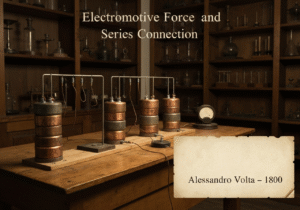
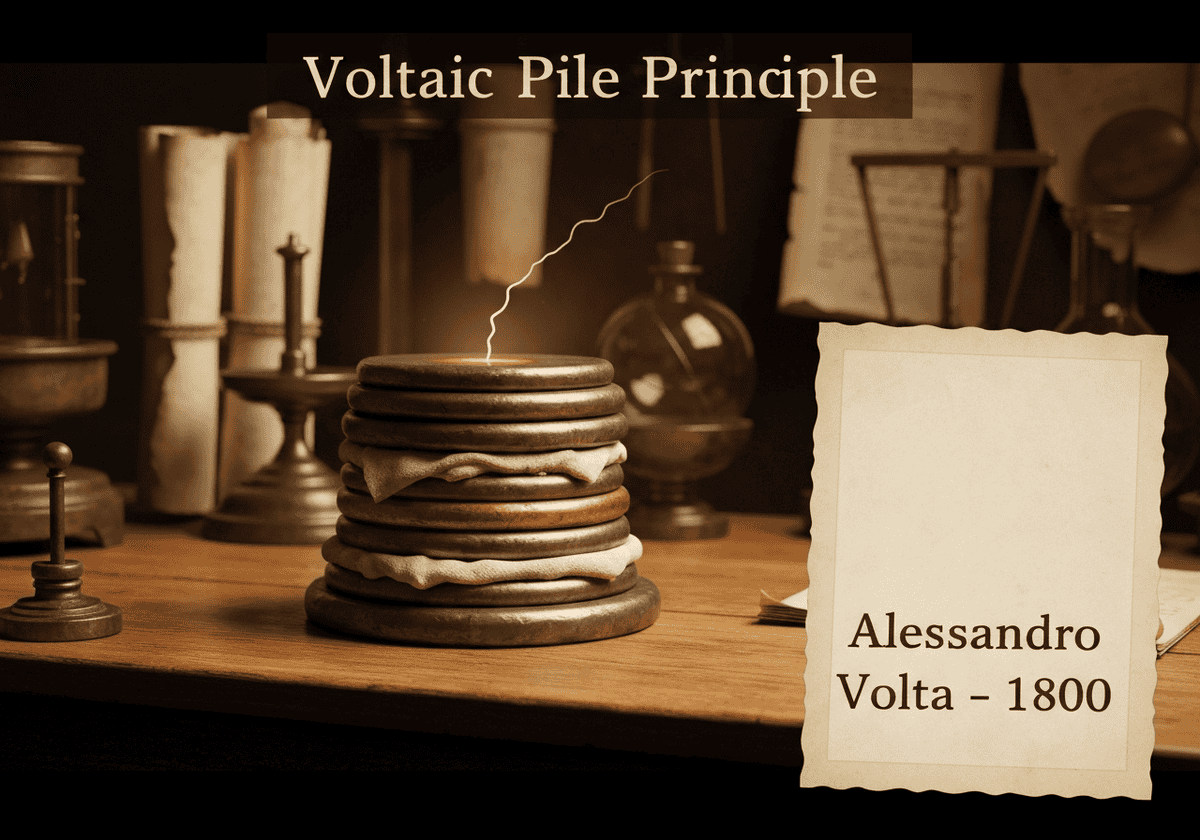
展示早期电化学能量转换的伏打桩。

(图片仅供参考)

它是第一个电池,通过堆叠成对的不同金属片(例如锌和铜),并用浸过盐水的布隔开,从而产生直流电。每对金属片构成一个原电池,将它们串联起来可以提高总电压。这种结构首次实现了化学能向电能的连续转化,为现代电化学奠定了基础。

The Voltaic pile operates on the fundamental principle of the electrochemical series. When two different metals, like zinc and copper, are connected by an electrolyte (in this case, brine-soaked paper), an electrochemical reaction occurs. Zinc, being more reactive, readily oxidizes, losing electrons and forming zinc ions that dissolve into the electrolyte. These electrons travel through the external metallic path to the copper disc. At the copper surface, a reduction reaction occurs; typically, 氢 ions from the water in the electrolyte accept the electrons to form hydrogen gas. This flow of electrons constitutes an electric current.


被电解液隔开的每对锌-铜电池都是一个 ‘电池’,能产生很小的电压(约 0.76 伏)。伏尔塔的天才设计在于将这些电池串联起来。将它们一个个叠放在一起(铜、锌、盐水浸泡过的布、铜、锌等),单个电池的电压就会累加起来。一堆 20 个电池可产生约 15 伏的电压。与莱顿瓶的静电放电不同,这是第一个能够提供稳定、持续电流源的装置。.

然而,伏打桩有很大的局限性。铜电极上产生的氢气会形成一层气泡,使电极与电解液绝缘。这种现象被称为极化,会迅速增加内阻,导致电压下降。此外,电解液会泄漏和蒸发,并可能出现局部短路,从而限制了其实用性。 寿命.

UNESCO Nomenclature: 2203
- 电化学

类型

物理设备

中断

革命

用法

过时

前体

  • 路易吉-伽尔瓦尼在青蛙腿上发现 ‘动物电能
  • 发明用于储存静电荷的莱顿瓶
  • 了解电导体和绝缘体
  • 金属电化学系列的概念

应用程序

  • 早 电解 experiments (e.g., decomposition of water)
  • 第一台电报的电源
  • 电镀
  • 弧光照明演示

专利:

NA

潜在创新理念

  • 使用天然体液作为电解质的生物集成电源
  • self-assembling nanoscale voltaic piles for targeted drug delivery activation
  • 用于一次性环境传感器的堆叠有机材料可生物降解电池
  • textile-based 可穿戴 power sources woven into clothing
  • 用于生存工具包的应急水激活电池
  • 使用安全家用材料演示电化学原理的教育套件
  • voltaic pile arrays for low-power 阴极保护 of small metal structures
  • 通过电化学反应产生光或声音的艺术装置
相关内容: 伏打桩、亚历山德罗-伏塔、电池、直流电、电电池、电化学、锌、铜.

历史背景

伏打电堆原理

1785
1788
1800
1800
1800
1800
1802
1757
1788
1800
1800
1800
1800
1801
1802

(如果日期未知或不相关,例如“流体力学”,则提供其显著出现的近似估计)

第十年 周年纪念日

只有注册会员才能免费获取完整尺寸的图片和下载内容。

> 登录 <