Product Design, Manufacturing & Innovation Resources
» Problematic Paper Screener (PPS)

Problematic Paper Screener (PPS)

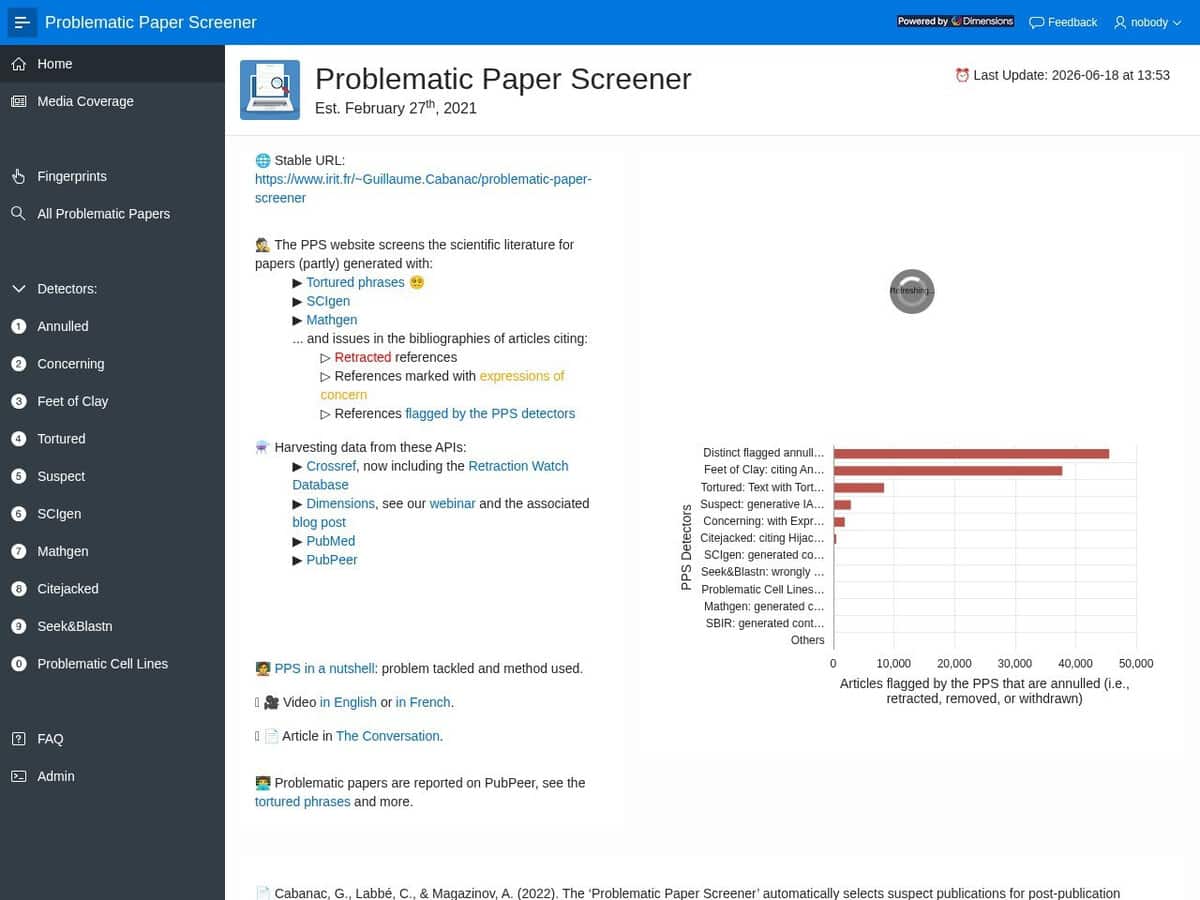
The Problematic Paper Screener (PPS) tool runs automated “fingerprint-queries” against the Dimensions.ai academic search engine, hunting for textual or structural patterns that correlate with known fraud. Malpractices are automatically identified using specific fingerprint-queries submitted to Dimensions.ai, and human peer judgment can then confirm or refute the status of a suspect paper. The public interface also lets users propose new fingerprints, so the detection list keeps growing. (extract from Wikipedia, as text below).

What it actually catches:

  • Tortured phrases — garbled paraphrases like “fake neural organization” instead of “artificial neural network,” produced when fraudsters run stolen text through synonym-swapping software to dodge plagiarism checkers.
  • Computer-generated gibberish — papers built from nonsense generators like SCIgen and Mathgen, identified via fixed phrases these tools always produce, such as “though many skeptics said it couldn’t be done”.
  • ChatGPT fingerprints — leftover snippets of telltale AI-generated text accidentally left in a submitted manuscript, plus several other detector types for things like suspicious citation patterns.

Its track record: the screener has been instrumental in more than 1,000 retractions, and some publishers have built it directly into their editorial workflow to catch suspect papers before 出版 rather than after. It was named one of ten key developments in science by Nature in 2021. Over 12,000 flagged-but-not-yet-retracted papers have also been integrated into a separate tool called Signals, where they’re collectively cited more than 160,000 times — illustrating how long flagged-but-unretracted fraud can keep circulating and influencing other research before anyone formally acts on it.

It doesn’t replace human editorial judgment, but it does the one thing humans can’t do at scale — continuously scanning tens of millions of papers for fraud fingerprints and surfacing the suspicious ones for a person to actually review.

おすすめのサイトを教えてください:

上記のウェブサイトよりも優れた、補完的な、あるいは代替となるウェブサイトをご存知ですか?

> こちらから提案してください <

すべてのツールカテゴリ:

  • 2Dグラフィックス(40)
    コンピュータ2Dグラフィックス、色彩、アートに関するすべて
  • AI(11)
    AIと機械学習を活用して生産性、革新性、創造性を高めるための最適なオンラインツールとリソース
  • CAD、3Dグラフィックス(8)
    コンピュータCADおよび3Dグラフィックスソフトウェアに関するあらゆる情報。
  • 計算(19)
  • コーディング(16)
  • コミュニケーション(14)
    インターネットに関連しないすべての通信ツール(これらについては専用の「ネットワーク&ウェブ」カテゴリを参照してください)。これには、2Gから5Gまでの各種ツールや、アナログおよびデジタル無線プロトコルが含まれます。
  • 楽しい(5)
    実用性は低いものの、技術的、工学的、あるいはグラフィック的な原理に基づいているツール。あるいは、単に独創性や好奇心から生まれたもの。
  • GIS(14)
    地理情報システム(GIS)は、空間位置情報を用いたデータの収集、管理、分析を行うためのツールです。これらのツールは、地球および宇宙の地図、各種ツール、リモートセンシングデータ、空間分析を統合します。
  • イノベーションワールド(13)
    既存の類似品が存在しなかったため(少なくとも我々が見つけることができなかったため)、我々独自のエンジニアリングおよび製品設計ツールを開発する必要がありました。
  • 言語(4)
  • ネットワークとウェブ (64)
  • OSINT (28)
    「リソース」または「検索」セクションに掲載されているツールよりもOSINTに特化した、少なくともフリーミアムモードを備えたオンラインのオープンソースインテリジェンス(OSINT)ツール。
  • 特許およびブランド(10)
  • プロジェクト(8件)
    研究開発プロジェクト開発のあらゆる側面と段階(アイデア創出、調査、プレゼンテーションからプロジェクト管理まで)
  • リソース(44)
    図書館、データベース、リポジトリ、分類広告
  • Search (45)
    検索エンジンと検索ツールは、最も有名なものから非常に専門的なものまで幅広く網羅しています。なお、規格や規制に関する検索は専用の「規格」カテゴリに分類されるため、ここでは対象外となります。
  • シミュレーション(14)
  • 基準(7)
    エンジニアリング、製品設計、安全に関する世界各国の規格、規範、規制
  • 関連テキスト(18)
    文章作成、翻訳、校正サービスなど、テキストに関連するすべてのサービス

フルサイズの画像とダウンロードは、登録会員のみが100%無料で利用できます。











