Product Design, Manufacturing & Innovation Resources
» Problematic Paper Screener (PPS)

Problematic Paper Screener (PPS)

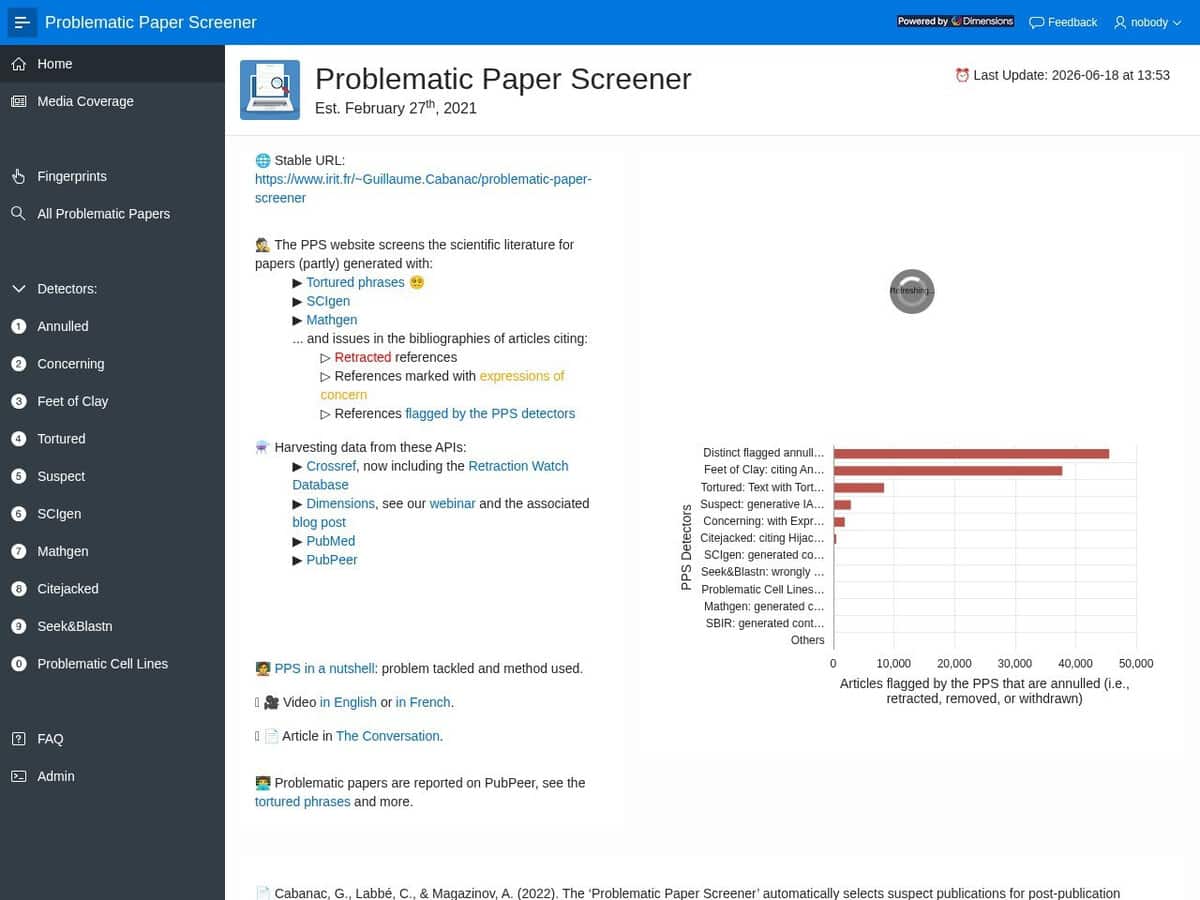
The Problematic Paper Screener (PPS) tool runs automated “fingerprint-queries” against the Dimensions.ai academic search engine, hunting for textual or structural patterns that correlate with known fraud. Malpractices are automatically identified using specific fingerprint-queries submitted to Dimensions.ai, and human peer judgment can then confirm or refute the status of a suspect paper. The public interface also lets users propose new fingerprints, so the detection list keeps growing. (extract from Wikipedia, as text below).

What it actually catches:

  • Tortured phrases — garbled paraphrases like “fake neural organization” instead of “artificial 神经网络,” produced when fraudsters run stolen text through synonym-swapping software to dodge plagiarism checkers.
  • Computer-generated gibberish — papers built from nonsense generators like SCIgen and Mathgen, identified via fixed phrases these tools always produce, such as “though many skeptics said it couldn’t be done”.
  • ChatGPT fingerprints — leftover snippets of telltale AI-generated text accidentally left in a submitted manuscript, plus several other detector types for things like suspicious citation patterns.

Its track record: the screener has been instrumental in more than 1,000 retractions, and some publishers have built it directly into their editorial workflow to catch suspect papers before 发布 rather than after. It was named one of ten key developments in science by Nature in 2021. Over 12,000 flagged-but-not-yet-retracted papers have also been integrated into a separate tool called Signals, where they’re collectively cited more than 160,000 times — illustrating how long flagged-but-unretracted fraud can keep circulating and influencing other research before anyone formally acts on it.

It doesn’t replace human editorial judgment, but it does the one thing humans can’t do at scale — continuously scanning tens of millions of papers for fraud fingerprints and surfacing the suspicious ones for a person to actually review.

请推荐您认为最好的网站:

您是否知道有比上面列出的网站更好、更互补或可以替代的网站?

> 在此处提出建议 <

所有工具类别:

  • 二维图形 (40)
    关于计算机二维图形、色彩和艺术的一切
  • 人工智能 (11)
    利用人工智能和机器学习提高生产力、创新力和创造力的最佳在线工具和资源
  • 计算机辅助设计、三维图形(8)
    计算机辅助设计(CAD)和三维图形软件相关内容。
  • 计算 (19)
  • 编码 (16)
  • 通信 (14)
    所有与互联网无关的通信工具(请参阅“网络与网络”类别了解详情)。这些工具包括各种 2G 到 5G 工具,以及模拟和数字无线电协议。
  • 乐趣 (5)
    实用性稍逊,但蕴含技术、工程或图形原理的工具。或者仅仅是出于创意和好奇心。
  • 地理信息系统(14)
    地理信息系统(GIS)工具用于收集、管理和分析利用空间位置的数据。这些工具集成了地球和空间地图、工具、遥感数据和空间分析技术。
  • innovation.world (13)
    我们自己开发了原创的工程和产品设计工具,因为市面上没有类似的工具(或者至少我们找不到相同的工具)。
  • 语言 (4)
  • 网络与网络(64)
  • OSINT (28)
    开源情报 (OSINT) 在线工具,至少提供免费增值模式,并且比“资源”或“搜索”部分列出的工具更专注于 OSINT。
  • 专利与品牌 (10)
  • 项目 (8)
    研发项目开发的各个方面和阶段,从构思、研究、方案展示到项目管理
  • 资源 (44)
    图书馆、数据库、存储库、分类广告
  • Search (45)
    这里涵盖了各种搜索引擎和搜索工具,从最知名的到非常专业的。请注意,标准和法规的搜索有其专门的“标准”类别,因此未包含在此处。
  • 模拟(14)
  • 标准(7)
    世界各地有关工程、产品设计和安全方面的标准、规范和法规
  • 文本相关 (18)
    所有与文本相关的服务,例如写作、翻译、校对服务

只有注册会员才能免费获得 100% 的全尺寸图片和下载。.

> 登录 <











