Product Design, Manufacturing & Innovation Resources
Casa » Impronta ecologica

Impronta ecologica

1990
  • Mathis Wackernagel
  • William E. Rees
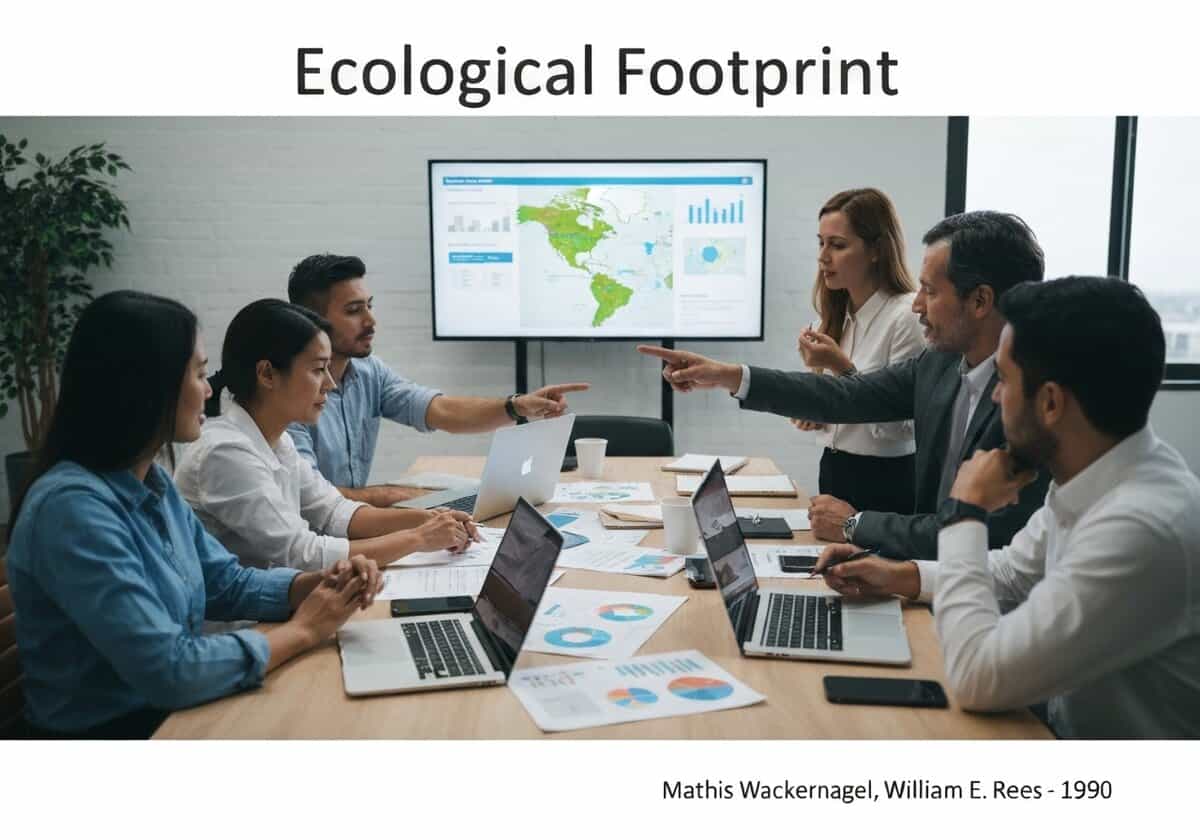
Incontro di urbanistica in cui si discute della metrica dell'impronta ecologica nella gestione ambientale.

(Immagine generata a solo scopo illustrativo)

The Ecological Footprint is a resource accounting metric that measures human demand on nature. It quantifies the amount of biologically productive land and sea area required to produce the resources a population consumes (like food, fiber, and timber), and to absorb its waste, especially carbon emissions. It is the ‘demand’ side of the Earth Overshoot Day (EOD) calculation.

Developed in the early 1990s by Mathis Wackernagel during his PhD research under William E. Rees at the University of British Columbia, the Ecological Footprint concept was designed to be a comprehensive indicator of human pressure on the environment. It translates various types of consumption and waste generation into a single, understandable unit: the global hectare (gha). The methodology categorizes consumption into several major areas: food, shelter, mobility, goods, and services. It also accounts for the six main land use types: cropland, grazing land, fishing grounds, forest land for timber and fiber, built-up land for infrastructure, and forest land required to absorb carbon dioxide emissions not absorbed by the ocean (the impronta di carbonio). La componente dell'impronta di carbonio è spesso la parte più consistente dell'impronta ecologica totale per la maggior parte delle nazioni industrializzate. Sommando queste aree, la metrica fornisce una misura aggregata della domanda che può essere confrontata direttamente con la disponibilità biocapacitàCiò lo rende uno strumento potente per valutare la sostenibilità a varie scale, dal singolo individuo all'intero pianeta.

UNESCO Nomenclature: 2511
- Gestione ambientale

Tipo

Metrico

Interruzione

Fondamento

Utilizzo

Uso diffuso

Precursori

  • concept of carrying capacity
  • Il concetto di ‘superficie fantasma’ di Georg Borgstrom’
  • energy accounting methods
  • input-output models from economics
  • life-cycle valutazione (LCA) quadri

Applicazioni

  • national environmental performance assessment
  • urban planning and municipal sustainability strategies
  • corporate environmental, social, and governance (esg) reporting
  • personal carbon and resource footprint calculators
  • curriculum material for environmental education

Brevetti:

NA

Idee e potenziali innovazioni

  • a footprint calculator for specific industrial processes or products
  • integrating footprint analysis into building information modeling (bimsoftware
  • a ‘footprint-neutral’ certification for events and organizations
  • using footprint data to design more effective consumption taxes
  • a personalized dietary planning app that minimizes a user’s food footprint
  • ai tools that analyze satellite imagery to provide more accurate and timely land use data for footprint calculations
  • a global trade model that tracks the embodied footprint of imported and exported goods
  • a ‘digital footprint’ metric to quantify the ecological cost of data storage and internet usage
  • a stock market index that weights companies based on their ecological footprint efficiency
  • a municipal planning tool that simulates the footprint impact of different zoning and transportation policies
Correlato a: impronta ecologica, Mathis Wackernagel, William Rees, consumo di risorse, impronta di carbonio, sostenibilità, ettaro globale, contabilità ambientale, domanda umana, uso del suolo.

Contesto storico

Impronta ecologica

1982
1990
1990
1990
1993
2001-09-01
1982
1990
1990
1990
1990
2000
2006

(se la data è sconosciuta o non rilevante, ad esempio "meccanica dei fluidi", viene fornita una stima approssimativa della sua notevole comparsa)

decimo anno anniversario

Le immagini a grandezza naturale e i download sono disponibili, gratuitamente al 100%, solo per gli utenti registrati.

> Login <