Product Design, Manufacturing & Innovation Resources
घर » पारिस्थितिक पदचिह्न

पारिस्थितिक पदचिह्न

1990
  • Mathis Wackernagel
  • William E. Rees
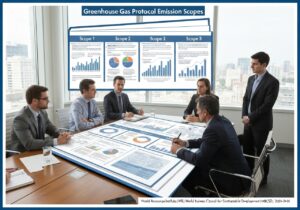
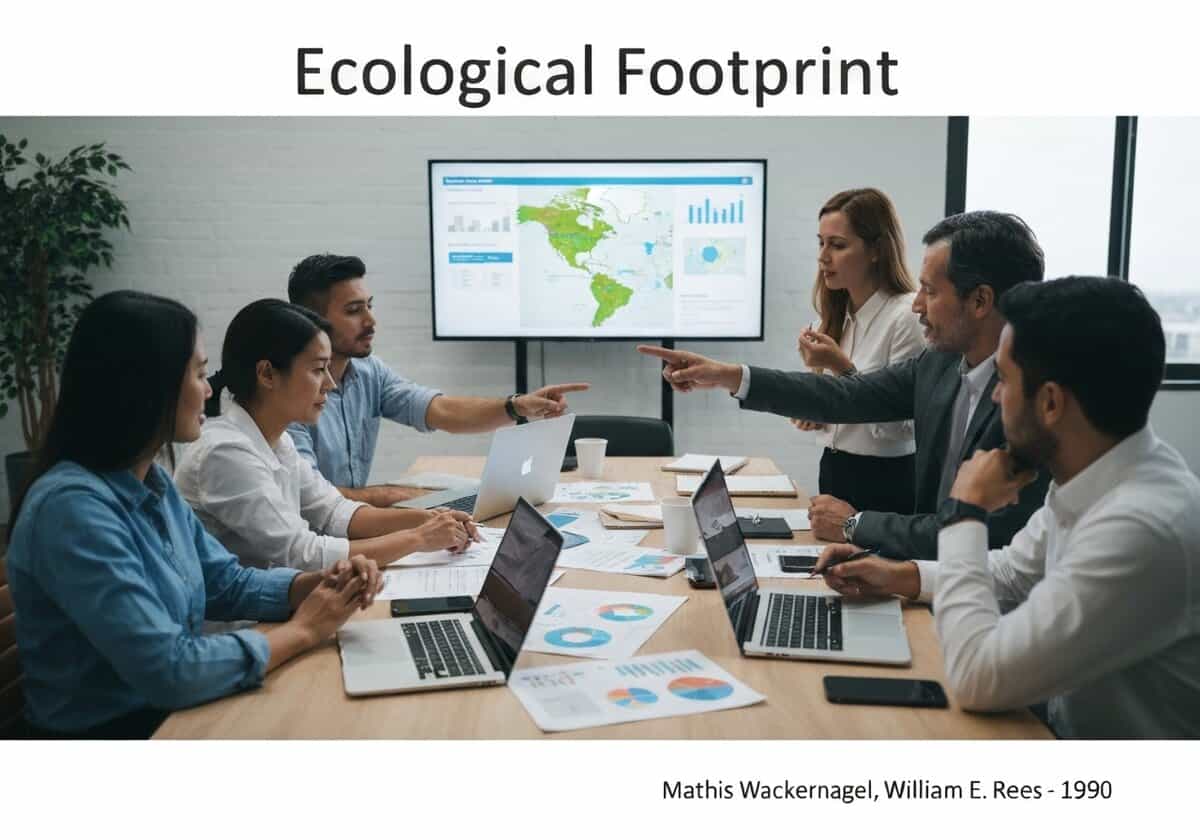
पर्यावरण प्रबंधन में पारिस्थितिक पदचिह्न मापदंडों पर चर्चा करने वाली शहरी नियोजन बैठक।.

(यह छवि केवल उदाहरण के लिए बनाई गई है)

The Ecological Footprint is a resource accounting metric that measures human demand on nature. It quantifies the amount of biologically productive land and sea area required to produce the resources a population consumes (like food, fiber, and timber), and to absorb its waste, especially carbon emissions. It is the ‘demand’ side of the Earth Overshoot Day (EOD) calculation.

Developed in the early 1990s by Mathis Wackernagel during his PhD research under William E. Rees at the University of British Columbia, the Ecological Footprint concept was designed to be a comprehensive indicator of human pressure on the environment. It translates various types of consumption and waste generation into a single, understandable unit: the global hectare (gha). The methodology categorizes consumption into several major areas: food, shelter, mobility, goods, and services. It also accounts for the six main land use types: cropland, grazing land, fishing grounds, forest land for timber and fiber, built-up land for infrastructure, and forest land required to absorb carbon dioxide emissions not absorbed by the ocean (the कार्बन पदचिह्नअधिकांश औद्योगिक देशों के लिए कुल पारिस्थितिक पदचिह्न में कार्बन पदचिह्न घटक अक्सर सबसे बड़ा हिस्सा होता है। इन क्षेत्रों को जोड़कर, यह मीट्रिक मांग का एक समग्र माप प्रदान करता है जिसकी तुलना सीधे उपलब्ध संसाधनों से की जा सकती है। जैव क्षमतायह इसे एक व्यक्ति से लेकर पूरे ग्रह तक, विभिन्न पैमानों पर स्थिरता का आकलन करने के लिए एक शक्तिशाली उपकरण बनाता है।

UNESCO Nomenclature: 2511
पर्यावरण प्रबंधन

Type

मीट्रिक

व्यवधान

मूलभूत

उपयोग

व्यापक उपयोग

शगुन

  • वहन क्षमता की अवधारणा
  • जॉर्ज बोर्गस्ट्रॉम की "भूतिया भूमि" की अवधारणा
  • ऊर्जा लेखांकन विधियाँ
  • अर्थशास्त्र से इनपुट-आउटपुट मॉडल
  • जीवन चक्र आकलन (LCA) ढाँचे

आवेदन

  • राष्ट्रीय पर्यावरण प्रदर्शन मूल्यांकन
  • शहरी नियोजन और नगरपालिका स्थिरता रणनीतियाँ
  • कॉर्पोरेट पर्यावरण, सामाजिक और शासन (ईएसजी) रिपोर्टिंग
  • व्यक्तिगत कार्बन और संसाधन पदचिह्न कैलकुलेटर
  • पर्यावरण शिक्षा के लिए पाठ्यक्रम सामग्री

पेटेंट:

NA

संभावित नवाचार विचार

  • विशिष्ट औद्योगिक प्रक्रियाओं या उत्पादों के लिए एक फुटप्रिंट कैलकुलेटर
  • integrating footprint analysis into building information modeling (बीआईएम) सॉफ़्टवेयर
  • a ‘footprint-neutral’ certification for events and organizations
  • अधिक प्रभावी उपभोग करों को डिजाइन करने के लिए फुटप्रिंट डेटा का उपयोग करना
  • a personalized dietary planning app that minimizes a user’s food footprint
  • कृत्रिम बुद्धिमत्ता (एआई) उपकरण जो उपग्रह छवियों का विश्लेषण करके भूमि उपयोग संबंधी अधिक सटीक और समय पर डेटा प्रदान करते हैं, जिनका उपयोग पदचिह्न गणनाओं के लिए किया जा सकता है।
  • एक वैश्विक व्यापार मॉडल जो आयातित और निर्यातित वस्तुओं के अंतर्निहित पदचिह्न का पता लगाता है
  • a ‘digital footprint’ metric to quantify the ecological cost of data storage and इंटरनेट usage
  • एक स्टॉक मार्केट इंडेक्स जो कंपनियों को उनके पारिस्थितिक पदचिह्न दक्षता के आधार पर भारित करता है
  • एक नगरपालिका नियोजन उपकरण जो विभिन्न ज़ोनिंग और परिवहन नीतियों के संभावित प्रभाव का अनुकरण करता है।
संबंधित विषय: पारिस्थितिक पदचिह्न, मैथिस वैकरनैगल, विलियम रीस, संसाधन खपत, कार्बन पदचिह्न, स्थिरता, वैश्विक हेक्टेयर, पर्यावरणीय लेखांकन, मानवीय मांग, भूमि उपयोग।

ऐतिहासिक संदर्भ

पारिस्थितिक पदचिह्न

1982
1990
1990
1990
1993
2001-09-01
1982
1990
1990
1990
1990
2000
2006

(यदि तिथि अज्ञात है या प्रासंगिक नहीं है, उदाहरण के लिए "द्रव यांत्रिकी", तो इसके उल्लेखनीय उद्भव का एक अनुमानित आंकड़ा प्रदान किया गया है)

नवीनतम परिवर्धन

शीर्ष पोस्ट और लेख

शीर्ष मूल उपकरण

10वां वर्ष सालगिरह

पंजीकृत सदस्यों के लिए पूर्ण आकार की छवियाँ और डाउनलोड 100% निःशुल्क उपलब्ध हैं।