Product Design, Manufacturing & Innovation Resources
Home » Oxygen Balance (OB%)

Oxygen Balance (OB%)

1900
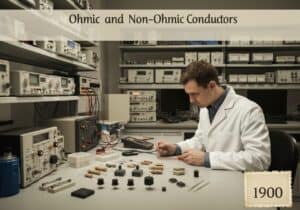
Chemist measuring explosive formulations in a 1900 laboratory for optimal oxygen balance.

(generated image for illustration only)

Oxygen Balance (OB%) is a measure of the degree to which an explosive can be oxidized. If an explosive molecule contains enough oxygen to convert all its carbon to carbon dioxide and all its hydrogen to water, it has an OB% of zero. A positive OB% means excess oxygen is present, while a negative OB% indicates an oxygen deficit, affecting energy output and byproducts.
Oxygen Balance (OB% or Ω) is a critical parameter in the design and analysis of explosive materials. It is calculated to predict the efficiency of an explosive and the nature of its detonation products. The calculation is based on the stoichiometry of the complete combustion of the explosive compound. For a generic organic compound with the formula CaHbNcOd, the goal is to oxidize carbon to CO2 and hydrogen to H2O. Nitrogen is typically assumed to form N2 gas. The formula for calculating OB% for 100 grams of the material is: \(OB% = frac{1600(d – 2a – b/2)}{M_w}\) where Mw is the molecular weight of the compound.

An explosive with a zero oxygen balance (e.g., nitroglycerin) is theoretically the most efficient in terms of energy release per unit mass, as all fuel elements (C, H) are fully oxidized using only the oxygen contained within the molecule. Explosives with a negative OB%, like TNT (trinitrotoluene), are oxygen-deficient. Upon detonation, they produce soot (unburned carbon) and carbon monoxide (CO), resulting in less energy release and visible black smoke. To improve their performance, they can be mixed with oxygen-rich compounds (oxidizers) like ammonium nitrate. Conversely, explosives with a positive OB% have excess oxygen, which can be used to oxidize added fuels, such as aluminum powder in aluminized explosives, to significantly increase the total energy output and blast temperature.

UNESCO Nomenclature: 2203
– Chemistry

Type

Chemical Process

Disruption

Incremental

Usage

Widespread Use

Precursors

  • Antoine Lavoisier’s work on combustion and the role of oxygen
  • the law of definite proportions by Joseph Proust
  • development of stoichiometry by Jeremias Richter
  • synthesis of early organic explosives like nitroglycerin and guncotton

Applications

  • design of optimized explosive mixtures like anfo
  • formulation of propellants with specific burn rates
  • development of aluminized explosives for enhanced blast effects
  • predicting the composition of detonation products

Patents:

NA

Potential Innovations Ideas

Due to scrapping bot traffic, currently more than 40k per day, this content is reserved to community members.
> Login < or > Register < (100% free) to access this, so as all other restricted content and tools.

Related to: oxygen balance, OB%, stoichiometry, explosive chemistry, detonation products, ANFO, TNT, oxidizer, fuel, exothermic reaction.

Historical Context

Oxygen Balance (OB%)

1900
1900
1900
1900
1900
1900-12-14
1902
1900
1900
1900
1900
1900
1900
1902
1902

(if date is unknown or not relevant, e.g. "fluid mechanics", a rounded estimation of its notable emergence is provided)

Related Invention, Innovation & Technical Principles

Full size images and downloads are only available, 100% free, for registered members.

> Login <