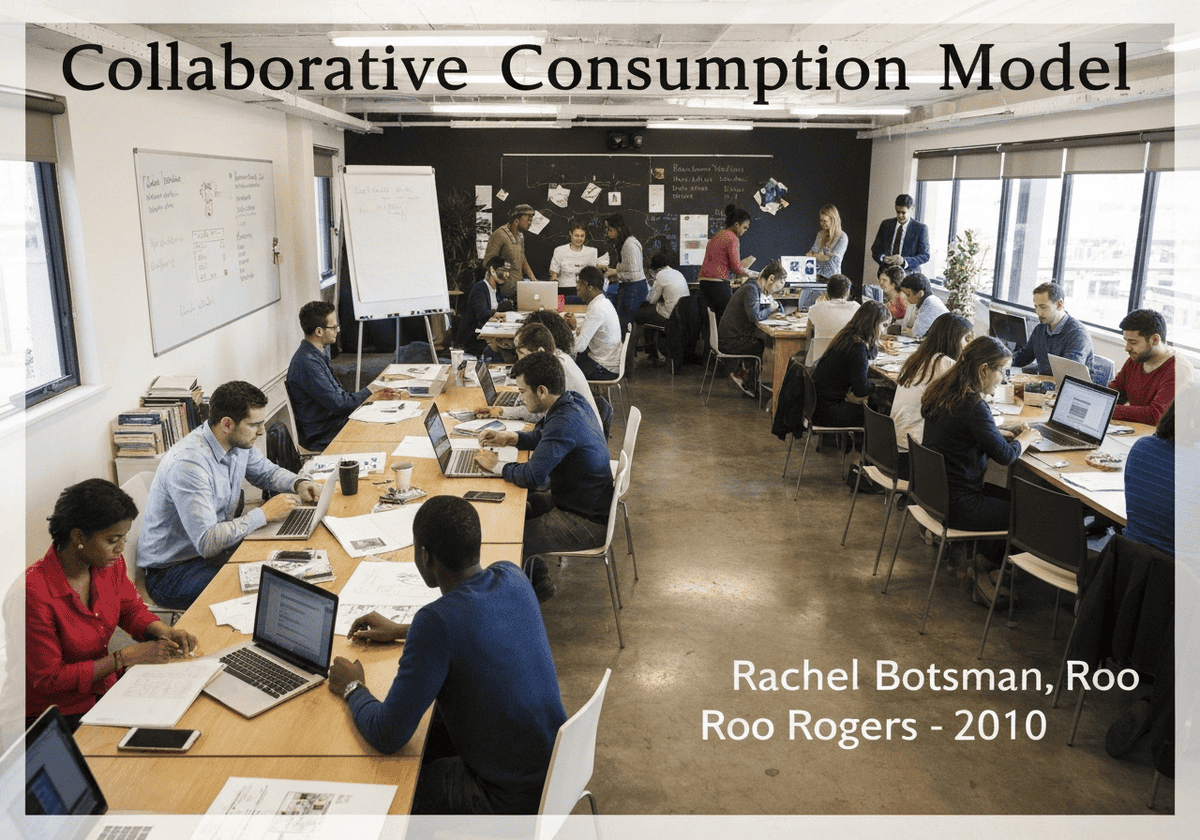
Collaborative Consumption Model
Collaborative consumption is an economic model based on sharing, swapping, trading, or renting products and services, enabling access over ownership. It is facilitated by technology and online communities, shifting consumer values from private ownership to shared use. This model leverages underutilized assets, promoting sustainability and community interaction by connecting owners of assets with individuals who need them.
Collaborative consumption represents a fundamental shift from the hyper-consumption characteristic of the 20th century to a more sustainable and community-oriented model. The concept is often broken down into three main systems. First, Product-Service Systems allow companies to offer goods as a service rather than selling them as products, such as car-sharing services where users pay for usage, not the vehicle itself. Second, Redistribution Markets involve the re-use or re-selling of pre-owned goods, moving them from a place where they are not needed to somewhere they are, as seen on platforms like eBay or ThredUP. Third, Collaborative Lifestyles involve people with similar needs or interests banding together to share and exchange less tangible assets like time, space, skills, and money. This is exemplified by co-working spaces and peer-to-peer lending.
The model’s success is deeply intertwined with technological advancements, particularly the internet and mobile devices, which have drastically reduced transaction costs. These platforms act as intermediaries, creating efficient, scalable markets for previously unmonetized or underutilized assets. Trust between strangers, a major barrier, is overcome through digital reputation systems. Economically, collaborative consumption unlocks latent value in personal assets, creating new income streams for individuals. Socially, it can foster a sense of community and reduce resource waste, contributing to a more circular economy. However, it also faces criticism regarding its impact on traditional industries, labor rights in the associated ‘gig economy’, and potential for exacerbating inequalities if not regulated properly.
UNESCO Nomenclature: 5203
– Economic systems
Precursors
- traditional practices of sharing within communities (e.g., borrowing from a neighbor)
- the rise of the internet and e-commerce platforms like eBay
- development of social networking sites
- growing environmental consciousness and anti-consumerism movements
Applications
- ride-sharing services like Uber and Lyft
- accommodation sharing platforms like Airbnb
- co-working spaces like WeWork
- tool and equipment rental libraries
Potential Innovations Ideas
Due to scrapping bot traffic, currently more than 40k per day, this content is reserved to community members.
> Login < or > Register < (100% free) to access this, so as all other restricted content and tools.
Related to: collaborative consumption, sharing economy, access over ownership, peer-to-peer, sustainability, underutilized assets, community, economic model.