Product Design, Manufacturing & Innovation Resources
Home » Biocapacity

Biocapacity

1990
  • Mathis Wackernagel
  • William E. Rees
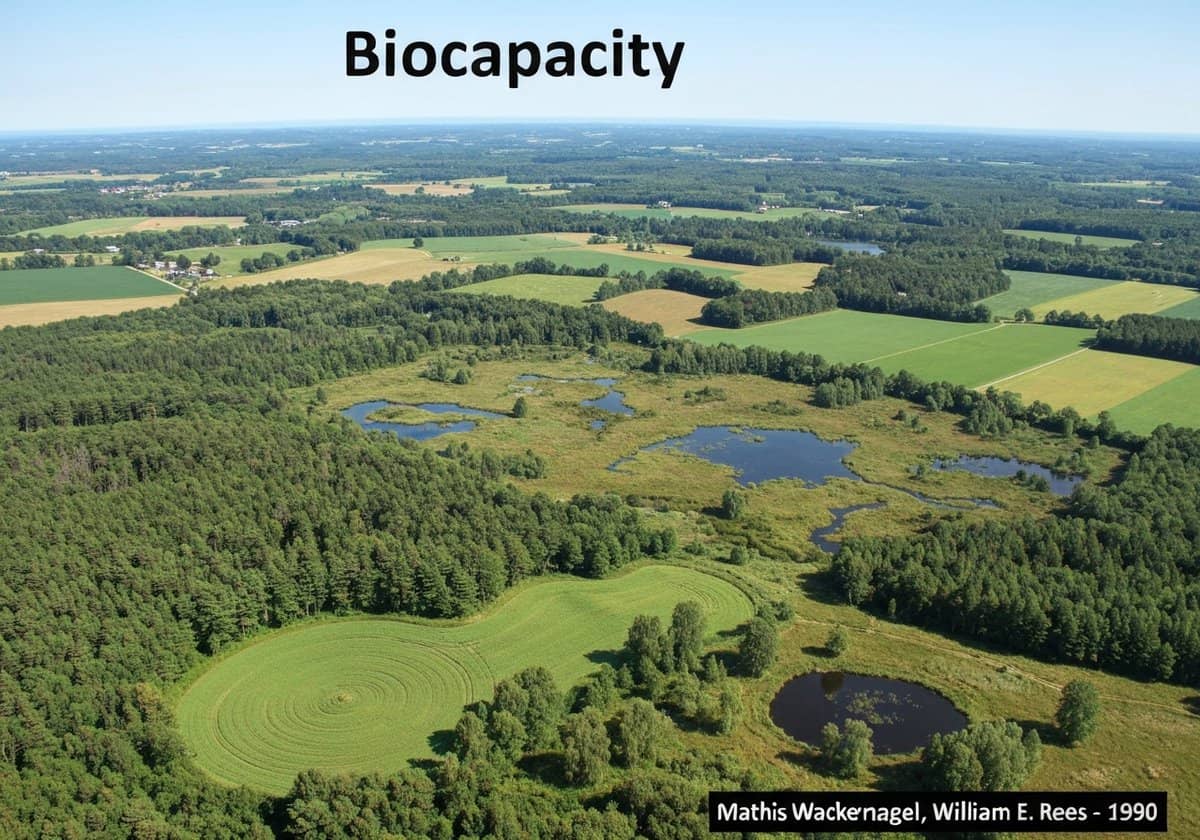
Diverse ecosystems illustrating biocapacity in human ecology and sustainable land management.

(generated image for illustration only)

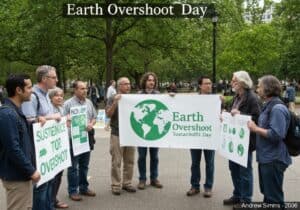
Biocapacity is a metric that represents the biosphere’s regenerative capacity in a given year. It measures the amount of biologically productive land and sea area available to provide resources and absorb wastes under current management practices. It is the ‘supply’ side of the ecological balance sheet used to calculate Earth Overshoot Day, measured in global hectares (gha).

Biocapacity is the crucial counterpart to the Ecological Footprint. It quantifies the planet’s or a region’s ability to regenerate what humans demand. The calculation of biocapacity involves summing the productive areas of cropland, grazing land, forest land, and fishing grounds. These areas are then weighted by their biological productivity using equivalence factors, which compare their productivity to the world average, and yield factors, which compare local yields to world average yields. This process converts physical hectares into the standardized ‘global hectares’ unit, allowing for a direct comparison with the Ecological Footprint. Biocapacity is not a static figure; it can be influenced by technology, agricultural practices (e.g., irrigation, fertilizer use), ecosystem degradation, and climate change. For example, soil erosion can decrease the biocapacity of cropland, while sustainable forestry practices can maintain or enhance the biocapacity of forests. A country can have an ecological deficit if its national Ecological Footprint exceeds its own biocapacity, meaning it is either importing biocapacity from other nations, liquidating its own ecological assets, or polluting the global commons with waste like CO2.

UNESCO Nomenclature: 2506
– Ecology

Type

Metric

Disruption

Incremental

Usage

Widespread Use

Precursors

  • agricultural science and crop yield measurement
  • forestry surveys and stock assessment
  • fisheries science and maximum sustainable yield (MSY) concept
  • ecosystem productivity studies
  • remote sensing and land use classification technologies

Applications

  • national resource and land use management
  • assessing the sustainability of agricultural and forestry practices
  • conservation planning and biodiversity protection strategies
  • evaluating the ecological assets of a nation or region
  • informing policy on ecosystem services valuation

Patents:

NA

Potential Innovations Ideas

Due to scrapping bot traffic, currently more than 40k per day, this content is reserved to community members.
> Login < or > Register < (100% free) to access this, so as all other restricted content and tools.

Related to: biocapacity, regenerative capacity, ecosystem services, global hectare, ecological supply, resource management, land productivity, sustainability, conservation, natural capital.

Historical Context

Biocapacity

1990
1990
1990
1990
2000
2006
1982
1990
1990
1990
1993
2001-09-01

(if date is unknown or not relevant, e.g. "fluid mechanics", a rounded estimation of its notable emergence is provided)

Related Invention, Innovation & Technical Principles

Full size images and downloads are only available, 100% free, for registered members.

> Login <