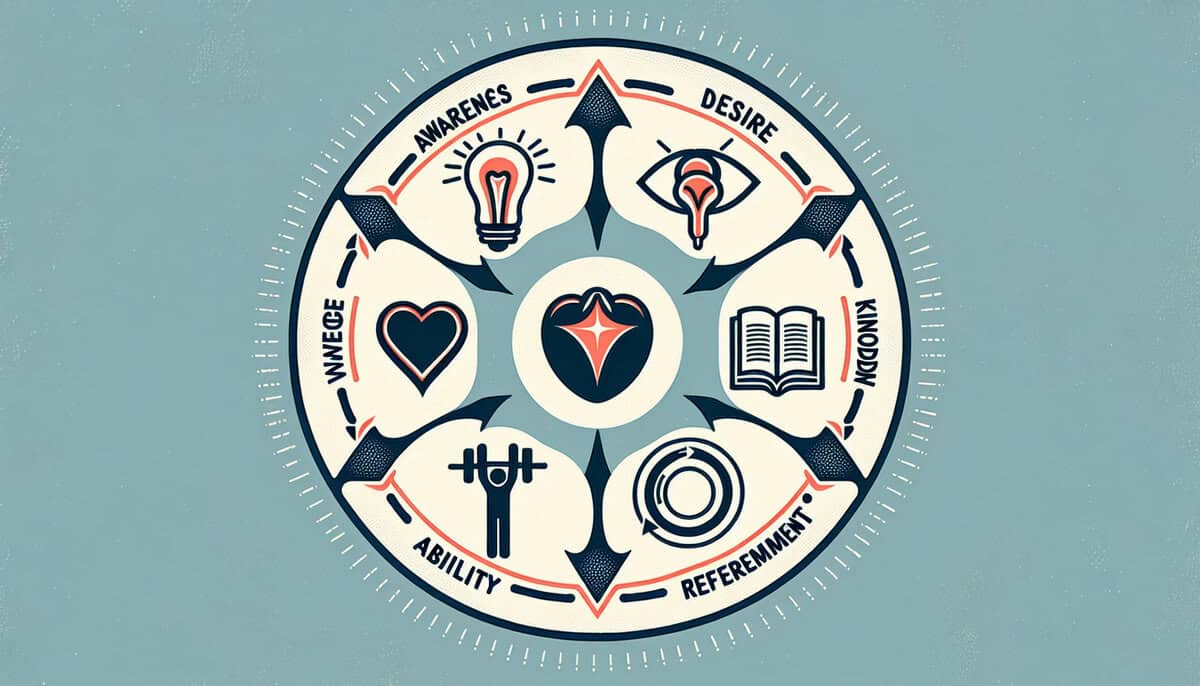
Have you ever asked yourself what leads to successful personal changes? The ADKAR model was created by Jeff Hiatt of Prosci in 1996. This method focuses on the importance of managing changes one step at a time at a personal level. It has become a key strategy for leaders working through difficult changes.
मुख्य बातें
- The ADKAR model includes five key elements: Awareness, Desire, Knowledge, Ability, and Reinforcement.
- Effective in diverse sectors, particularly in healthcare, finance, and technology.
- This model addresses both emotional and practical aspects of change.
- Leaders play a vital role in ADKAR model implementation and success.
- Emphasis is placed on progress tracking through metrics and key performance indicators (KPIs).
- The model encourages continuous monitoring and reinforcement post-implementation to maintain momentum.
Understanding the ADKAR Model
The ADKAR Model, made by Prosci, is a top tool for managing change. It outlines a clear path to guide people and organizations through changes. This method has five key steps: Awareness, Desire, Knowledge, Ability, and Reinforcement. They help ensure a smooth and successful change.
This model is great at handling the human aspects of change. It helps employees smoothly shift into new roles or use new technologies. This makes ADKAR useful for various changes, like tech updates or adapting to new cultures.
ADKAR अपनी लचीली कार्यप्रणाली के लिए जाना जाता है। यह मानव संसाधन, सूचना प्रौद्योगिकी या संचालन जैसे किसी भी विभाग में अच्छी तरह से काम करता है। यह विलय या नई तकनीक अपनाने जैसे विभिन्न परिवर्तनों के लिए उपयोगी है। साथ ही, यह किसी भी आकार की परियोजना के लिए उपयुक्त है, चाहे वह एक व्यक्ति की हो या पूरी कंपनी की।
ADKAR प्रबंधन पर ध्यान केंद्रित करता है मानवीय पक्ष परिवर्तन के प्रति जागरूकता और कर्मचारियों को नई प्रक्रियाओं, प्रौद्योगिकियों और भूमिकाओं के अनुकूल ढलने में मदद करना। — प्रोस्की
ADKAR differs from other models like Kotter’s 8-Step Process because it focuses on individuals. This reduces pushback and makes adoption quicker. One key to its success is making sure people understand why change is needed. This shows the importance of the Awareness step.
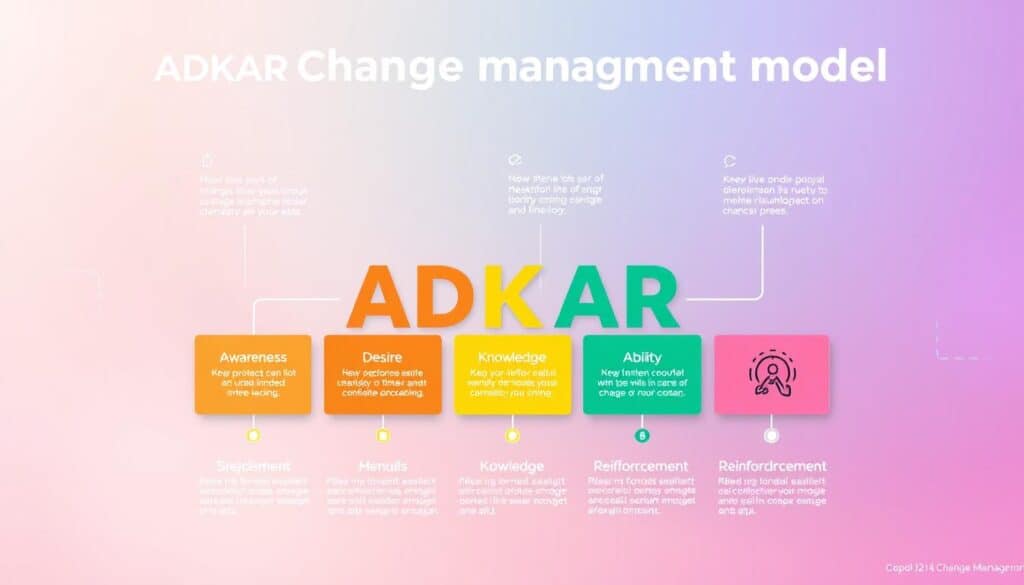
- Awareness: understanding the need for change.
- Desire: wanting to participate in and support change.
- Knowledge: knowing how to change.
- Ability: implementing the necessary skills and behaviors.
- Reinforcement: sustaining the change.
The ADKAR Model shines by focusing on what each person goes through during change. It deals with personal challenges and what motivates people at each step. Because of this attention to detail, ADKAR works well across many industries and types of change.
Key Elements of the ADKAR Change Management Model
Each part is crucial for a successful change strategy in various fields, including USAID work and partnerships.
- जागरूकता: बदलाव की आवश्यकता को पहचानना अत्यंत महत्वपूर्ण है। इसका अर्थ है बदलाव की आवश्यकता को खुलकर संप्रेषित करना और समझ विकसित करना। एक अध्ययन से पता चला है कि 40% से अधिक लोग अपने बदलाव के प्रयासों का आकलन करने के लिए ADKAR का उपयोग करते हैं।
- इच्छा का अर्थ है परिवर्तन का समर्थन करने की प्रेरणा उत्पन्न करना। परिवर्तन के नेता कर्मचारियों और इसमें शामिल लोगों के बीच इस इच्छा को जगाने का लक्ष्य रखते हैं। अध्ययन में पाया गया कि ADKAR प्रभावी है, जिसमें 32% लोगों ने इसे कुछ हद तक प्रभावी बताया और 66% लोगों ने इसे अत्यंत प्रभावी पाया।
- Knowledge means giving people the skills and info they need. It involves teaching tailored to everyone’s roles and responsibilities. This way, the awareness phase is strengthened by continual learning.
- क्षमता का अर्थ है कौशल का प्रयोग करना और चुनौतियों पर काबू पाना। यह अत्यंत महत्वपूर्ण है कि हर कोई अपने ज्ञान को व्यवहार में ला सके। नेता ध्यान देते हैं कि व्यक्ति अलग-अलग समय पर ADKAR लक्ष्यों तक पहुंचते हैं, जो इस चरण में व्यक्तिगत स्पर्श को दर्शाता है।
- Lastly, reinforcement ensures changes stick through ongoing support and encouragement. The ADKAR Model spots resistance, helping leaders to deal with it for lasting success.
All these elements lead to a organized method. This helps everyone adapt to changes effectively. By using the ADKAR Model, organizations can spot and tackle resistance, making it a strong strategy for managing change.
Implementing the ADKAR Model in Your Organization
Using the ADKAR Model can totally change how your organization handles change. It leads to big benefits. Here are key points for making the ADKAR Model work in your company:
- Leadership Advocacy: Having a leader who supports change management boosts the success of changes. Leaders need to back the ADKAR Model and create a culture open to change.
- Building Desire: Coaching is a powerful way to get people excited about change. It helps employees want to support and join in the change efforts.
- Training Programs: Joining comprehensive training, like the Prosci’s Change Management Certification Program, improves an organization’s change ability.
- Custom Methodologies: Using your own change management methods can work well. Strategies made for your company’s specific needs and culture are best.
- Mitigating Resistance: According to Prosci’s 2019 study, nearly half of employee resistance could be stopped by using good change management practices.
Here’s a table that compares key facts about successful versus unsuccessful change management:
| Factor | Excellent Change Management | Poor Change Management |
|---|---|---|
| Likelihood of Meeting Objectives | 7 times higher | Significantly lower |
| Impact of Moving from Poor to Fair Practices | Nearly triples success rate | Low success rate |
| Employee Resistance Avoidance | 47% reduced | High resistance |
| Role of Leadership | Increases success rate | Minimal impact |
Benefits of Using the ADKAR Model in Change Management
A study in 2005 with over 400 companies showed that not knowing enough caused most resistance. This fact highlights the value of the ADKAR Model’s first step.

Another key benefit of the ADKAR Model is boosting employee involvement. When people know why changes are happening and see how it matches their goals, they’re more likely to support and commit. Being actively involved reduces resistance, making things easier for all.
For any change effort, making the transition seamless is crucial. The ADKAR Model lays out clear steps and backing to guide employees. It ensures people can learn and take on new actions well. Offering ongoing training and reminders lessens issues and quickens accepting new changes.
| Factors Influencing Success | प्रभाव |
|---|---|
| No Awareness/No Desire | Slower adoption and delays |
| No Knowledge/No Ability | Lower utilization of new processes and tools |
| No Reinforcement | Reversion to old behaviors |
It’s vital to help employees personally move through changes, too. The ADKAR Model provides clear directions for this. It looks at how people learn, what might hold them back, and what drives them. By considering these factors, the model effectively addresses the diverse challenges of change.
Tips for Successfully Applying the ADKAR Model
To use the ADKAR Model well, think it through and plan. Start by creating a strong communication plan. This helps grow employees’ desire for change and stops frustration-based resistance. If people feel part of the journey, they’re open to change.
Using social learning is key for spreading knowledge. Let peers teach each other to share insights and boost ongoing improvement.
Leadership plays a huge role too. Leaders must inspire confidence in their teams to tackle challenges. Using feedback, surveys, and tracking progress helps find areas to improve and celebrate wins. This strengthens the change effort. Adopting these tips can smooth out the ADKAR process, leading to better change management.
संबंधित पठन
- Kotter’s 8-Step change model: a framework for leading change that complements ADKAR by focusing on creating urgency and building a guiding coalition.
- लेविन का परिवर्तन प्रबंधन मॉडल: focuses on unfreezing, changing, and refreezing organizational processes, which can align with ADKAR’s reinforcement stage.
- Prosci change management methodology: provides a structured approach to change management, which can be used alongside ADKAR for comprehensive change planning.
- Stakeholder analysis: identifying and understanding stakeholders can enhance the effectiveness of creating awareness and desire in the ADKAR model.
- Communication planning: developing strategies to effectively communicate change, crucial for building awareness and knowledge.
- Organizational culture assessment: understanding and aligning organizational culture with change initiatives can improve the success of the ADKAR model.
- Performance management systems: tools and processes that support the reinforcement stage by measuring and rewarding desired behaviors.
अक्सर पूछे जाने वाले प्रश्न
What is the ADKAR Model in change management?
ADKAR मॉडल Prosci द्वारा बनाया गया है। यह पाँच चरणों (जागरूकता, इच्छा, ज्ञान, क्षमता और सुदृढ़ीकरण) के माध्यम से परिवर्तनों से निपटने के लिए एक मार्गदर्शिका है। यह विधि इस बात पर केंद्रित है कि प्रत्येक व्यक्ति परिवर्तन का अनुभव कैसे करता है। यह कई उद्योगों में कारगर साबित होती है।
How does the ADKAR Model address resistance to change?
The ADKAR Model helps reduce resistance to change by considering how changes worry or scare employees. It includes employees in the change process. This makes them more likely to support the change.
What are the key elements of the ADKAR Model?
ADKAR मॉडल के मुख्य 5 बिंदु हैं: जागरूकता (परिवर्तन की आवश्यकता को समझना), इच्छा (परिवर्तन का हिस्सा बनना), ज्ञान (परिवर्तन को साकार करने का तरीका सीखना), क्षमता (सीखे गए ज्ञान का उपयोग परिवर्तन लाने के लिए करना), सुदृढ़ीकरण (परिवर्तन को प्रोत्साहित करके उसे जारी रखना)।
What are the benefits of using the ADKAR Model?
ADKAR मॉडल का उपयोग करने से कई लाभ मिलते हैं जैसे: कर्मचारी सहभागिता (कर्मचारियों को शामिल करने का मतलब है कि उनके बदलाव का समर्थन करने की संभावना अधिक होती है), प्रतिरोध को कम करना (नई चीजों के बारे में लोगों की चिंताओं और भय को कम करता है), प्रभावी प्रशिक्षण (उचित प्रशिक्षण कर्मचारियों को नए तरीके सीखने और अपनाने में मदद करता है), या स्थायी परिवर्तन (समर्थन बनाए रखने से यह सुनिश्चित होता है कि परिवर्तन स्थायी रहें)।
सामाजिक और व्यावसायिक परिवर्तन प्रबंधन पर बाहरी लिंक
अंतर्राष्ट्रीय मानक
(सामग्री का हमारा विवरण देखने के लिए लिंक पर होवर करें)
प्रयुक्त शब्दों की शब्दावली
Key Performance Indicator (KPI): a measurable value that demonstrates how effectively an organization is achieving key business objectives, often used to evaluate success at reaching targets.