Product Design, Manufacturing & Innovation Resources
بيت » نظرية الطبقة الحدودية (السوائل)

نظرية الطبقة الحدودية (السوائل)

1904
  • Ludwig Prandtl
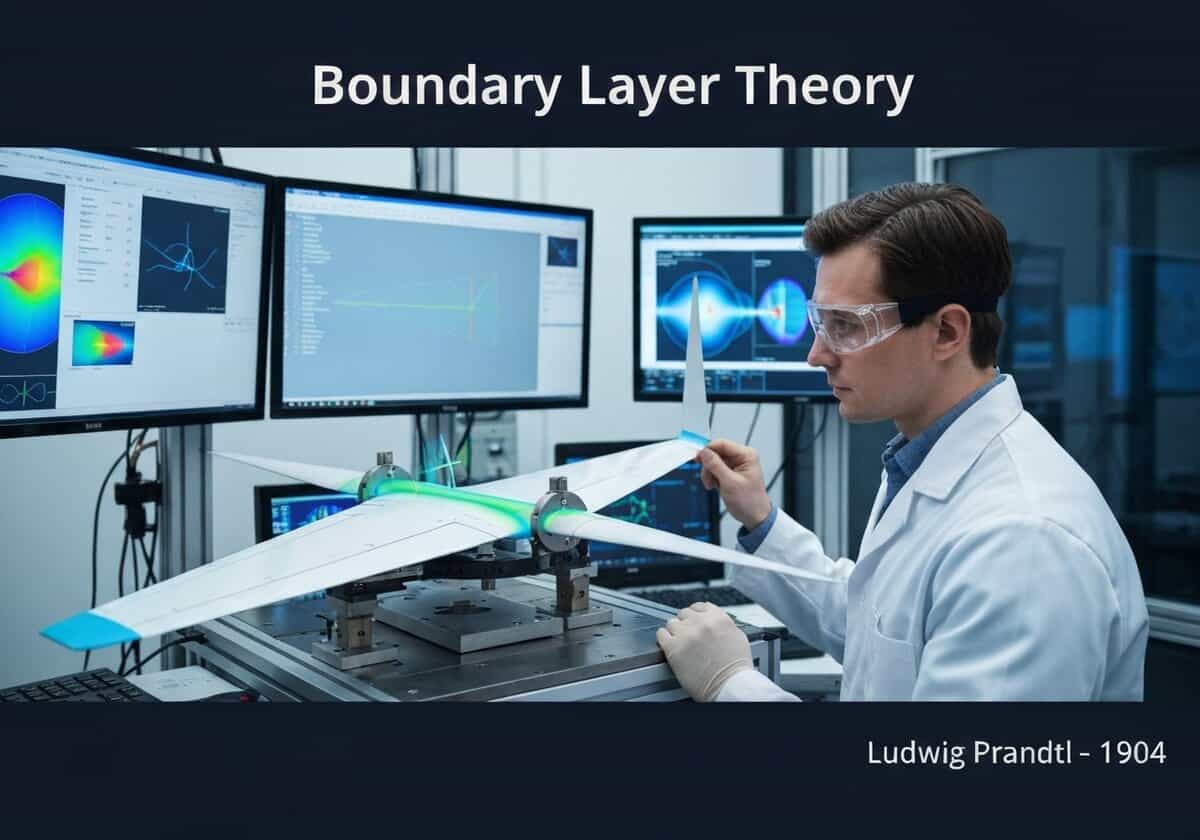
Aerospace engineer analyzing airflow around an aircraft wing model in a wind tunnel.

(صورة توضيحية فقط)

The boundary layer is the thin layer of fluid in the immediate vicinity of a bounding surface where the effects of اللزوجة are significant. Introduced by Ludwig Prandtl, this concept simplifies fluid dynamics problems by dividing the flow into two regions: the thin boundary layer where viscosity dominates and the outer region where inviscid flow theory can be applied.


Ludwig Prandtl’s boundary layer theory was a monumental breakthrough that reconciled theoretical fluid dynamics with experimental results. Before 1904, theory based on inviscid flow (like d’Alembert’s paradox) incorrectly predicted zero drag for objects moving through a fluid, a clear contradiction of reality. Prandtl proposed that the effects of fluid friction (اللزوجة), while negligible in the bulk of the flow, are critically important in a very thin layer adjacent to the object’s surface. This is the boundary layer.

Within this layer, the fluid velocity changes from zero at the surface (the no-slip condition) to the free-stream velocity at the edge of the layer. This velocity gradient creates shear stress, which is the source of skin friction drag, one of the two main components of aerodynamic drag. The behavior of the boundary layer is crucial. It can be either smooth and orderly (laminar) or chaotic and irregular (turbulent). A turbulent boundary layer has more energy and is more resistant to separating from the surface, but it also creates significantly more skin friction drag. Flow separation, where the boundary layer detaches from the surface, often occurs due to an adverse pressure gradient and leads to a massive increase in pressure drag, which is the other main drag component. Understanding and controlling the boundary layer is a central goal of aerodynamic design.

UNESCO Nomenclature: 2210
الميكانيكا

يكتب

نظام مجرد

خلل

Revolutionary

الاستخدام

استخدام واسع النطاق

مقدمات

  • معادلات نافييه-ستوكس التي تصف التدفق اللزج
  • D’Alembert’s paradox, which highlighted the discrepancy between inviscid theory and reality
  • الملاحظات التجريبية لمقاومة السوائل والسحب

التطبيقات

  • تصميم هياكل انسيابية مثل أجنحة الطائرات وهياكل السيارات لتقليل السحب
  • تحليل انتقال الحرارة في تبريد المحركات والإلكترونيات
  • فهم وتحكم فصل التدفق
  • تصميم شفرات التوربينات والضاغطات
  • development of ‘shark skin’ surfaces for drag reduction

براءات الاختراع:

NA

أفكار ابتكارية محتملة

  • أنظمة التحكم في التدفق النشط باستخدام المحركات الدقيقة للحفاظ على طبقة الحدود متصلة
  • التنظيف الذاتي surfaces that manipulate the boundary layer to repel dust and water
  • plasma actuators for ‘virtual’ shaping of aerodynamic surfaces without moving parts
  • أجنحة طائرات قابلة للتكيف تتغير شكلها للحفاظ على التدفق الصفحي الأمثل في ظروف الطيران المختلفة
  • أسطح حصاد الطاقة التي تستخدم اضطراب الطبقة الحدودية لتوليد كميات صغيرة من الطاقة
  • طائرات أسرع من الصوت بمحركات استيعاب الطبقة الحدودية لتحقيق كفاءة أعلى
  • الغرسات الطبية with surfaces designed to control blood flow boundary layers and prevent clotting
  • طلاءات ذكية تغير الملمس للانتقال بين الحالات الصفائحية والمضطربة حسب الطلب
Related to: boundary layer, prandtl, viscosity, drag, flow separation, laminar flow, turbulent flow, no-slip condition.

السياق التاريخي

نظرية الطبقة الحدودية (السوائل)

1900
1900-12-14
1902
1904
1907
1909
1910
1900
1900
1902
1902
1907
1909
1910
1911-04-08

(إذا كان التاريخ غير معروف أو غير ذي صلة، على سبيل المثال "ميكانيكا الموائع"، يتم توفير تقدير تقريبي لظهوره الملحوظ)

أحدث الإضافات

أهم المنشورات والمقالات

أفضل الأدوات الأصلية

السنة العاشرة عيد

الصور والتنزيلات بالحجم الكامل متاحة فقط، ومجانية تمامًا، للأعضاء المسجلين.