Product Design, Manufacturing & Innovation Resources
بيت » مبدأ التكافؤ

مبدأ التكافؤ

1907
  • Albert Einstein
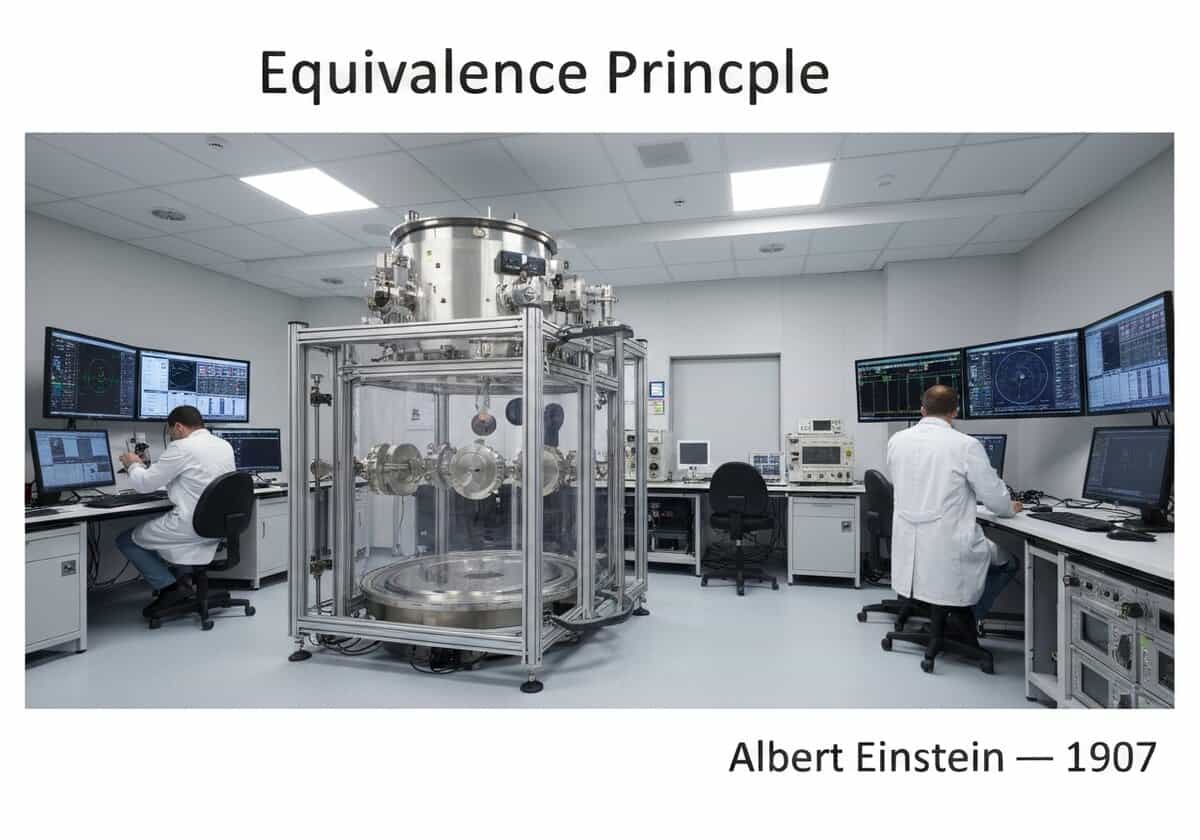
Modern laboratory demonstrating the equivalence principle with a free-falling object in a vacuum chamber.

(صورة توضيحية فقط)

يُعد مبدأ التكافؤ حجر الزاوية في النسبية العامة. ويفترض أن تأثيرات مجال الجاذبية المنتظم لا يمكن تمييزها عن تأثيرات التسارع المنتظم. هذا يعني أن الراصد في مصعد حر السقوط بلا نوافذ يشعر بانعدام الوزن، تمامًا كما يشعر الراصد في الفضاء السحيق، بعيدًا عن أي مصدر جاذبية، مما يُشكل الأساس المفاهيمي للجاذبية كظاهرة هندسية.
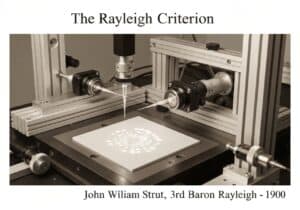
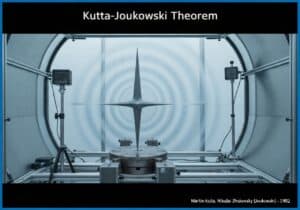
The equivalence principle exists in several versions. The weak equivalence principle states that the trajectory of a point mass in a gravitational field depends only on its initial position and velocity, not on its composition. This is the modern version of Galileo’s observation that all objects fall at the same rate. The Einstein equivalence principle extends this, stating that the outcome of any local non-gravitational experiment in a freely falling reference frame is independent of the velocity and location of the frame in spacetime. Finally, the strong equivalence principle includes gravitational experiments themselves, positing that the gravitational motion of a small test body depends only on its initial position and velocity, not its constitution.

This principle was Einstein’s crucial insight that bridged special and general relativity. It allowed him to generalize the principle of relativity to include accelerating reference frames, which he then equated with gravitational fields. The famous thought experiment of an observer in an elevator illustrates this: if the elevator is accelerating upwards in empty space, the observer feels a downward force identical to gravity. Conversely, if the elevator is in free-fall, everything inside is weightless. This equivalence implies that gravity is not a force propagating through space, but a manifestation of the curvature of spacetime. The paths objects follow under gravity are not due to a force but are the straightest possible paths (geodesics) through a curved spacetime, a radical departure from the Newtonian concept.

UNESCO Nomenclature: 2211
– Relativity

يكتب

نظام مجرد

خلل

Revolutionary

الاستخدام

استخدام واسع النطاق

مقدمات

  • Galileo’s experiments on falling bodies
  • قانون نيوتن لـ universal gravitation (والمساواة الضمنية بين الكتلة العطالية والكتلة الجاذبية)
  • النسبية الخاصة

التطبيقات

  • الأساس للتفسير الهندسي للجاذبية
  • يدعم نظرية النسبية العامة بأكملها
  • يُبلغ عن تصميم أنظمة الملاحة بالقصور الذاتي
  • تستخدم في تدريب رواد الفضاء على انعدام الوزن

براءات الاختراع:

NA

أفكار ابتكارية محتملة

  • مواد حجب الجاذبية تعتمد على التلاعب بالزمان والمكان الموضعي
  • أجهزة الطرد المركزي التدريبية عالية الجاذبية التي تحاكي الجاذبية الكوكبية تمامًا
  • أنظمة الدفع المضادة للجاذبية من خلال إنشاء حقول تسارع موضعية
  • مخمدات القصور الذاتي للمركبات الفضائية عالية السرعة
  • اختبارات المبدأ باستخدام أجسام كمية لاستكشاف الجاذبية الكمية
  • تطوير أجهزة قياس التسارع فائقة الدقة للمسح الجيولوجي
  • أنظمة الملاحة بالقصور الذاتي المتقدمة للمسبارات الفضائية العميقة
  • creating artificial gravity on spacecraft without rotation
Related to: equivalence principle, general relativity, gravity, acceleration, spacetime, inertial mass, gravitational mass, free-fall.

السياق التاريخي

مبدأ التكافؤ

1900
1902
1902
1907
1909
1910
1911-04-08
1900
1900-12-14
1902
1904
1907
1909
1910
1912

(إذا كان التاريخ غير معروف أو غير ذي صلة، على سبيل المثال "ميكانيكا الموائع"، يتم توفير تقدير تقريبي لظهوره الملحوظ)

أحدث الإضافات

أهم المنشورات والمقالات

أفضل الأدوات الأصلية

السنة العاشرة عيد

الصور والتنزيلات بالحجم الكامل متاحة فقط، ومجانية تمامًا، للأعضاء المسجلين.