Product Design, Manufacturing & Innovation Resources
بيت » عامل الفصل (ألفا)

عامل الفصل (ألفا)

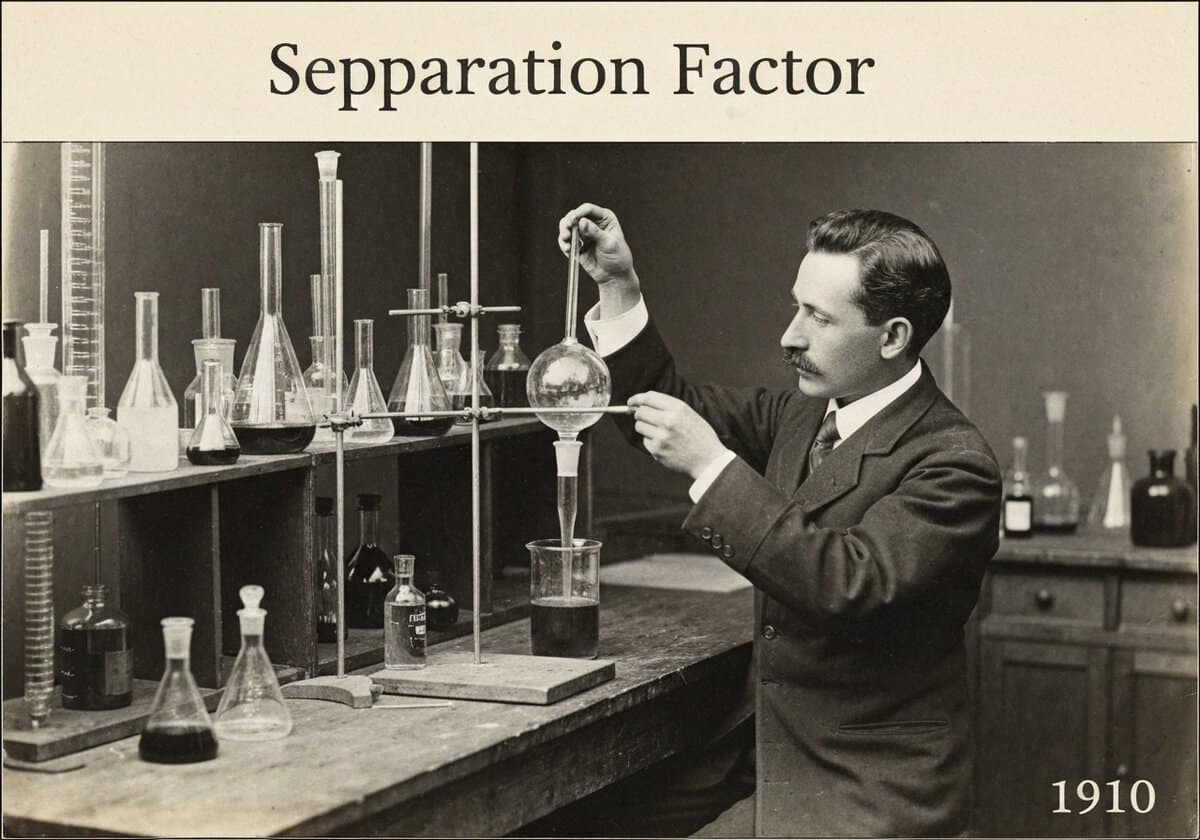
1910
Chemical engineer performing separation processes in a vintage laboratory.

(صورة توضيحية فقط)

The separation factor, α (alpha), quantifies the selectivity of an extraction system for two different solutes, A and B. It is defined as the ratio of their individual distribution ratios, [latex]\alpha_{A,B} = \frac{D_A}{D_B}[/latex]. For a separation to be effective, α يجب be significantly different from unity. A larger α value implies an easier and more efficient separation.


The separation factor is a dimensionless quantity that provides a direct measure of the theoretical possibility of separating two components using a specific liquid-liquid extraction system. While the نسبة التوزيع يشير (D) إلى مدى كفاءة استخلاص مذاب واحد، بينما يقارن عامل الفصل (α) سلوك استخلاص مذابين. اصطلاحًا، يُحسب α عادةً باستخدام نسبة التوزيع الأكبر في البسط، مما يضمن أن α ≥ 1. إذا كان α = 1، فإن المذابين يُستخلصان بكفاءة متساوية، ولا يمكن فصلهما باستخدام نظام المذيب هذا، بغض النظر عن عدد مراحل الاستخلاص المستخدمة.

The magnitude of α dictates the complexity of the required separation process. A very high α value (e.g., >100) means the solutes can be separated easily, often in a single extraction stage. A low α value (e.g., <2) indicates that the solutes have very similar affinities for the solvent, requiring a more complex and energy-intensive process, such as a multi-stage counter-current extraction cascade, to achieve high purity. The goal in developing a new LLE process is often to find a solvent or a complexing agent (an ‘extractant’) that maximizes the separation factor for the desired components. This involves tuning parameters like solvent type, pH, temperature, and the concentration of additives to selectively enhance the distribution ratio of one component over the other.

UNESCO Nomenclature: 3305
– Chemical engineering

يكتب

Performance Metric

خلل

Incremental

الاستخدام

استخدام واسع النطاق

مقدمات

  • مفهوم نسبة التوزيع (د)
  • مبادئ التقطير التجزيئي ومفهوم التقلب النسبي
  • نظرية الكروماتوغرافيا وعوامل الاحتفاظ
  • التطورات في كيمياء التنسيق لتصميم الربيطة الانتقائية

التطبيقات

  • فصل المواد المتشابهة كيميائيا العناصر الأرضية النادرة عناصر
  • تنقية الأيزومرات في صناعة الأدوية
  • تجزئة النظائر، كما هو الحال في التطبيقات النووية
  • تصميم عمليات استعادة المعادن الانتقائية في علم المعادن الهيدرولوجي
  • تطوير الأساليب التحليلية لفصل المخاليط المعقدة

براءات الاختراع:

NA

أفكار ابتكارية محتملة

  • الفحص الحسابي للمذيبات لتعظيم α لأزواج مذابات محددة
  • development of ‘molecularly imprinted’ solvents with tailored cavities for ultra-high selectivity
  • أنظمة LLE الديناميكية حيث يتم تعديل α في الوقت الفعلي باستخدام المجالات الخارجية
  • استخدام التعلم الآلي للتنبؤ بـ α من الهياكل الجزيئية للمذابات والمذيبات
  • تصميم مستخلصات ثنائية الوظيفة تعمل على ربط أيونين معدنيين مختلفين في وقت واحد لتحقيق فصل معقد
  • أنظمة LLE لفصل الجسيمات البلاستيكية الدقيقة بناءً على نوع البوليمر
  • الاستخلاص عالي الانتقائية للبروتينات القيمة من المرق البيولوجي المعقد
  • تطوير السوائل الأيونية الكيرالية لتحقيق ألفا عالية لفصل المتماثلات الفراغية
  • استخدام nanoparticles as extractants with tunable surface chemistry to control α
  • separation of different isotopologues for applications in التصوير الطبي and research
Related to: separation factor, selectivity, liquid-liquid extraction, distribution ratio, counter-current extraction, hydrometallurgy, rare earth elements, process design, chemical engineering, alpha value.

السياق التاريخي

عامل الفصل (ألفا)

1903-05-10
1910
1910
1910
1910
1920
1920
1903
1906
1910
1910
1910
1920
1920
1920

(إذا كان التاريخ غير معروف أو غير ذي صلة، على سبيل المثال "ميكانيكا الموائع"، يتم توفير تقدير تقريبي لظهوره الملحوظ)

أحدث الإضافات

أهم المنشورات والمقالات

أفضل الأدوات الأصلية

السنة العاشرة عيد

الصور والتنزيلات بالحجم الكامل متاحة فقط، ومجانية تمامًا، للأعضاء المسجلين.