Product Design, Manufacturing & Innovation Resources
بيت » طرق المحرك

طرق المحرك

1920
  • Harry Ricardo
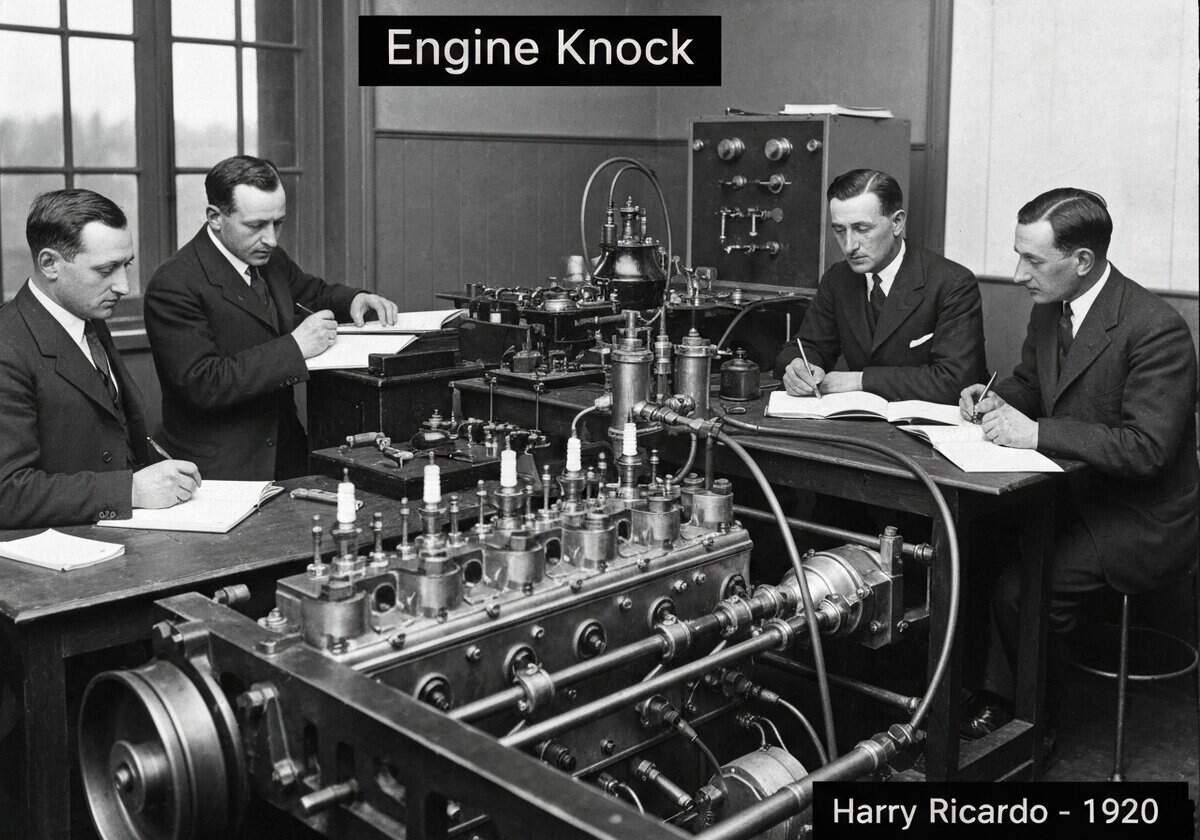
Otto cycle engine analysis in a 1920s automotive laboratory, focusing on combustion efficiency.

(صورة توضيحية فقط)

Engine knock, or detonation, is a major constraint on the thermal efficiency of an Otto cycle engine. While higher compression ratios increase efficiency, they also raise the temperature and ضغط of the air-fuel mixture during compression. This can cause the mixture to auto-ignite prematurely, creating a shockwave that produces a ‘knocking’ sound and can damage the engine.

Engine knock occurs when a portion of the unburned air-fuel mixture (the end gas) ahead of the propagating flame front from the spark plug spontaneously ignites. This auto-ignition is caused by the end gas being compressed and heated beyond its auto-ignition temperature by both the piston’s compression stroke and the advancing flame front. The resulting combustion is extremely rapid and uncontrolled, creating a pressure wave that travels through the cylinder at supersonic speeds. This shockwave collides with the cylinder walls and piston crown, causing the characteristic metallic pinging or knocking sound.

The consequences of severe or prolonged engine knock are significant. The intense pressure spikes can lead to mechanical failure, including cracked pistons, broken piston rings, and damaged cylinder heads. The extreme temperatures can also cause pitting and erosion of metal surfaces. To prevent knock, several strategies are employed. The most fundamental is limiting the engine’s compression ratio to a level suitable for the available fuel. Fuel quality, measured by its octane rating, indicates its resistance to auto-ignition. Higher octane fuels allow for higher compression ratios. Modern engines use sophisticated electronic control systems with knock sensors (essentially microphones tuned to the frequency of knock) that detect the onset of detonation and instruct the engine control unit (ECU) to retard ignition timing, which reduces cylinder pressure and stops the knock.

UNESCO Nomenclature: 3305
– Chemical engineering

يكتب

Physical Phenomenon

خلل

Incremental

الاستخدام

استخدام واسع النطاق

مقدمات

  • development of high-compression Otto cycle engines
  • مراقبة أوضاع فشل المحرك
  • فهم أساسي للحركية الكيميائية ودرجات حرارة الاشتعال الذاتي
  • أجهزة قادرة على قياس الضغط داخل الأسطوانة

التطبيقات

  • تطوير الوقود عالي الأوكتان
  • استخدام عوامل مضادة للطرق مثل رباعي إيثيل الرصاص (سابقًا) والإيثانول (حاليًا)
  • وحدات التحكم في المحرك (ECUS) مع أجهزة استشعار الطرق
  • تصميم أشكال غرف الاحتراق لمنع النقاط الساخنة
  • الشحن التوربيني والشحن الفائق مع التبريد الداخلي

براءات الاختراع:

NA

أفكار ابتكارية محتملة

  • تحليل كيميائي للوقود في الوقت الفعلي لضبط معلمات المحرك بشكل ديناميكي
  • كشف الطرق التنبؤي بالذكاء الاصطناعي استنادًا إلى اندماج المستشعرات (الصوت والضغط ودرجة الحرارة)
  • أنظمة الإشعال المعتمدة على الليزر للتحكم في موقع وتوقيت الاحتراق بدقة أكبر
  • طلاءات مكبس متقدمة تعمل على تثبيط تفاعلات الاشتعال المسبق تحفيزيًا
  • أنظمة حقن المياه للمحركات عالية الأداء لتبريد شحنة السحب
  • محركات ذات نسبة ضغط متغيرة يتم تعديلها ميكانيكيًا لتحسين القوة والكفاءة دون طرق
  • تصميمات غرف الاحتراق باستخدام الذكاء الاصطناعي التوليدي لتقليل جيوب الغازات النهائية
  • محركات hcci التي تستفيد من الاشتعال التلقائي المتحكم فيه بدلاً من محاربته
  • تطوير الوقود الحيوي المقاوم للصدمات من المواد الخام الجديدة
  • أجهزة استشعار بصرية داخل الأسطوانة لمراقبة انتشار اللهب بشكل مباشر واكتشاف مقدمات الطرق
Related to: engine knock, detonation, compression ratio, octane rating, auto-ignition, spark-ignition engine, pre-ignition, harry ricardo, anti-knock agent, engine damage.

السياق التاريخي

طرق المحرك

1910
1920
1920
1920
1922
1924
1927
1910
1910
1920
1920
1920
1922
1925-01-01
1930

(إذا كان التاريخ غير معروف أو غير ذي صلة، على سبيل المثال "ميكانيكا الموائع"، يتم توفير تقدير تقريبي لظهوره الملحوظ)

أحدث الإضافات

أهم المنشورات والمقالات

أفضل الأدوات الأصلية

السنة العاشرة عيد

الصور والتنزيلات بالحجم الكامل متاحة فقط، ومجانية تمامًا، للأعضاء المسجلين.