Product Design, Manufacturing & Innovation Resources
بيت » Top-Down Nanomaterial Synthesis

Top-Down Nanomaterial Synthesis

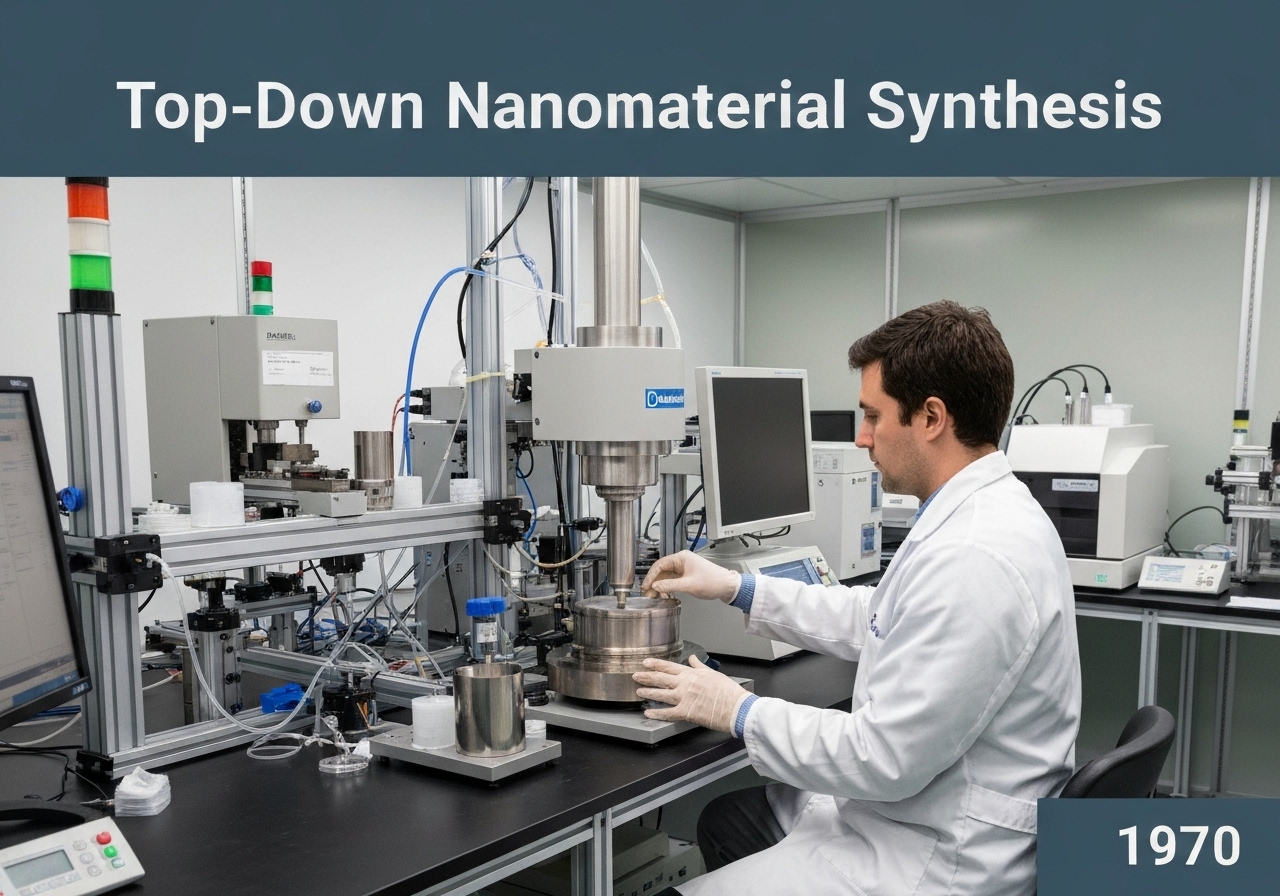
1970
باحث يقوم بتشغيل مطحنة كروية لتصنيع المواد النانوية من الأعلى إلى الأسفل في غرفة نظيفة.

(صورة تم إنشاؤها للتوضيح فقط)

Top-down synthesis involves creating nanomaterials by starting with a larger, bulk material and breaking it down or patterning it to the nanoscale. Key techniques include mechanical methods like ball milling and lithographic methods like photolithography, electron-beam lithography, and nanoimprint lithography. These methods are often used for creating structured surfaces and integrated circuits, but can suffer from surface imperfections.

Top-down approaches are conceptually straightforward: they are an extension of traditional microfabrication techniques to smaller dimensions. The most prominent example is lithography, the cornerstone of the semiconductor industry. In photolithography, a light-sensitive polymer (photoresist) is coated onto a substrate. A mask is used to selectively expose the resist to UV light, causing a chemical change that allows for the selective removal of either the exposed or unexposed regions. The underlying material can then be etched or deposited upon, transferring the pattern from the mask to the substrate. To achieve nanoscale features, shorter wavelength light sources (e.g., extreme ultraviolet, EUV) or alternative patterning sources like electron beams (e-beam lithography) are used. E-beam lithography offers very high resolution but is a slow, serial process, making it unsuitable for mass production but excellent for prototyping and mask making.

Another major class of top-down methods is mechanical attrition. High-energy ball milling, for instance, places a bulk material in a container with hard grinding media (balls). The container is rotated at high speed, causing the balls to collide with and fracture the material, progressively reducing its particle size down to the nanometer scale. This method is simple and scalable for producing large quantities of nanopowders but offers poor control over particle shape and size distribution, and can introduce impurities from the milling media.

وتتمثل الميزة الأساسية للطرق من أعلى إلى أسفل، وخاصة الطباعة الحجرية، في القدرة على إنشاء هياكل مرتبة ومعقدة بدقة على مساحات كبيرة، وهو أمر ضروري للدوائر المتكاملة. ومع ذلك، هناك عيب كبير يتمثل في إدخال التلف البلوري والعيوب السطحية أثناء عملية الحفر أو الطحن، مما قد يؤثر سلبًا على خصائص المادة.

UNESCO Nomenclature: 2211
- فيزياء الحالة الصلبة

يكتب

العملية الكيميائية

الاضطراب

تزايدي

الاستخدام

الاستخدام الواسع النطاق

السلائف

  • invention of the printing press and early lithographic printing
  • development of photography and photosensitive chemicals
  • the invention of the transistor and the subsequent drive for miniaturization in electronics
  • advances in vacuum technology and plasma physics for etching processes

التطبيقات

  • manufacturing of computer microprocessors and memory chips
  • fabrication of microelectromechanical systems (mems)
  • creation of patterned surfaces for biomedical applications
  • production of nanopowders for ceramics and composites
  • fabrication of molds for nanoimprint lithography

براءات الاختراع:

NA

أفكار ابتكارات محتملة

بسبب عمليات جمع البيانات من خلال برامج الروبوت، والتي تتجاوز حاليًا 40 ألفًا يوميًا، فإن هذا المحتوى مخصص لأعضاء المجتمع فقط.
> تسجيل الدخول < أو > سجل < (مجاني 100٪) للوصول إلى هذا، وكذلك جميع المحتويات والأدوات الأخرى المقيدة.

ذات صلة ب: التوليف من أعلى إلى أسفل، والطباعة الحجرية، والطباعة الحجرية الضوئية، والطباعة الحجرية بالحزمة الإلكترونية، والطحن بالكرات، والتصنيع الدقيق، وأشباه الموصلات، والحفر، والطباعة النانوية، والطباعة النانوية، والميمز.

السياق التاريخي

Top-Down Nanomaterial Synthesis

1962
1963
1965
1970
1970
1974-11-15
1980
1962
1963
1964
1968
1970
1970
1975
1980

(إذا كان التاريخ غير معروف أو غير ذي صلة، على سبيل المثال "ميكانيكا الموائع"، يتم توفير تقدير تقريبي لظهوره الملحوظ)

الصور بالحجم الكامل والتنزيلات متاحة فقط 100% مجاناً للأعضاء المسجلين.