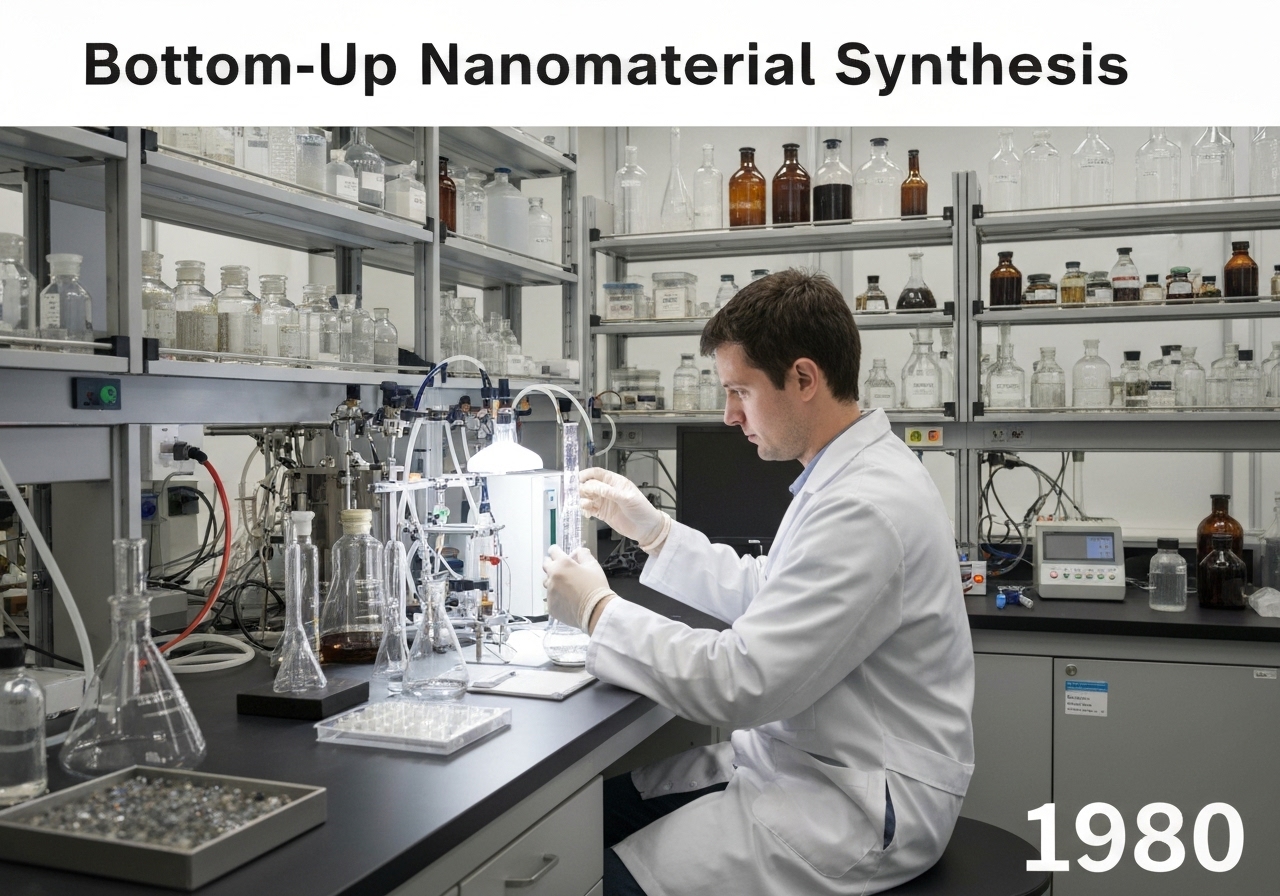
Bottom-up synthesis represents a paradigm of building with atomic precision, often mimicking natural processes like crystal growth. These methods offer significant advantages over top-down approaches, primarily in their ability to produce nanomaterials with fewer defects, more homogeneous chemical compositions, and well-defined, narrow size distributions.
Chemical Vapor Deposition (CVD) is a versatile technique where a substrate is exposed to one or more volatile precursors, which react or decompose on the substrate surface to produce the desired deposit. For example, graphene is commonly grown by flowing a hydrocarbon gas (like methane) over a copper foil at high temperatures. The methane decomposes, and carbon atoms arrange themselves into the hexagonal lattice of graphene on the copper surface. This method is scalable and produces high-quality films.
التخليق الهلامي المذاب هو تقنية كيميائية رطبة تستخدم لإنتاج مواد صلبة من جزيئات صغيرة. وتنطوي العملية على تحويل السلائف (عادةً ألكوكسيدات الفلزات أو كلوريدات الفلزات) إلى محلول غرواني ("سول") ثم إلى شبكة متكاملة ("هلام") من جزيئات منفصلة أو بوليمرات متصلة. وبعد التجفيف والمعالجة الحرارية، يتم تحويل الهلام إلى سيراميك أو زجاج كثيف. هذه الطريقة منخفضة التكلفة وتسمح بتكوين مواد مسامية للغاية وجسيمات نانوية معقدة من الأكسيد في درجات حرارة منخفضة.
Colloidal synthesis, particularly important for quantum dots, involves the nucleation and growth of nanoparticles in a liquid solution. By carefully controlling parameters like temperature, precursor concentration, and the presence of stabilizing ligands (surfactants), chemists can precisely tune the final size, shape, and crystal structure of the nanoparticles. The ligands cap the particle surface, preventing aggregation and allowing the particles to be dispersed in various solvents.
ذات صلة ب: التوليف من أسفل إلى أعلى، التجميع الذاتي، ترسيب البخار الكيميائي، cvd، سول-جل، التوليف الغرواني، الحزمة الجزيئية الفوقية، mbe، النانو كيمياء النانو.