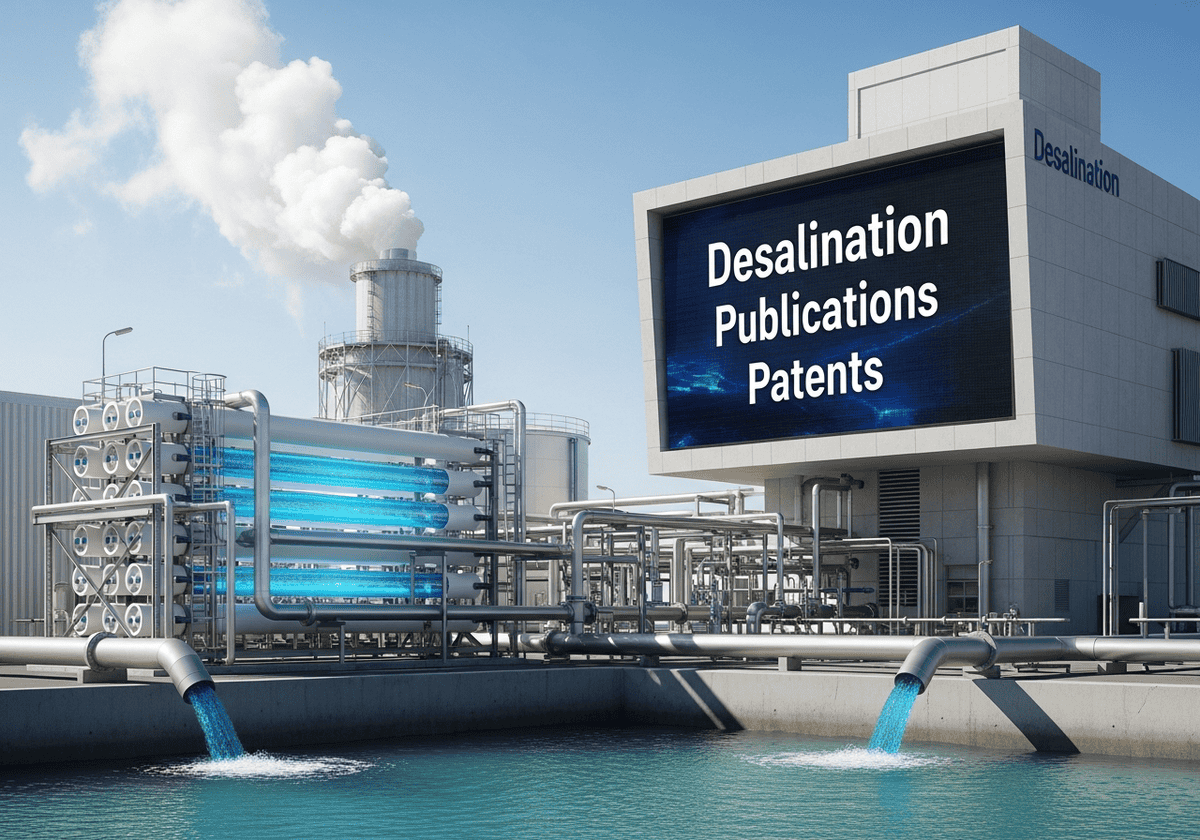
تحلية المياه هي تخصص صناعي وهندسي لإزالة الأملاح والمعادن المذابة من مياه البحر أو المياه الجوفية المالحة لإنتاج مياه عذبة صالحة للشرب أو الري، وهي الآن تزود أكثر من 100 مليون شخص في المناطق التي تعاني من نقص المياه في الشرق الأوسط وشمال إفريقيا وآسيا الساحلية، وبشكل متزايد في جنوب أوروبا والأمريكتين.
تهيمن تقنية التناضح العكسي (RO) على القدرة الإنتاجية الحالية، حيث تدفع المياه المالحة تحت ضغط عالٍ عبر أغشية البولي أميد المركبة ذات الطبقة الرقيقة، والتي لا تزال انتقائيتها ومقاومتها للتلوث ومعدلات رفض البورون فيها من المجالات البحثية النشطة في علوم المواد. أما العمليات الحرارية - مثل التقطير الومضي متعدد المراحل والتقطير متعدد التأثيرات - فتظل ذات أهمية حيثما تتوفر الحرارة المهدرة من توليد الطاقة كمصدر طاقة مجاني. ويُعدّ استهلاك الطاقة المحدد القيد الهندسي الرئيسي في هذا المجال: إذ تقترب محطات التناضح العكسي الحديثة المزودة بمبادلات الضغط لاستعادة الطاقة من الحد الأدنى الديناميكي الحراري لتحلية مياه البحر، مما يحوّل التنافس نحو طول عمر الأغشية، وتصميم المدخل، وإدارة مركزات المحلول الملحي، حيث تجذب سمية التصريف وتأثيرها على النظام البيئي البحري تدقيقًا تنظيميًا متزايدًا.
تستهدف بنى العمليات الناشئة - التناضح الأمامي، والتقطير الغشائي، وإزالة الأيونات السعوية، والأغشية القائمة على أكسيد الجرافين أو الأكوابورين - كيمياء مياه التغذية المتخصصة أو التكوينات التي تعمل بالطاقة المتجددة خارج الشبكة حيث تنهار اقتصاديات التناضح العكسي التقليدية.
تغطي المنشورات وبراءات الاختراع المفهرسة أدناه هذا الطيف الكامل، بدءًا من تركيب الأغشية وهندسة الوحدات النمطية مرورًا بالديناميكا الحرارية للنظام، واستغلال المحلول الملحي، وربط الطاقة المتجددة، وتقييمات المواقع الهيدروجيولوجية التي تحكم جدوى المحطة:
يحتاج الماء العذب من البحر إلى أغشية وطاقة وكيمياء متطورة. وتدور فيزياء الأغشية حول هذا الموضوع. الخاصية الأسموزيةوالمواد الماصة المسامية على الزيوليتتأتي الطاقة الموثوقة من لوحة شمسية أو مفاعلات معيارية صغيرةيتم تتبع الملوثات الخاضعة للتنظيم بموجب PFAS.
هذه أحدث مجموعة مختارة لدينا من المنشورات وبراءات الاختراع العالمية باللغة الإنجليزية حول تحلية المياه، من بين العديد من المجلات العلمية على الإنترنت، مصنفة ومركزة على التناضح العكسي، وتحلية المياه، وتحلية مياه البحر، وتحلية المياه قليلة الملوحة، وتلوث أغشية التناضح العكسي، والأغشية المركبة ذات الطبقة الرقيقة، وأجهزة استعادة طاقة التناضح العكسي، وتحلية المياه باستخدام مبادل الضغط، والتقطير الومضي متعدد المراحل، والتقطير متعدد التأثيرات، وتحلية المياه بالتحليل الكهربائي، والتناضح الأمامي، والتقطير الغشائي، وإزالة الأيونات السعوية، والتخلص من محلول التحلية الملحي، وإدارة مركزات المحلول الملحي، والتناضح العكسي الذي يعمل بالطاقة الشمسية، وتحلية المياه التي تعمل بطاقة الرياح، وتحلية المياه النووية، واستهلاك طاقة التحلية، واستهلاك الطاقة النوعي للتناضح العكسي، وأغشية التناضح العكسي التي ترفض البورون، ومعدل استعادة نفاذية التناضح العكسي.
Water purification apparatus and flushing method for water purification apparatus
Patent published on the 2026-11-19 in WO under Ref WO2026238134 by QINGDAO HAIER STRAUSS WATER CO LTD [CN] (Zhang Penghui [cn], Liu Jie [cn], Tan Jun [cn], Sheng Xunning [cn])
Abstract: A water purification apparatus and a flushing method for the water purification apparatus. The water purification apparatus comprises a filter assembly, a pressure tank, and a flushing water path assembly. The filter assembly comprises a reverse osmosis membrane element and a filtrate outlet. The pressure tank is configured to store pure water. The flushing water path assembly comprises a water flow channel and a flushing flow channel, wherein the water flow channel is capable of communicating t[...]
Our summary: The water purification apparatus includes a filter assembly with a reverse osmosis membrane and a pressure tank for storing pure water. It features a flushing water path assembly that allows for selective communication between the filtrate outlet and the reverse osmosis membrane. The flushing method enhances the cleaning of the membrane element to maintain efficiency.
water purification, reverse osmosis, flushing method, pressure tank
Patent
Lithium recovery from rechargeable batteries
Patent published on the 2026-11-19 in WO under Ref WO2026241702 by LIEN LARRY [US] (Lien Larry [us])
Abstract: Methods of recovering lithium from a lithium containing material, such as a lithium battery, using water leaching to recover lithium hydroxide in an alkaline solution, concentrating the lithium hydroxide using one or more of a semipermeable membrane, an optional ion-exchange membrane, and/or a reverse osmosis membrane to form a concentrated lithium solution, and then exposing the concentrated lithium solution to carbon dioxide to form lithium carbonate.[...]
Our summary: This process involves recovering lithium from batteries using water leaching to extract lithium hydroxide. The lithium hydroxide is concentrated through membrane techniques, including semipermeable and reverse osmosis membranes. Finally, carbon dioxide is introduced to convert the concentrated lithium solution into lithium carbonate.
Lithium recovery, water leaching, membrane filtration, lithium carbonate
Patent
Purification of evaporator condensate
Patent published on the 2026-11-19 in US under Ref US20260365555 by LUCASE3 L C [US] (Lucas Scott A [us])
Abstract: Systems, methods, and devices for purifying evaporator condensate from one or more evaporators, such as evaporators of an ethanol distillation process. The evaporator condensate is fed to one or more separators to remove at least a portion of contaminants from the evaporator condensate. The one or more separators include at least one reverse osmosis system for removing at least a portion of the contaminants from the evaporator condensate to form a clean water stream. The clean water stream is th[...]
Our summary: Systems and methods are designed to purify evaporator condensate from ethanol distillation processes. Contaminants are removed using separators, including reverse osmosis systems. The resulting clean water stream is recycled for use in the distillation process.
evaporator condensate, purification, reverse osmosis, ethanol distillation
Patent
Gravity motor
Patent published on the 2026-11-19 in WO under Ref WO2026240710 by JMAI KAIES [TN] (Jmai Kaies [tn])
Abstract: The application relates to a gravity motor which is easy to manufacture industrially or in terms of cost and transforms the available sustainable energy coming from the Earth s gravity into consistent and continuous kinetic energy of rotation via the effect of the pressure and counter-pressure caused by the rotating weights, resulting from a function of injection on one side and suction on the other side causing a displacement of the liquid, providing a difference in weight between the two sides[...]
Our summary: The gravity motor converts Earth s gravity into continuous rotational kinetic energy using pressure differences. It is cost-effective, sustainable, and environmentally friendly, producing no waste or pollution. Potential applications include powering electric generators, illuminating cities, and desalinating seawater.
gravity motor, sustainable energy, kinetic energy, environmental impact
Patent
Membrane separation system and method for operating same
Patent published on the 2026-11-19 in WO under Ref WO2026239714 by KURITA WATER IND LTD [JP] (Kawakatsu Takahiro [jp], Gotou Hideki [jp])
Abstract: The disclosure provides a membrane separation system comprising: a membrane separation device having a nanofiltration membrane or a reverse osmosis membrane; and a pressure recovery device for pressurizing raw water to be supplied to the membrane separation device by means of pressure from concentrated water from the membrane separation device, said system being characterized in that, on the basis of the following formula, the quantity of concentrated water received by the pressure recovery devi[...]
Our summary: The membrane separation system includes a nanofiltration or reverse osmosis membrane and a pressure recovery device. The system operates by pressurizing raw water using concentrated water from the membrane device. The quantity of concentrated water received is determined by a specific formula based on operating pressure and recovery efficiency.
membrane separation, nanofiltration, reverse osmosis, pressure recovery
Patent
Subsea desalination systems and methods using fluid displacement
Patent published on the 2026-11-19 in US under Ref US20260365550 by INNOVATOR ENERGY LLC [US] (Novek Ethan [us])
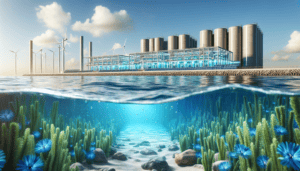
Abstract: The present application pertains to systems and methods for desalination. In one embodiment the system employs a first storage reservoir configured to be near the surface of a body of water and configured to store a low density fluid. A second storage reservoir is configured to be located below the surface of the body of water. A desalination system is operably connected to the second reservoir. Desalinated water is produced by allowing desalination permeate to displace low density fluid in the [...]
Our summary: The system utilizes a first storage reservoir near the surface and a second reservoir below water. Desalination occurs by displacing low density fluid in the second reservoir. Desalinated water is exported by transferring fluid between the reservoirs.
Desalination, Subsea systems, Fluid displacement, Reservoirs
Patent
Carbon dioxide emissions elimination for reverse osmosis desalination units of remote islands via photovoltaic and battery solution. The case of Karpathos Island
Published on 2026-06-06 by @OXFORD
Abstract: AbstractRecently, the imperative water demand problem of small islands in the South-East Mediterranean area is being faced with the development and operation of new reverse osmosis (RO) desalination plants at high operational and environmental cost. One of the most serious RO desalination unit’s problems is their high-energy demand. This water demand coincides with the electricity demand, both peaked during the summer imposing the existing local electrical power stations to operate near their [...]
Our summary: This study explores the integration of photovoltaic systems and battery storage to power reverse osmosis desalination units on Karpathos Island. It addresses high energy demands and carbon emissions associated with traditional diesel power. The proposed solution aims to enhance clean energy autonomy while minimizing operational costs and environmental impact.
photovoltaic, desalination, carbon emissions, battery storage
Publication
PSS composite sponge for solar-driven water purification and dye removal for environmental sustainability
Published on 2026-05-21 by Chung-Wei Huang, Wei-Cheng Jhao, Yu-Jen Liang, Meng-Fang Lin, Yu-Sheng Hsiao @NATURE
Abstract: Polymer Journal, Published online: 21 May 2026; doi:10.1038/s41428-026-01188-zA 3D macroporous MWCNT/PEDOT: PSS composite sponge, fabricated via freeze-drying, enables efficient solar-driven interfacial water evaporation (SIWE) through optimized light absorption, wettability, and water transport. The engineered porous architecture enhances solar–thermal management while facilitating rapid water uptake. Simultaneously, the sponge exhibits high adsorption capacities for organic dyes and strong a[...]
Our summary: A 3D macroporous MWCNT/PEDOT: PSS composite sponge enables efficient solar-driven interfacial water evaporation. It enhances solar–thermal management and facilitates rapid water uptake. The sponge also demonstrates high dye adsorption capacities and strong antifouling properties for sustainable water purification.
PSS, composite sponge, solar-driven purification, environmental sustainability
Publication