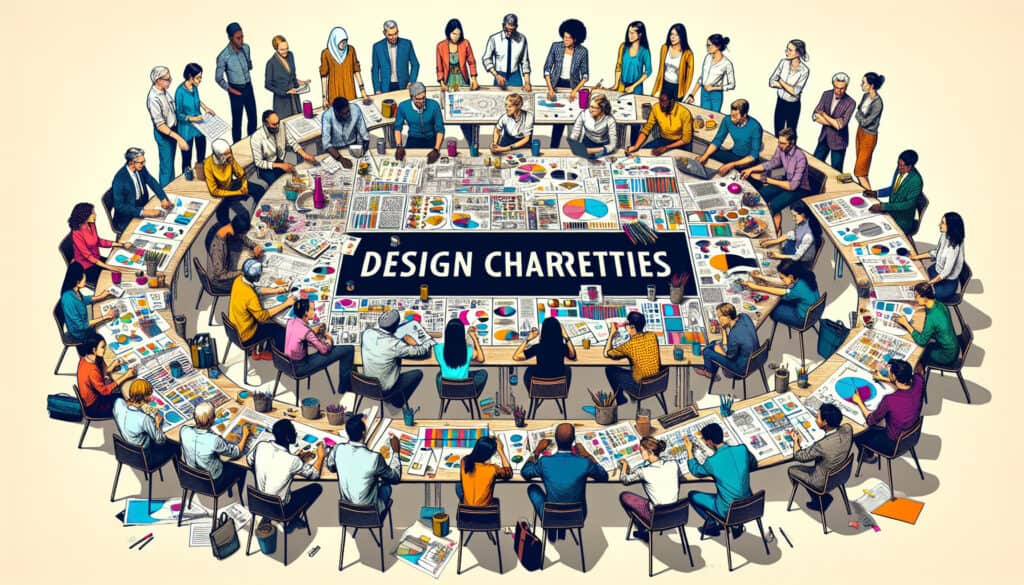
Design charrettes are frequently utilized in urban planning, architecture, and product development, bringing together diverse stakeholders such as designers, engineers, clients, and users throughout the different phases of a project, particularly during ideation and concept refinement. These intensive workshops often occur early in the design process, allowing rapid ideation and synthesis of varied perspectives that can enrich the final product. For example, in the context of urban redevelopment, a charrette may include local residents, planners, and environmental experts to collaboratively envision community spaces that meet ecological, social, and economic needs. This methodology provides a structured yet flexible format for brainstorming solutions, often utilizing sketching and visual tools to communicate ideas swiftly, which can lead to breakthrough innovations that might not arise in standard meetings. The participatory nature encourages engagement and can significantly reduce the time spent on revisions and misunderstandings later in the project by aligning different viewpoints early on. Organizations like the American Institute of Architects promote this approach for its ability to cultivate community involvement and garner a sense of shared investment in the outcomes, creating a platform where everyone can contribute, thus leading to a more user-centered design solution. Each session typically culminates in a tangible output or preliminary design direction that serves as a reference point for subsequent phases of development, reinforcing the commitment to collaboration and shared ownership among all participants, which is crucial for successful outcomes in interdisciplinary projects.