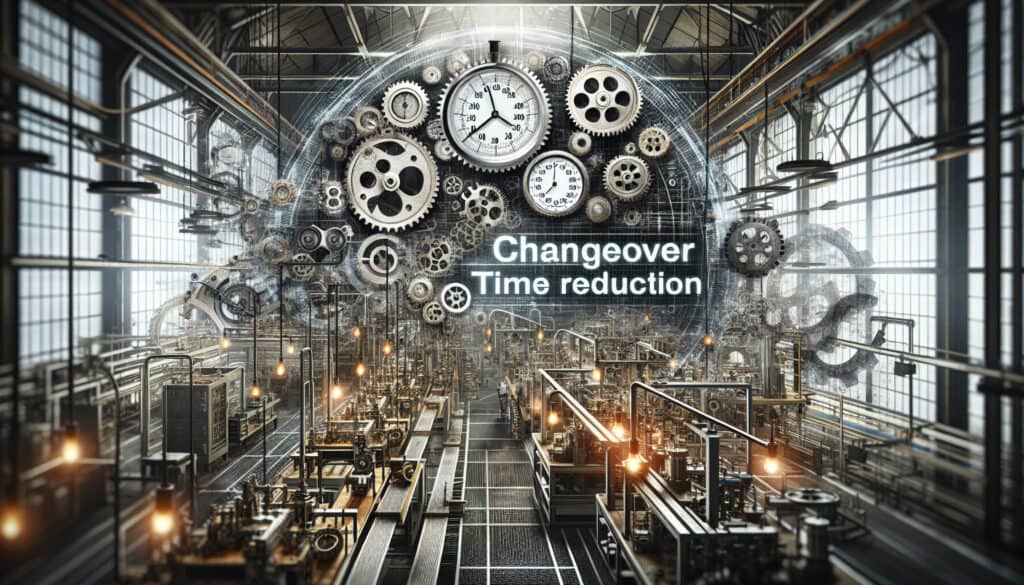
Often using the SMED (Single-Minute Exchange of Die) methodology, this involves analyzing the entire changeover process to identify and streamline steps, converting internal (machine-off) tasks to external (machine-on) tasks.
优点
提高生产灵活性和产能,缩短制造周期,允许更小的批量和更少的库存。
缺点
分析和实施需要大量的时间和精力,可能需要投资新的工具或设备,并且需要操作人员的积极参与和培训。
类别
工程, 精益六西格玛, 制造业
最适合:
通过系统地减少生产线换线相关的停机时间,提高生产效率。
Changeover Time Reduction through the SMED methodology has found its application across various industries, including automotive, aerospace, food and beverage, and electronics manufacturing, where the need for rapid response to market demands and customization is pronounced. This methodology is particularly effective during the design and implementation phases of manufacturing processes, especially when a company introduces new products or variations. Typically, a cross-functional team involving engineers, operators, and production managers initiates the changeover time reduction initiative, ensuring that diverse perspectives are captured to identify inefficiencies in the process. In practice, this involves detailed mapping of each step in the changeover, allowing teams to distinguish between internal tasks that require the machine to be stopped and external tasks that can be executed while the machine operates. Sources of inefficiencies may emerge from unnecessary adjustments or waiting times, which can be systematically addressed. Industries employing this methodology often report an improvement in production cycle times, enabling them to optimize resource allocation and enhance operational resilience. As a result, businesses can achieve heightened competitiveness by promoting just-in-time production philosophies, leading to more responsive supply chains and improved customer satisfaction.
该方法的关键步骤
详细识别并绘制整个转换过程。
区分转换过程中涉及的内部任务和外部任务。
尽可能将内部任务转换为外部任务。
从转换过程中剔除非增值活动。
规范并记录修改后的换型流程。
对操作人员进行新换班流程的培训,以确保流程一致性。
实施新的切换流程并监控其运行情况。
不断寻求反馈,并对流程进行逐步改进。
专业提示
利用视频分析对每个转换步骤进行详细的时间研究,以识别非增值活动。
Collaborate with cross-functional teams, including operators and engineers, to develop standardized work procedures that maximize external setup tasks.