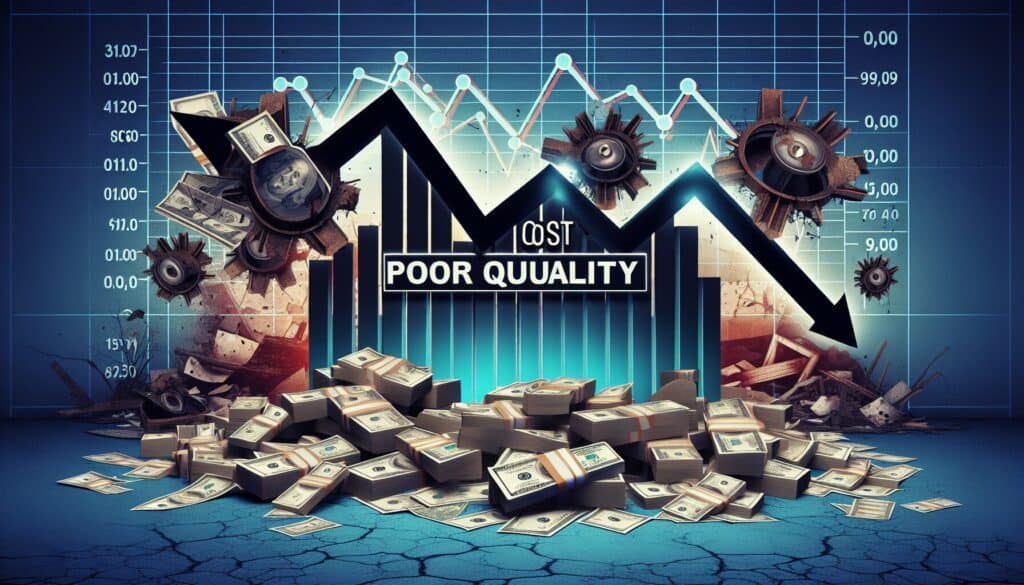
Highlights the financial benefits of quality improvement initiatives; Helps prioritize improvement projects; Provides a common language for discussing quality issues with management; Can lead to significant 成本节约.
Cost of Poor Quality (COPQ) is a method widely utilized across various sectors such as manufacturing, healthcare, software development, and service industries to systematically evaluate the costs associated with subpar quality. This methodology can be particularly effective during the early phases of product development, where teams are engaged in design and prototyping; by quantifying quality-related costs, stakeholders can make informed decisions about design modifications or resource allocation. For instance, in the automotive industry, COPQ can help manufacturers identify and reduce high rework rates or warranty claims, ultimately enhancing 产品可靠性 and customer satisfaction. Participants typically include cross-functional teams consisting of quality assurance, engineering, production, and finance professionals who collaborate to gather relevant data and analyze cost components. Implementation may require training personnel on gathering and interpreting quality metrics, thereby promoting a culture of continuous improvement. Organizations benefit financially by not only reducing the costs associated with defects but also improving process efficiency, which can lead to enhanced profitability and market competitiveness. Deploying COPQ in conjunction with other methodologies, such as 六西格玛 精益方法可通过提供量化数据,进一步强化质量改进举措。这些数据能凸显质量问题与质量提升对财务的影响,从而激励管理层并推动改进项目中的战略优先级设定。.