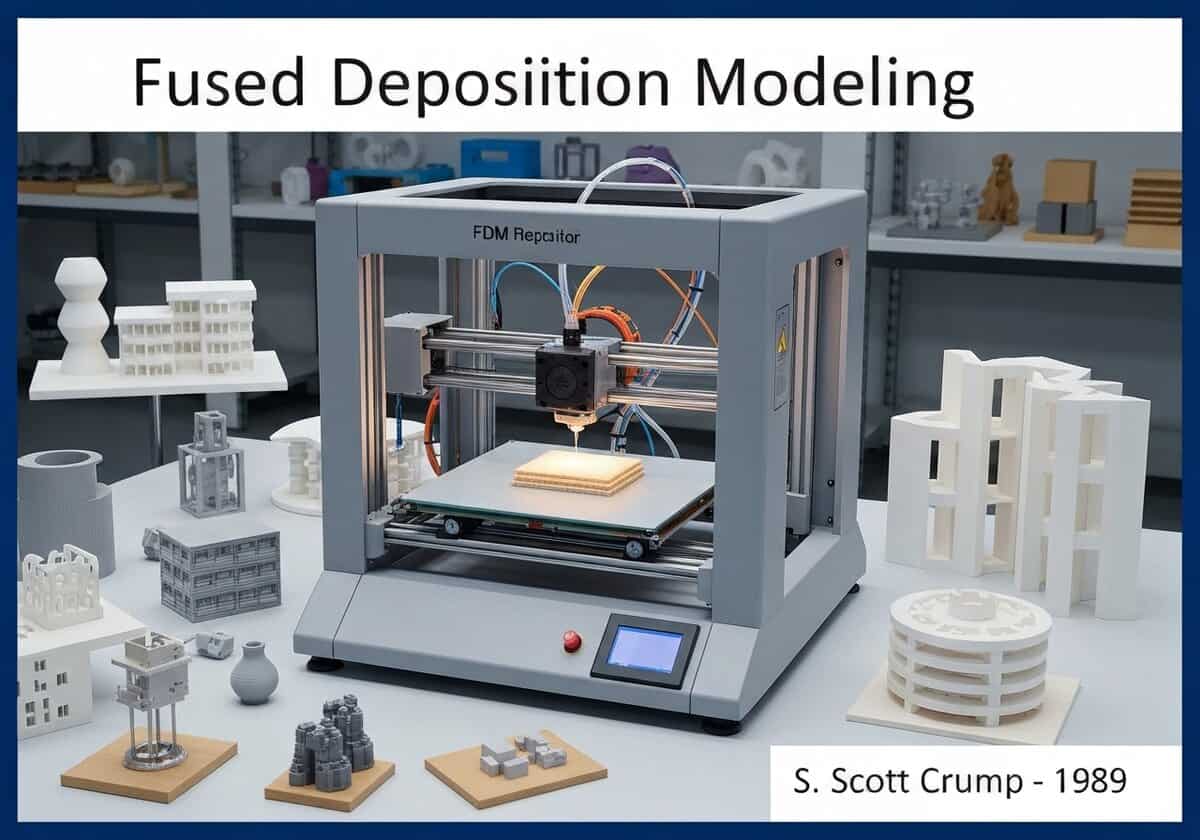
In an FDM printer, the motion of the extruder head and/or the build platform is controlled by a computer that interprets a sliced 3D model (G-code). The head moves in the X and Y axes, while the platform typically moves in the Z axis after each layer is complete. The process relies on precise thermal management: the ‘hot end’ of the extruder must keep the plastic at a temperature that allows it to flow but not degrade, while the deposited material must cool quickly enough to hold its shape. Layer adhesion is critical for part strength and is highly dependent on temperature, speed, and material properties. FDM parts are not fully dense; their internal structure is often a pre-defined infill pattern (e.g., grid, honeycomb) to save material and print time while providing structural support. Common materials include polylactic acid (PLA), acrylonitrile butadiene styrene (ABS), polyethylene terephthalate glycol (PETG), and various engineering-grade polymers. The expiration of the original FDM patent in 2009 was a catalyst for the open-source RepRap project and the subsequent explosion of affordable, consumer-grade 3D printers, making the technology widely accessible.