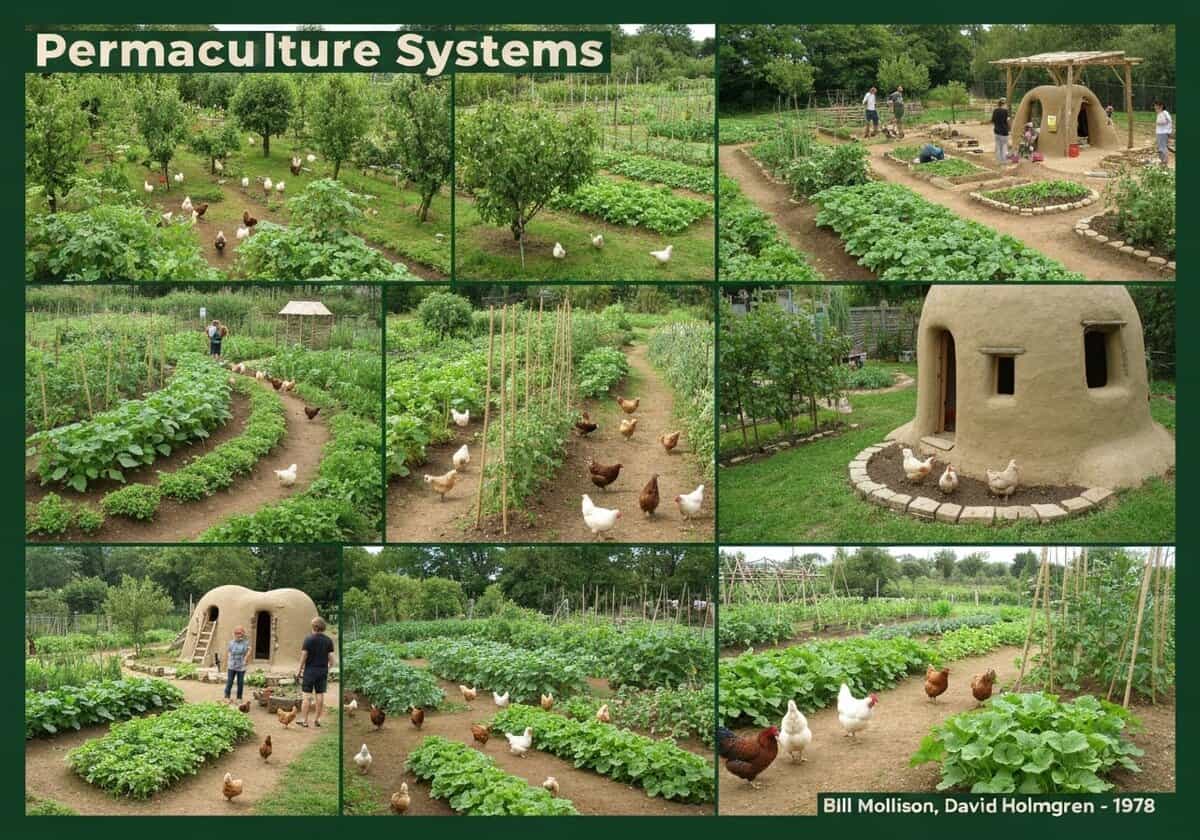
The system is guided by a set of ethics (Earth Care, People Care, Fair Share) and design principles. These principles, such as “Observe and Interact,” “Catch and Store Energy,” “Use and Value Diversity,” and “Produce No Waste,” serve as tools for thinking about and designing systems. A key concept is “stacking functions,” where a single element in a design serves multiple purposes. For example, a pond can provide irrigation water, support aquaculture, attract beneficial insects, and create a microclimate. Another core idea is “zoning,” which involves placing elements of the design based on how frequently they are used or need attention, minimizing energy expenditure. Permaculture seeks to create closed-loop systems where the outputs of one component become the inputs for another, mimicking the waste-free cycles of nature.
Related to: permaculture, Bill Mollison, David Holmgren, sustainable agriculture, agroecology, systems thinking, food forest, ecological design, regenerative agriculture, whole systems design.