当轻量化不仅仅是成本优化,而是产品发挥功能的主要标准时,你能让坦克飞起来吗?或者,如何才能进入良性循环,使轻量化框架能够容纳更小的部件? 发动机允许安装更小的电池,允许(…)。
Also a great example of using existing off-the-shelf cross-components to achieve very low consumer costs.
{snippet review|Hubsan|http://www.hubsan.com}
When it comes to a flying toy, every gram counts. And when the target is even to make that as cheap as possible, designers need to make smart use of off-the-shelf components.
设计
Already, the box is thought lean: 2 simple elastic bands to hold the product safely but easy to put or detach.
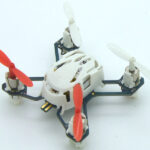
The main copter’s body
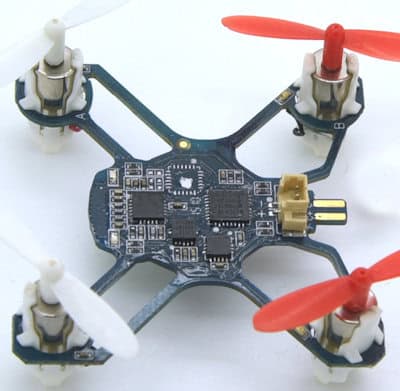
A very nice piece of product design.
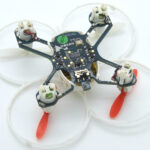
The main frame is achieved at the same time:
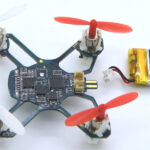
- the physical structure of the copter without any other assembly required. The CNC cut permits an advanced shape so as hollowing the 4 arms, reducing, even more, the weight
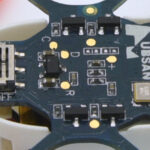
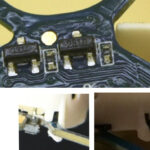
- the frame is the PCB itself! which permits all electronics components to be directly soldered on it, avoiding fixing a separate PCB; It permits also to route the two poles of the 4 motors directly on the 4 frame arms without the need for additional wires (except the ones directly on the motor -read the suggestion on that below-)
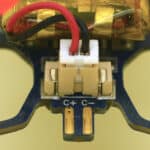
- one protrusion of the PCB it at the same time the power connector. To ensure a right +/- polarity connection, the 再见 is just a CMS resistor mounted on one side, thus avoiding user mistakes. This resistor is mounted as the other electronic components on the board.

The other genius idea is the choice of a standard micro-size motor used in the phone industry.
Specially made, these ones would cost a fortune, but as they are used as vibrator actuators in very high volumes, these of-the-shelve motors are not only very reliable but very low cost also.
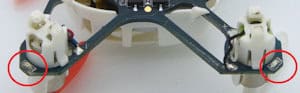
4 LEDs, 2 red & 2 blue, are placed at the extremities of the arm to help the pilot to distinguish the front from the back of the drone during flight, as the drone has an overall round shape. These LEDs are simply routed in parallel to the motor, thus avoiding additionally dedicated PCB routing.
The battery is just maintained in place with double face tape to the PCB and later surrounded by the main body cover.
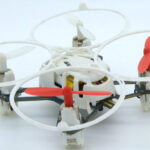
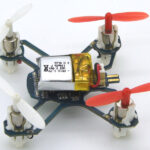
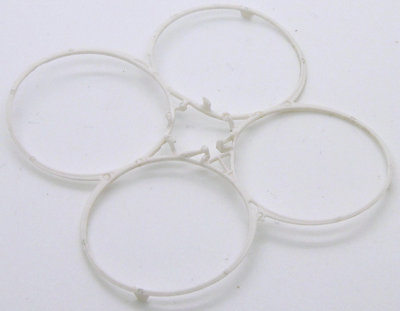
Blade protection Frame
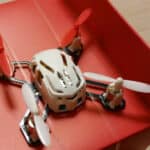
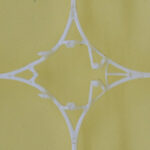
Made light and flexible, the frame is intended to protect the user’s fingers from the blades, and the blades from any shock against surroundings during the pilot learning phase.
This is the thinnest injected part of this product; 6 ejectors per circle are required to take the part out of the mold.
Motor cage
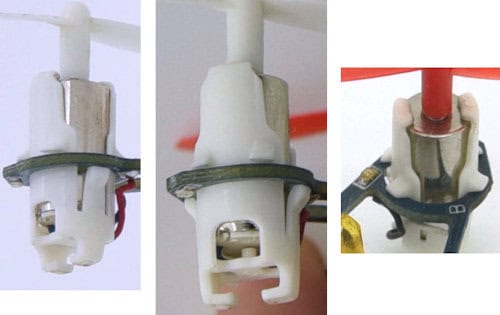
A piece of art in terms of design to achieve a 2 parts mold only (just follow the parting line!)
Cut-offs permit, within 15mm:
- the cage around the motor + 2 clips on the top, maintaining the motor after inserting
- 4 end-stops around the PCB + 2 clips
- a bottom pin, providing the motor both for venting passages and clearance for wires
- 2 “foots” on the bottom, acting as a landing supports (really necessary? Hypothesis: these were possibly to allow a different passage for the wires)
Main Body Cover
Very fine plastic injection, with hollowing design that achieves 4 goals:
- nice visual design, with technical shapes
- holding the battery & protecting the components both from the user’s fingers and from potential shock during (end of) flight
- space for venting the electronics components, including the battery
- permitting a 1-movement mold design
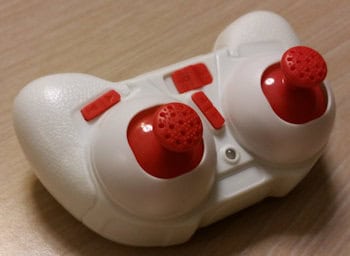
Remote control
Obviously less design & optimization effort on this one. Just does its jobs for such price level.
Purely functional and not intended to withstand chocs.
Its size is really the minimum to be held correctly by two adult hands.
The body is made out of 3 basic parts, including the battery cover. Functions include the 2 typical joysticks to be controlled by thumbs.
结论
Thumbs up! A great demonstration of smart components choice, value analyses to restrict everything to its minimum, and plastic design. Not counting a nice injection work for such thin deformable parts & frames.
Likely the design process has started with the available micro motor (see article on that) and the rest then being adapted around, ie overall frame size and then the choice of battery
All that permitting, to our knowledge, the smallest mass-produced drone toy, but still maintaining a cheap really affordable product.
Possible Improvements?
Compatible in that price range & toy market segment, we see only very minor ones:
- slightly shaping the PCB frame legs more even and directly to the body; an even further improvement could be to link the 4 arms by a circular path, making the drone more rigid, at the cost of not-so-good PCB placement optimization on the total sheet & associated PCB material losses
- some plastic indexing shape in the motor cage, and its female counter shape in the PCB, to avoid the motor cage to turn
- a possible production improvement: if the motors would sit on the PCB rather than being in the median plane, it means a complete redesign of the cage, and the motor’s two pins could be connected directly on the PCB with through-holes soldering, avoiding the 8 wires completely and associated 2x2x4 manual soldering. Rigidity and overall quadcopter typical design to be confirmed
Possible innovations?
As the price of small components decreases, next generation could include some height + sides distance sensors to allow easier control of height and obstacle avoidance for beginner pilots or fast races?
Some research labs have already demonstrated some incredible co-op between flying drones. Combined with the sensor suggestion above this drone could become a nice DIY drone platform and gain an additional massive customer base by being programmable? (some open-source USB-programmable chip + a slightly bigger USB connector).
常用术语表
Computer Numerical Control (CNC): 一种利用计算机软件程序控制机床的制造工艺,能够精确地进行铣削、钻孔和车削等任务的运动和操作,从而提高生产的自动化程度和精度。
Computer Numerically Controlled (CNC): 一种使用编程计算机软件控制机床的制造过程,可实现切割、铣削、钻孔和雕刻材料等任务的精确和自动化操作。
Content Management System (CMS): 一款软件应用程序,使用户无需专业技术知识即可创建、管理和修改数字内容,从而促进跨各种平台的协作、版本控制和发布。
Contract Manufacturer (CM): 一家公司代表另一家公司生产产品,通常遵循特定的设计和质量规范。这种安排使委托方公司能够专注于市场营销和产品开发等核心竞争力,同时将制造流程外包。
Printed Circuit Board (PCB): 一种由绝缘材料制成的平板,用于支撑并通过导电通路连接电子元件,通常由铜片蚀刻而成。它作为电路组装的基础,并有助于元件之间的电气连接。
Universal Serial Bus (USB): 一种用于将设备连接到计算机的标准,可实现数据传输和供电。它支持多种协议,并支持热插拔,多个版本提供不同的数据速率和供电能力。通常用于键盘、鼠标和存储设备等外围设备。