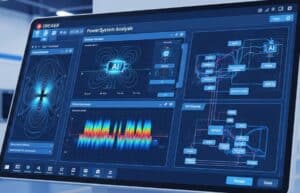
在线人工智能工具正在通过增强人类能力,迅速改变电气工程领域。 电路设计, system analysis, electronics manufacturing, and power system maintenance. These AI systems can process vast amounts of simulation data, sensor readings, and network traffic, identify complex anomalies or performance bottlenecks, and generate novel circuit topologies or control 算法 much faster than traditional methods. For instance, AI can assist you in optimizing PCB layouts for signal integrity and manufacturability, accelerate complex electromagnetic or power flow simulations, predict semiconductor device characteristics, and automate a wide range of 信号处理 和数据分析任务。
例如,下面提供的提示有助于天线或滤波器的生成式设计、加速仿真(SPICE、电磁场仿真、电力系统稳定性分析)、帮助进行预测性维护(人工智能通过分析电力变压器或电网组件的传感器数据来预测潜在故障,从而实现主动服务并最大限度地减少停机时间)、帮助进行半导体材料选择或最佳组件选择(例如,针对特定参数选择最佳运算放大器)等等。
电力系统与电网管理
[prompt_formatter title=”Automated Power Flow Analysis and Optimization Report” description=”Analyzes power system network data to perform load flow calculations, identify potential overloads or voltage violations, and suggest optimal adjustments to transformer taps and capacitor banks. This prompt generates a detailed report with recommended corrective actions to enhance grid stability and 效率.” temperature=”0.3″ thinking=”high”]**TASK OVERVIEW**⸻Analyze power system network data to perform load flow calculations, identify potential overloads or voltage violations, and suggest optimal adjustments to transformer taps and capacitor banks. Generate a detailed report with recommended corrective actions to enhance grid stability and efficiency.⸻⸻**INPUT REQUIREMENTS**⸻1. Network Data File: Provide the path to the power system network data file in a compatible format (e.g., .csv, .xlsx).⸻2. Load Flow Parameters: Specify parameters such as base power, voltage levels, and any specific constraints or limits.⸻3. Transformer and Capacitor Data: Include details on transformer tap settings and capacitor bank configurations.⸻⸻**ANALYSIS STEPS**⸻1. Load the network data from {network_data_file}.⸻2. Perform load flow calculations using the specified parameters.⸻3. Identify potential overloads and voltage violations in the network.⸻4. Analyze transformer taps and capacitor banks for optimization opportunities.⸻5. Suggest optimal adjustments to transformer taps and capacitor banks to mitigate identified issues.⸻⸻**OUTPUT REPORT**⸻Generate a detailed report including:⸻- Summary of load flow calculations.⸻- List of identified overloads and voltage violations.⸻- Recommended adjustments to transformer taps and capacitor banks.⸻- Suggested corrective actions to enhance grid stability and efficiency.⸻⸻**EXECUTION**⸻Use the provided inputs to execute the analysis and generate the report. Ensure all calculations and recommendations are based on the latest network data and specified parameters.[/prompt_formatter]
[prompt_formatter title=”动态稳定性评估与故障排序” description=”在给定电网模型上模拟各类故障场景,评估其暂态稳定性,并根据故障影响严重程度进行排序。 输出结果包含关键故障事件的优先级列表及对应稳定裕度,助力电网主动管理。温度=0.7 思考=高]**任务概述**⸻在电网模型上模拟故障场景以评估暂态稳定性并排序故障事件。⸻⸻**输入要求**⸻1. 提供电网模型数据:{power_grid_model_data}。⸻2. 定义待模拟故障场景:{fault_scenarios}。⸻3. 指定仿真参数:{simulation_parameters}。⸻⸻**处理流程**⸻1. 加载提供的电网模型数据。⸻2. 针对{故障场景}中的每个故障场景:⸻⸻⸻a. 使用{仿真参数}对电网模型进行故障仿真。⸻⸻⸻b. 分析故障后电网的暂态稳定性。⸻⸻3. 根据对电网稳定性的影响严重程度对每个故障场景进行排序。⸻4. 计算每种场景的稳定性裕度。⸻⸻**输出**⸻1. 关键故障事件优先级排序列表。⸻2. 每项故障事件对应的稳定性裕度值。⸻⸻**补充说明**⸻确保所有仿真严格遵循瞬态稳定性分析行业标准。⸻采用先进算法实现精准排序与裕度计算。[/prompt_formatter]
[prompt_formatter title=”Renewable Energy Integration Impact Study” description=”Evaluates the impact of integrating a new large-scale 可再生能源 source into an existing power grid by analyzing power quality, voltage stability, and frequency response. This generates a comprehensive report outlining potential issues and recommending necessary grid reinforcements or control strategies.” temperature=”0.7″ thinking=”high”]**TASK OVERVIEW**⸻Analyze the impact of integrating a new large-scale renewable energy source into an existing power grid. Focus on power quality, voltage stability, and frequency response.⸻⸻**INPUTS**⸻1. Existing power grid parameters: {existing_grid_parameters}⸻2. Renewable energy source characteristics: {renewable_source_characteristics}⸻3. Load demand forecast: {load_demand_forecast}⸻⸻**INSTRUCTIONS**⸻1. **Data Analysis**⸻- Analyze {existing_grid_parameters} to understand the current grid configuration and performance.⸻- Evaluate {renewable_source_characteristics} to determine potential impacts on the grid.⸻- Use {load_demand_forecast} to assess future grid demands.⸻⸻2. **Power Quality Assessment**⸻- Calculate potential changes in power quality metrics due to the integration of the renewable source.⸻- Identify any deviations from standard power quality thresholds.⸻⸻3. **Voltage Stability Analysis**⸻- Evaluate voltage stability under various load conditions using the provided data.⸻- Identify potential voltage instability scenarios and their triggers.⸻⸻4. **Frequency Response Evaluation**⸻- Analyze the grid’s frequency response to the integration of the renewable source.⸻- Identify any potential frequency deviations and their impact on grid stability.⸻⸻5. **Report Generation**⸻- Compile a comprehensive report summarizing the findings of the analyses.⸻- Highlight potential issues in power quality, voltage stability, and frequency response.⸻- Recommend necessary grid reinforcements or control strategies to mitigate identified issues.⸻⸻**OUTPUT FORMAT**⸻Provide a structured report with the following sections:⸻- Executive Summary⸻- Introduction⸻- Methodology⸻- Analysis Results⸻- Potential Issues⸻- Recommendations⸻- Conclusion⸻[/prompt_formatter]
[prompt_formatter title=”最优电力调度计划生成器” description=”根据一组发电机组的成本曲线、运行限制和预测负荷需求,为其确定最经济、最高效的发电计划。其输出是 CSV 格式的详细调度计划,在保持系统可靠性的同时将运行成本降至最低。” temperature=”0.3″ thinking=”high”]**TASK**⸻Generate an optimal power dispatch schedule for a set of generating units.⸻⸻**输入要求**⸻1。**发电机组数据**:提供一份发电机组清单,包括各自的成本曲线、运行限制和容量。格式:{generating_units_data}.⸻2.**预测负荷需求**:输入调度期间的预测负荷需求。格式为{forecasted_load_demand}.⸻3.** 运行限制**:指定任何额外的运行限制,如斜率、最短上/下行时间和维护计划。格式:{operational_constraints}.⸻⸻**PROCESS**⸻1.分析每个发电机组的成本曲线和运行约束条件⸻2.计算调度期内的负荷需求分布⸻3.⸻3. 制定调度策略,在满足预测负荷需求和遵守所有运行限制的同时,最大限度地降低运行成本。⸻4. 保持储备裕度并考虑机组可用性,确保系统可靠性。生成 CSV 格式的详细调度计划。⸻⸻**输出**⸻提供包含优化调度计划的 CSV 文件,包括以下栏目:⸻- 时间段⸻- 发电机组 ID⸻- 功率输出(兆瓦)⸻- 运行成本($)⸻- 状态(在线/离线)⸻⸻**控制措施**⸻- 确保调度计划将运行成本降至最低。⸻- 保持系统可靠性并遵守所有指定的约束条件。⸻⸻**格式**⸻以 CSV 格式输出包含指定列的调度计划。⸻⸻**附加说明**⸻- 考虑使用线性规划或其他优化技术以获得最佳结果⸻- 在最终确定之前根据所有输入约束条件验证调度计划。
[prompt_formatter title=”短路分析和保护装置协调性研究” description=”计算电网中各点的故障电流,并评估继电器和断路器等保护装置的协调性。此提示将生成一份报告,指出任何协调不当的问题,并提出新的设置建议,以确保正确的故障隔离。” temperature=”0.3″ thinking=”high”]**任务概述**⸻对电网执行短路分析和保护装置协调研究。计算指定点的故障电流,评估保护装置的协调性。找出协调不当的问题,并提出新的设置建议,以实现正确的故障隔离⸻⸻**输入**⸻1.电气网络数据:{network_data}⸻2.故障电流计算点列表:故障点列表: {fault_points}⸻3.保护装置的电流设置:{device_settings}⸻⸻**说明**⸻1.解析 {network_data} 以了解网络拓扑结构,包括总线、线路、变压器和负载。对于 {fault_points} 中的每个点,使用适当的短路计算方法计算故障电流。分析继电器和断路器的电流 {device_settings} 以确定它们与计算出的故障电流是否协调。找出保护装置不能有效隔离故障的任何不协调问题。建议保护装置的新设置,以确保适当的协调和故障隔离。编制详细报告,包括以下部分:⸻⸻ a. 网络拓扑概述⸻ b. 故障电流计算⸻ c. 保护装置协调分析⸻ d. 发现的故障协调问题⸻e.确定的故障协调问题⸻ e. 保护装置的建议设置⸻⸻**输出格式**⸻以结构化格式提供报告,标题和要点清晰,便于阅读。必要时使用表格,以便有效地呈现数据。***补充说明***⸻确保计算准确无误,并考虑短路分析和保护装置协调方面的所有相关电气工程标准和实践。
[prompt_formatter title=#电力负荷预测模型生成器#description=#基于历史负荷数据、天气模式和经济指标,开发电力需求时间序列预测模型。输出结果为预测的负荷曲线以及模型准确性报告,这对于高效发电和资源分配至关重要。#temperature=#0.7#thinking=#high#]**任务**⸻开发电力需求时间序列预测模型。⸻⸻**输入**⸻1. 历史负荷数据:提供包含历史电力负荷数据的数据集。格式:{historical_load_data}⸻2. 天气模式:提供与历史负荷数据对应的天气数据数据集。格式:{weather_data}⸻3.经济指标:提供一个与电力需求相关的经济指标数据集。格式:{economic_indicators}⸻⸻**说明**⸻1. **数据预处理**⸻- 清理并预处理 {historical_load_data}、{weather_data} 和 {economic_indicators} 数据,以处理缺失值和异常值。⸻- 根据时间间隔对齐数据集,以确保一致性。⸻⸻2. **特征工程**⸻- 从 {weather_data} 和 {economic_indicators} 中提取可能影响电力需求的相关特征。⸻- 考虑对 {historical_load_data} 进行滞后特征、移动平均和季节性分解。⸻⸻3. **模型选择与训练**⸻- 选择合适的时间序列预测模型(例如,ARIMA、SARIMA、LSTM)。⸻- 使用预处理后的数据集训练模型。⸻⸻4. **模型评估**⸻- 使用 MAE、RMSE 和 MAPE 等指标评估模型的性能。⸻- 执行交叉验证以确保模型的稳健性。⸻⸻5. **输出生成**⸻- 生成指定未来时期的预测负荷曲线。⸻- 创建一份关于模型准确性和性能指标的详细报告。⸻⸻**输出格式**⸻1. 预测负荷曲线:提供显示预测电力需求的时间序列图或数据集。⸻2.模型精度报告:包含模型性能指标的摘要以及对其可靠性的分析。⸻⸻**附加说明**⸻- 确保模型考虑了任何可能影响电力需求的已知节假日或事件。⸻- 考虑近期经济状况或天气模式变化的影响。⸻⸻**任务结束**[/prompt_formatter]
[prompt_formatter title=”极端天气事件下的电网复原力分析” description=”通过识别面临风险的关键组件并模拟对电网的潜在影响,评估电网在特定极端天气情况下的脆弱性。这将生成一份报告,其中包含复原力评分和加固电网基础设施的建议。” temperature=”0.7″ thinking=”high”]**任务概述**⸻通过识别易受影响的组件、模拟影响并提供复原力评分和建议,分析电网应对极端天气事件的复原力。网格配置数据:{grid_configuration_data}⸻2.历史天气数据:历史天气数据: {historical_weather_data}⸻3.具体天气情况: {specific_weather_scenario}⸻⸻**** 说明**⸻1.**数据分析***⸻- 分析{电网配置数据},确定关键组件及其相互联系。**脆弱性评估***⸻- 确定在{特定天气情况}下面临最大风险的组件⸻- 确定电网中的潜在故障点和连锁效应⸻⸻3.** 模拟**⸻- 利用已识别的脆弱性模拟{特定天气情况}对电网的影响⸻- 计算潜在的停电、负载失衡和恢复时间⸻⸻4。** 弹性评分**⸻- 根据模拟结果,考虑冗余、恢复速度和影响严重程度等因素,制定弹性评分。⸻⸻5.建议**⸻- 提供可操作的建议,以增强电网恢复能力,重点关注基础设施加固、冗余改进和应急响应策略。⸻⸻**输出格式**⸻- 提供详细报告,包括⸻ - 脆弱性分析摘要⸻ - 仿真结果⸻ - 弹性得分⸻ - 电网加固建议⸻⸻**附加说明**⸻确保所有计算和仿真均基于最新的电网弹性工程标准和方法。酌情使用概率模型,以考虑天气预测和电网响应的不确定性。
电机和驱动器
[prompt_formatter title=”Electric Motor Design Parameter Optimization” description=”Optimizes the design parameters of an electric motor for a specific application by iterating through various geometric and material combinations to maximize efficiency and torque density. The output provides the optimized design specifications and performance characteristics in a tabular format.” temperature=”0.7″ thinking=”high”]## CONTEXT⸻You are tasked with optimizing the design parameters of an electric motor to maximize efficiency and torque density for a specific application. This involves iterating through various geometric and material combinations.⸻⸻## INPUTS⸻1. Application Requirements: {application_requirements}⸻2. Initial Design Parameters: {initial_design_parameters}⸻3. Material Options: {material_options}⸻4. Geometric Constraints: {geometric_constraints}⸻⸻## INSTRUCTIONS⸻1. Analyze the provided {application_requirements} to understand the specific needs of the motor application.⸻2. Use the {initial_design_parameters} as a starting point for the optimization process.⸻3. Iterate through the {material_options} and {geometric_constraints} to explore different combinations.⸻4. For each combination, calculate the motor’s efficiency and torque density.⸻5. Compare the results to identify the combination that maximizes both efficiency and torque density.⸻6. Ensure that the final design adheres to the {geometric_constraints}.⸻⸻## OUTPUT⸻Provide the optimized design specifications and performance characteristics in a tabular format. The table should include:⸻- Geometric Parameters⸻- Material Selection⸻- Efficiency (%)⸻- Torque Density (Nm/kg)⸻- Any additional relevant performance metrics⸻⸻## FORMAT⸻Output the results in a clear and concise table with appropriate headings for each column.[/prompt_formatter]
[prompt_formatter title=”通过振动和电流数据诊断感应电动机故障” description=”分析感应电动机的振动和定子电流数据,以检测轴承磨损、转子线棒断裂和定子绕组故障等常见故障并对其进行分类。此提示将生成诊断报告,详细说明已识别的故障及其严重程度。” temperature=”0.7″ thinking=”high”]** 任务概述**⸻分析感应电机的振动和定子电流数据,以检测故障并进行分类。生成诊断报告,详细说明查明的故障及其严重程度。振动数据:{vibration_data}⸻2.定子电流数据:定子电流数据: {stator_current_data}⸻3.电机规格:电机规格: {motor_specifications}⸻⸻**** 说明**⸻1.**数据预处理***⸻- 对提供的 {vibration_data} 和 {stator_current_data} 进行归一化处理。** 特征提取**⸻- 从经过处理的振动数据中提取关键特征,如频率成分、振幅和谐波。** 故障检测和分类**⸻- 利用提取的特征来检测潜在故障:轴承磨损、转子线棒断裂和定子绕组故障⸻- 根据预定义阈值和电机规格 {motor_specifications} 对检测到的每个故障的严重程度进行分类⸻⸻4。**诊断报告的生成***⸻- 将诊断结果编入结构化的诊断报告中。建议采取的维护措施⸻⸻***输出格式***⸻- 按照以下格式提供综合诊断报告:⸻ $diagnostic_report⸻⸻**** 附加说明***⸻- 确保所有计算和分类均基于最新的行业标准和实践。⸻- 根据已知故障模式(如有)进行交叉引用,验证结果。
[prompt_formatter title=”变频驱动器 (VFD) 谐波分析” description=”分析给定电机负载和驱动器配置下 VFD 在电力系统中产生的谐波畸变。输出为一份报告,详细说明谐波频谱和滤波器设计建议,以符合电能质量标准。” temperature=”0.3″ thinking=”high”]**TASK**⸻针对指定的电机负载和驱动器配置,分析电力系统中变频驱动器 (VFD) 产生的谐波畸变。生成一份报告,详细说明谐波频谱,并提供滤波器设计建议,以符合电能质量标准。电机负载规格:{motor_load_specifications}⸻2.VFD 配置详情:{vfd_configuration_details}⸻3.电源系统参数:{power_system_parameters}⸻⸻**** 说明**⸻1.分析所提供的电机负载规格和 VFD 配置详情,以确定运行参数。使用电力系统参数计算变频驱动装置引入的谐波畸变水平。生成谐波频谱,确定各阶谐波的大小。将计算出的谐波等级与相关的电能质量标准(如 IEEE 519)进行比较。提供滤波器设计建议,以减少过量谐波并确保符合标准⸻⸻**输出格式**⸻- **谐波频谱分析**:⸻-**符合性评估**:说明谐波等级是否符合规定的标准⸻- **滤波器设计建议**:提供详细的滤波器设计建议,包括类型、尺寸和配置,以实现合规性⸻⸻**注意事项**⸻确保所有计算准确无误,并基于最新的电气工程标准和实践。使用适合专家级电气工程师的精确技术语言。
[prompt_formatter title=”根据溶解气体分析 (DGA) 数据评估变压器健康状况” description=”解释变压器油报告中包含的溶解气体分析数据,以评估变压器的内部健康状况并识别潜在的初期故障,如电弧、电晕或过热。根据杜瓦尔三角法或其他标准方法生成健康指数和诊断报告。” temperature=”0.3″ thinking=”high”]**TASK**:分析变压器油中的溶解气体分析 (DGA) 数据,以评估变压器的内部健康状况并确定潜在故障:{dga_report}⸻⸻**说明**:⸻1.从提供的 DGA 报告中提取气体浓度值。使用杜瓦尔三角法解释气体浓度并识别潜在故障,如电弧、电晕或过热。根据确定的故障和气体浓度水平计算变压器的健康指数。生成详细报告,包括:⸻ - 潜在故障诊断⸻ - 变压器健康指数⸻ - 维护或进一步调查建议⸻⸻**输出格式**:⸻- 诊断:$diagnosis⸻- 健康指数:$health_index⸻- Recommendations(建议):$recommendations⸻⸻**NOTES**: ⸻- Ensure the interpretation aligns with industry standards and practices.⸻- Provide clear and concise recommendations based on the analysis.⸻- Use additional standard methods if necessary to corroborate findings.[/prompt_formatter](确保解释符合行业标准和惯例)。
[prompt_formatter title=”发电机励磁控制系统调谐” description=”模拟发电机对电网干扰的动态响应,并为其自动电压调节器 (AVR) 和电力系统稳定器 (PSS) 建议最佳调谐参数。输出提供建议的 PID 控制器增益,以提高发电机的稳定性。” temperature=”0.7″ thinking=”high”]**CONTEXT**⸻ 您的任务是调整发电机的励磁控制系统,以提高其应对电网扰动的稳定性。目标是确定自动电压调节器 (AVR) 和电力系统稳定器 (PSS) 的最佳 PID 控制器增益。发电机模型参数:{generator_parameters}⸻2.电网扰动情况:电网扰动情景: {grid_disturbance_scenarios}⸻3.AVR 的初始 PID 增益: {initial_avr_gains}⸻4.PSS 的初始 PID 增益: {initial_pss_gains}⸻⸻**TASKS**⸻1.使用给定的发电机模型参数,模拟发电机对所提供的电网干扰情景的动态响应。分析仿真结果,找出稳定性问题或性能差距。根据分析结果调整 AVR 和 PSS 的 PID 增益,以提高稳定性和性能。⸻4. 通过重新模拟发电机的响应验证新的 PID 增益,并确保提高稳定性。提供有关推荐 PID 增益和预期稳定性改进的详细报告:$stability_summary⸻- 详细报告:$detailed_report⸻⸻**NOTES**⸻Ensure that the simulations consider all provided grid disturbance scenarios and that the tuning process is iterative to achieve optimal results.[/prompt_formatter](确保仿真考虑所有提供的电网干扰情况,并确保调整过程是迭代的,以实现最佳结果。
控制系统工程
[prompt_formatter title=”工业过程的 PID 控制器调整” description=”分析工业过程的阶跃响应数据,以确定最佳比例积分微分 (PID) 控制器调整参数。本提示提供计算得出的 Kp、Ki 和 Kd 值以及受控系统的模拟响应。” temperature=”0.3″ thinking=”high”]** 输入要求**⸻提供以下数据以供分析:⸻1.过程的步进响应数据:步骤响应数据: {step_response_data}⸻2.期望的性能标准(如稳定时间、过冲):性能标准: {performance_criteria}⸻3.数据的采样时间:{sampling_time}⸻⸻**TASKS**⸻1.分析所提供的阶跃响应数据,提取上升时间、峰值时间、稳定时间和过冲等关键特征。使用所提取的特征,确定 PID 参数(Kp、Ki、Kd)的初始估计值,使用的方法包括 Ziegler-Nichols 法或 科恩-库恩.⸻3.通过仿真来完善 PID 参数 闭环 ⸻4. 提供详细的 PID 参数计算报告和受控系统响应模拟图。提供 PID 参数计算的详细报告和受控系统响应的模拟图。计算的 PID 参数:⸻- 比例增益 (Kp):$Kp⸻- 积分增益 (Ki):$Ki⸻- 微分增益 (Kd):$Kd⸻2.符合性能标准的受控系统响应模拟图。调整过程和分析过程中的假设摘要。
[prompt_formatter title=”PLC Ladder Logic Code Generator for Automation Tasks” description=”Generates PLC ladder logic code for a described 工业自动化 sequence, including inputs, outputs, and control logic. The output is the raw ladder logic code in a standard format that can be imported into a PLC programming environment.” temperature=”0.3″ thinking=”medium”]**TASK:** Generate PLC ladder logic code for an industrial automation sequence.⸻⸻**INPUT REQUIREMENTS:**⸻1. **Automation Sequence Description:** Provide a detailed description of the industrial automation sequence, including the process steps and any specific conditions. Example: “{automation_sequence_description}”.⸻2. **Inputs:** List all the input devices and their respective signals. Example: “{input_devices}”.⸻3. **Outputs:** List all the output devices and their respective signals. Example: “{output_devices}”.⸻4. **Control Logic:** Describe any specific control logic or conditions that must be met during the automation process. Example: “{control_logic}”.⸻⸻**INSTRUCTIONS:**⸻1. Analyze the provided automation sequence description to understand the process flow and requirements.⸻2. Identify and map the inputs and outputs to the respective devices and signals.⸻3. Develop the control logic based on the described conditions and requirements.⸻4. Generate the ladder logic code in a standard format suitable for PLC programming environments.⸻5. Ensure the code is structured and annotated for clarity and ease of understanding.⸻⸻**OUTPUT FORMAT:**⸻Provide the raw ladder logic code with annotations. Use the following structure:⸻- **Inputs Mapping:** $inputs_mapping⸻- **Outputs Mapping:** $outputs_mapping⸻- **Control Logic:** $control_logic⸻- **Ladder Logic Code:** $ladder_logic_code⸻⸻**NOTE:** Ensure the ladder logic code is compatible with standard PLC programming environments and follows best practices for industrial automation.⸻⸻**USER INPUTS:** Specific data to generate the ladder logic code. Example: “{automation_sequence_description}”, “{input_devices}”, “{output_devices}”, “{control_logic}”.[/prompt_formatter]
[prompt_formatter title=”从输入输出数据识别状态空间模型” description=”从实验输入输出数据识别动态系统的线性时不变(LTI)状态空间模型。本提示提供状态空间矩阵(A、B、C、D)和模型准确性评估。” temperature=”0.3″ thinking=”high”]**TASK**⸻ 根据实验输入输出数据确定线性时不变(LTI)状态空间模型。⸻⸻**输入**⸻- 实验输入数据:{input_data}⸻- 实验输出数据:{output_data}⸻- 采样时间(秒):{sampling_time}⸻⸻**** 说明**⸻1.**数据预处理***⸻ - 必要时对{输入数据}和{输出数据}进行归一化处理⸻ - 确保数据一致性并处理任何缺失值⸻2.**模型阶次选择**⸻ - 使用 Akaike 信息准则(AIC)或贝叶斯信息准则(BIC)等方法确定最佳模型阶次。** 状态空间模型估计**⸻ - 应用子空间识别技术来估计给定模型阶次的状态空间矩阵(A、B、C、D)。** 模型验证**⸻ - 使用估计矩阵模拟已识别的模型,并将输出与 {output_data} 进行比较⸻ - 计算平均平方误差 (MSE) 或拟合百分比等性能指标,以评估准确性⸻5.⸻ - 提供估计的状态空间矩阵(A、B、C、D)。⸻⸻**** 输出格式**⸻- 状态空间矩阵:⸻ - A: $matrixA⸻ - B: $matrixB⸻ - C: $matrixC⸻ - D:$matrixD⸻- 模型精确度:⸻ - MSE:$mse⸻ - 拟合百分比:$fitPercentage[/prompt_formatter]
[prompt_formatter title=”控制系统根节点分析与设计” description=”为给定的控制系统生成根节点图。 开环 该系统可帮助设计补偿器,以满足所需的瞬态响应规格。输出包括根座图和所设计的超前或滞后补偿器的参数。” temperature=”0.5″ thinking=”high”]**任务概述**⸻为所提供的开环传递函数生成根座图,并设计补偿器以实现指定的瞬态响应特性⸻⸻**输入**⸻1.开环传递函数:开环传递函数: {open_loop_transfer_function}⸻2.期望的瞬态响应规格(如平稳时间、过冲等):{transient_response_specs}⸻⸻**说明**⸻1.解析用户提供的开环传递函数。为解析后的传递函数生成根位置图。分析根座图,确定符合所需瞬态响应规格的增益值范围。⸻4. 设计一个补偿器(前导或滞后)来调整系统的极点和零点,以实现指定的瞬态响应。计算所设计补偿器的参数。将根点图和补偿器参数作为输出⸻⸻**输出格式**⸻1.根节点图:$root_locus_plot⸻2.补偿器参数:$compensator_parameters⸻⸻**ADDITIONAL NOTES**⸻- Ensure the root locus plot is clear and accurately represents the system's behavior.⸻- Provide a brief explanation of how the compensator affects the system's transient response.简要说明补偿器如何影响系统的瞬态响应。⸻- 使用标准控制系统术语和单位。 ⸻- 根据预期规格验证所设计的补偿器。
安全与维护
[prompt_formatter title=”Arc Flash 危害分析 and Label Generation” description=”Calculates the incident energy and arc flash boundary for a piece of electrical equipment based on its specifications and the upstream protective device settings. This prompt generates a detailed arc flash hazard report and the content for a compliant safety label.” temperature=”0.3″ thinking=”high”]**INPUT REQUIREMENTS**⸻Provide the following data for the analysis:⸻1. Equipment Specifications: {equipment_voltage}, {equipment_current}, {equipment_type}, {equipment_distance}.⸻2. Upstream Protective Device Settings: {device_type}, {device_rating}, {device_trip_time}.⸻3. System Parameters: {system_voltage}, {system_fault_current}.⸻⸻**TASKS**⸻1. Calculate the incident energy at the working distance using the provided equipment specifications and system parameters.⸻2. Determine the arc flash boundary based on the calculated incident energy and system parameters.⸻3. Generate a detailed arc flash hazard report including:⸻ – Equipment details⸻ – Calculated incident energy⸻ – Arc flash boundary⸻ – Recommendations for PPE (Personal Protective Equipment)⸻4. Create content for a compliant safety label including:⸻ – Equipment identification⸻ – Incident energy level⸻ – Arc flash boundary⸻ – Required PPE⸻⸻**OUTPUT FORMAT**⸻Provide the results in the following format:⸻1. Arc Flash Hazard Report:⸻ – Equipment Details: $equipmentdetails⸻ – Incident Energy: $incidentenergy cal/cm²⸻ – Arc Flash Boundary: $arcflashboundary inches⸻ – PPE Recommendations: $pperecommendations⸻2. Safety Label Content:⸻ – Equipment ID: $equipmentid⸻ – Incident Energy Level: $incidentenergylevel cal/cm²⸻ – Arc Flash Boundary: $arcflashboundarylabel inches⸻ – Required PPE: $requiredppe[/prompt_formatter]
[prompt_formatter title=”电气资产的预测性维护计划” description=”根据电气资产的运行数据、故障历史和维护记录,为其制定预测性维护计划。输出结果是一个优先优化的维护计划,以最大限度地减少停机时间并防止故障。” temperature=”0.7″ thinking=”high”]**CONTEXT**⸻ 您的任务是为一个电气资产机群制定预测性维护计划。目标是通过分析运行数据、故障历史和维护记录,最大限度地减少停机时间和预防故障。每项资产的运行数据:{operational_data}⸻2.每项资产的故障历史记录: {failure_history}⸻3.每项资产的维护记录: {maintenance_records}⸻⸻**TASKS**⸻1.分析运行数据,找出可能表明潜在故障的模式或异常现象。检查故障历史,确定常见故障模式及其频率。检查维护记录,以评估过去维护活动的有效性,并确定任何重复出现的问题⸻4。利用步骤 1-3 中获得的信息预测未来的故障,并确定每项资产的最佳维护间隔。根据每项资产的关键性和发生故障的可能性,确定维护计划的优先级⸻6.⸻⸻**输出格式**⸻按以下格式提供详细的维护计划:⸻- 资产 ID:$asset_id⸻- 预测故障日期: $predicted_failure_date⸻- 建议维护日期: $recommended_maintenance_date⸻- 维护行动:$maintenance_actions⸻- 优先级: $priority_level⸻- 资源分配:$resource_allocation⸻⸻**附加说明**⸻确保维护计划经过优化,对运行的干扰最小,并考虑到资源的可用性。根据新的数据输入或资产状况的变化动态调整计划。
[prompt_formatter title=”Electrical Safety Audit Report Generator” description=”Generates a comprehensive electrical safety audit report for a facility based on a checklist of observations and non-compliance issues. The output is a structured report with findings, risk assessments, and recommendations for corrective actions.” temperature=”0.5″ thinking=”medium”]**TASK**⸻Generate a comprehensive electrical safety audit report for a facility.⸻⸻**INPUTS**⸻1. Checklist of Observations: {checklist_of_observations}⸻2. Non-Compliance Issues: {non_compliance_issues}⸻3. Facility Details: {facility_details}⸻⸻**INSTRUCTIONS**⸻1. Analyze the provided {checklist_of_observations} and {non_compliance_issues}.⸻2. For each observation and issue, identify the potential risks and categorize them based on severity (e.g., low, medium, high).⸻3. Assess the impact of each risk on the facility’s operations and safety.⸻4. Provide a detailed finding for each observation and issue, including the identified risks and their severity.⸻5. Develop recommendations for corrective actions to mitigate each identified risk.⸻6. Structure the report into the following sections:⸻ – Introduction: Brief overview of the audit scope and objectives.⸻ – Facility Overview: Summary of {facility_details}.⸻ – Findings: Detailed list of observations and non-compliance issues with associated risks and severity.⸻ – 风险评估: Analysis of the potential impact of each risk on the facility.⸻ – Recommendations: Suggested corrective actions for each identified risk.⸻ – Conclusion: Summary of key findings and overall safety assessment.⸻⸻**OUTPUT FORMAT**⸻Provide the report in a structured format with clear headings and subheadings as outlined in the instructions. Use bullet points or numbered lists where appropriate for clarity.⸻[/prompt_formatter]
[prompt_formatter title=”关键电气系统的故障树分析” description=”构建故障树图,以确定电气系统中潜在关键故障的根本原因。此提示以 ‘美人鱼 ’图格式生成故障树,并计算顶部事件的概率。” temperature=”0.7″ thinking=”high”]**任务概述**⸻为一个关键电气系统生成故障树图,以确定潜在故障的根本原因,并使用 ‘美人鱼 ’图格式计算首要事件的概率。潜在故障事件列表:{list_of_failure_events}⸻2.每个故障事件的概率:每个故障事件的概率: {probability_of_failure_events}⸻3.事件之间的逻辑关系(AND/OR):{逻辑关系}⸻⸻**说明**⸻1.**输入解析**:提取并验证所提供的故障事件列表、其概率和逻辑关系。确保所有输入一致且格式正确。** 故障树构建**:⸻ - 使用 ‘美人鱼 ’语法构建故障树图⸻ - 定义每个事件节点,并使用指定的逻辑关系(AND/OR)将它们连接起来⸻3。**概率计算**:⸻ - 使用提供的概率和逻辑关系计算顶端事件的概率:p(a 或 b) = p(a) + p(b) - p(a)p(b) ⸻4.** 输出生成**:⸻ - 以 ‘美人鱼 ’格式呈现故障树图⸻ - 提供最高事件概率的详细计算⸻⸻**输出格式**⸻1.**人鱼图**:⸻ “`mermaid⸻ faultTree⸻ $mermaid_diagram⸻ “`⸻2.**概率计算**:⸻ - 最高事件概率:$top_event_probability⸻ - 计算详情:$calculation_details⸻⸻**EXAMPLE**⸻- 输入:⸻ - 潜在故障事件列表:{list_of_failure_events}⸻ - 每个故障事件的概率:{probability_of_failure_events}⸻ - 逻辑关系:{logical_relationships}⸻- Output:⸻ “`mermaid⸻ faultTree⸻ $mermaid_diagram⸻ “`⸻ - Top Event Probability: $top_event_probability⸻ - Calculation Details:$calculation_details[/prompt_formatter] - 计算细节:$calculation_details[/prompt_formatter]。
[prompt_formatter title=”Lockout-Tagout (LOTO) Procedure Generator” description=”Creates a detailed and compliant Lockout-Tagout procedure for isolating a specific piece of electrical equipment for maintenance.” temperature=”0.5″ thinking=”medium”]**CONTEXT**⸻You are tasked with generating a Lockout-Tagout (LOTO) procedure for isolating a specific piece of electrical equipment to ensure safe maintenance. This procedure must be detailed, compliant with safety regulations, and include all necessary isolation points and verification steps.⸻⸻**INPUTS**⸻1. Equipment Name: {equipment_name}⸻2. Equipment Location: {equipment_location}⸻3. Power Source Details: {power_source_details}⸻4. Isolation Points: {isolation_points}⸻5. Verification Steps: {verification_steps}⸻6. Safety Regulations: {safety_regulations}⸻⸻**TASKS**⸻1. Identify and list all isolation points for {equipment_name} located at {equipment_location}.⸻2. Describe the step-by-step procedure to safely isolate each power source as detailed in {power_source_details}.⸻3. Incorporate {isolation_points} into the procedure, ensuring each point is addressed.⸻4. Detail the verification steps from {verification_steps} to confirm successful isolation.⸻5. Ensure all steps comply with {safety_regulations}.⸻6. Format the final procedure document with clear headings and numbered steps for easy reference.⸻⸻**OUTPUT FORMAT**⸻Provide a detailed Lockout-Tagout procedure document with the following sections:⸻1. Introduction⸻2. Equipment Information⸻3. Isolation Points⸻4. Step-by-Step Isolation Procedure⸻5. Verification Steps⸻6. Compliance and Safety Notes[/prompt_formatter]
项目管理和文件
[prompt_formatter title=”电气项目材料清单 (BOM) 生成器” description=”根据文本格式提供的单线图和设备规格,为电气项目创建详细的材料清单。输出是 CSV 格式的结构化 BOM,包括组件说明、数量和估计成本。” temperature=”0.3″ thinking=”medium”]** 任务概述**⸻为电气项目生成详细的材料清单 (BOM)。使用所提供的单线图和设备规格,编制 CSV 格式的结构化 BOM。BOM 必须包括组件说明、数量和估计成本。文本格式的单线图:{single_line_diagrams}⸻2.文本格式的设备规格:{设备规格}⸻⸻**说明**⸻1.**提取组件***⸻- 分析 {single_line_diagrams} 以识别所有电气组件及其连接。**交叉参考规格**⸻- 将确定的组件与 { 设备规格} 匹配,以收集详细说明和规格⸻- 注意任何差异或缺失的信息⸻⸻3。**计算数量***⸻- 根据单线图确定每个组件的所需数量。** 估算成本***⸻- 使用提供的规格估算每个组件的成本⸻- 如果缺少成本数据,则提供占位符或备注,以便进一步研究。**编译 BOM**⸻- 以 CSV 格式编排 BOM,包含以下栏目:⸻- 确保所有数据准确完整。⸻⸻**输出格式**⸻以 CSV 字符串的形式提供最终 BOM,每行代表一个组件条目。⸻⸻**** 附加说明**⸻- 确保组件描述的清晰度和准确性。
[prompt_formatter title=”电气施工项目甘特图” description=”生成详细的 甘特图 以'美人鱼'格式为一个电气施工项目编写一份文档,根据项目范围和资源可用性概述任务、依赖关系和时间表。‘ temperature=’0.5″ thinking=”medium”]**TASK**⸻Generate a detailed 甘特 以 ‘美人鱼 ’格式绘制一个电气施工项目的图表⸻⸻**INPUTS**⸻1.项目范围:提供项目任务的详细清单,包括任务名称和说明。依赖关系:说明任务之间的任何依赖关系,指出哪些任务必须在其他任务开始之前完成。时间表:提供每项任务的预计开始和结束日期。资源可用性:详细说明每项任务可用的资源,包括人员和设备。解析所提供的项目范围,以确定所有任务及其说明。分析依赖关系,确定任务顺序。根据提供的开始和结束日期,计算每项任务的时间表。考虑资源的可用性,确保任务安排不会发生冲突。使用 ‘美人鱼 ’语法构建甘特图,其中包含任务、依赖关系和时间线。确保甘特图直观地反映项目进度,突出关键路径和潜在瓶颈。⸻⸻**输出格式**⸻以 ‘美人鱼 ’格式提供甘特图,如下所示:⸻“`mermaid⸻gantt⸻title 电气施工项目进度表⸻dateFormat YYYY-MM-DD⸻section {Task Section Name}⸻{Task Name} :{任务 ID},{开始日期},{结束日期}⸻{依赖任务名称} :{依赖任务 ID},{依赖关系 ID}之后,{结束日期}⸻“`⸻根据需要重复任务和依赖关系行,以涵盖项目中的所有任务。⸻⸻**示例输入**⸻- 项目范围:“{task_list}”⸻- 依赖项:“{dependency_list}”⸻- 时间轴:“{timeline_list}”⸻- 资源可用性:“{resource_list}”⸻⸻**** 示例输出**⸻“`美人鱼⸻gantt⸻title 电气施工项目进度表⸻dateFormat YYYY-MM-DD⸻section 安装⸻Wiring :a1, 2023-01-01, 2023-01-10⸻Testing :a2, after a1, 2023-01-15⸻“`⸻Ensure the output is clear and accurately represents the project schedule.[/prompt_formatter] (提示格式
[prompt_formatter title=”电气设备技术规范文档” description=”根据用户提供的性能要求和标准,为电气设备(如变压器、开关设备)生成全面的技术规范文档。输出为格式良好的技术文档,可用于采购或制造。” temperature=”0.3″ thinking=”medium”]**TASK**⸻Generate a comprehensive technical specification document for electrical equipment based on user-provided performance requirements and standards.⸻⸻**INPUTS**⸻1.设备类型:设备类型:{设备类型}⸻2.性能要求:{performance_requirements}⸻3.适用标准:适用标准: {applicable_standards}⸻4。附加规格:{附加规格}⸻⸻**说明**⸻1.分析所提供的设备类型和性能要求,以确定所需的关键规格。交叉参考适用标准,确保符合要求,并将相关部分纳入文件。将用户提供的任何其他规格整合到文件中。用以下部分构建文件结构:⸻ - 标题页⸻ - 目录⸻ - 引言⸻ - 设备描述⸻ - 性能规格⸻ - 符合标准⸻ - 附加规格⸻ - 结论⸻5.⸻⸻⸻**输出格式**⸻⸻以结构化格式提供最终文件,以备审查和使用。包括说明中概述的所有部分。
[prompt_formatter title=”电缆尺寸和布线优化” description=”为一组给定的电力负载计算最佳电缆尺寸,并确定设施内最有效的布线路径,以最大限度地降低电压降和材料成本。此提示将提供详细的电缆计划和布线计划。” temperature=”0.3″ thinking=”high”]** 任务概述**⸻计算电气负载的最佳电缆尺寸和布线路径,以最大限度地降低电压降和材料成本。⸻⸻**输入**⸻1.电气负载数据:{electrical_load_data}⸻2.设备布局:设备布局: {facility_layout}⸻3.材料成本数据:{material_cost_data}⸻⸻**** 说明**⸻1.解析电力负荷数据,以确定所有负荷点及其各自的电力需求⸻2.分析设施布局,确定潜在的电缆布线路径。使用标准电气工程公式计算每个负载点的最佳电缆尺寸,同时考虑载流能力、电压降和安全系数等因素。评估潜在的布线路径,找出最有效的路径,最大限度地降低电压降和材料成本。生成详细的电缆计划,包括电缆尺寸、长度和相关成本。创建一个全面的路由计划,直观地显示设施布局中选择的路径⸻⸻**输出格式**⸻1.电缆明细表:列出每个负载点、电缆尺寸、长度和成本的表格。路由计划:带有电缆路径注释的设施布局直观图。摘要:简要说明优化过程和做出的关键决策。⸻⸻**附加说明**⸻确保所有计算符合相关电气标准和规定。
[prompt_formatter title=”变电站调试测试计划” description=”为新变电站创建详细的调试测试计划,包括所有必要测试、程序和每台设备预期结果的列表。输出将是一份指导调试过程的综合文档。” temperature=”0.3″ thinking=”high”]** 输入要求**⸻为调试测试计划提供以下详细信息:⸻1.分站名称:变电站名称: {变电站名称}⸻2.地点: {地点}⸻3:{location}⸻3.设备清单:设备清单: {equipment_list}⸻4.应遵循的具体标准或规定:{标准}⸻5.调试时间表:{时间表}⸻6.任何特定的安全协议:{safety_protocols}⸻7.关键人员的联系信息:{contact_info}⸻⸻**TASKS**⸻1.针对{设备清单}中的每台设备,确定并列出所有必要的调试测试⸻2.详细说明每项测试的程序,确保符合 { 标准}。说明每次测试的预期结果,包括任何可接受的公差。按逻辑顺序组织测试,以优化调试过程。将{安全协议}纳入每个测试程序,以确保安全合规。根据{时间表}制定时间表,为每个测试和程序分配时间。包括{contact_info}中的详细联系信息,以便进行协调和安排。 沟通.⸻⸻**输出格式**⸻提供一份全面的调试测试计划文件,其结构如下:⸻1.扉页:包括{分站名称}、{位置}和日期。目录:列出所有章节和小节。引言:调试过程和目标概述。设备清单:设备清单:{设备清单}的详细清单⸻5.测试程序:针对每个设备,列出测试、程序、预期结果和安全协议。时间表:基于 { 时间表}的详细时间表。安全协议:详细的安全措施和遵守情况。联系信息:来自 {contact_info} 的关键人员名单。附录:⸻⸻确保文件清晰、简洁,并采用适合专家级电气工程师的专业格式。
常问问题
人工智能能否取代 SPICE 或电力系统仿真软件?
不。语言模型只能预测文本,除非运行代码,否则它无法求解电路或网络方程。应该使用人工智能来编写网表、脚本和测试用例,或者解释结果,然后在仿真器或分析程序中运行计算。
这些提示能否根据我的数据文件运行潮流计算或短路分析?
只有当人工智能工具能够读取文件并执行代码时,它才能正常工作。仅能进行聊天的模型会返回一些看似合理但未经计算的数字。例如,让它编写一个脚本,使用 Python 的 pandapower 库进行潮流计算,然后自行运行该脚本,并将其结果与您的电力系统软件进行比较。
这些提示中,“推荐温度”和“思维复杂度”分别是什么意思?
温度控制随机性:0.3 为计算和报告提供一致的输出,0.7 则允许设计思路产生更多样化的结果。思维复杂性是指在提供相应模型的情况下进行推理所需的工作量。如果您的应用没有这两个设置,请请求提供逐步操作指南。
将网格或植物数据上传到在线人工智能工具是否安全?
请先查看雇主的政策和供应商的数据条款。电网模型、保护设置和工厂布局通常受保密协议或关键基础设施规则的约束。尽可能对设备名称、位置和设置进行匿名化处理。