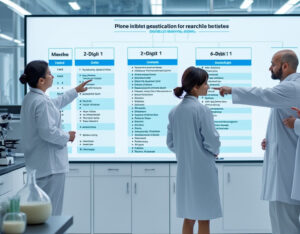
The “UNESCO Nomenclature for Fields of Science and Technology”是联合国教育、科学及文化组织制定的一种分级分类系统,用于对研究论文和博士论文进行分类。该系统最初于 20 世纪 70 年代初提出,提供了一个标准化的 方法 用于组织科技信息。它的结构分为三个详细层次,分别由 2 位数、4 位数和 6 位数的代码标识,这些代码分别对应于领域、学科和子学科。这种系统化的组织方式可以对大量研究活动进行精确分类。该术语表是研究项目和学术论文知识管理中广泛使用的工具。.
The structured nature of the UNESCO Nomenclature offers significant potential for applications beyond academia and scientific research, 创新和 营销. .该术语可用于绘制现有创新领域或数据图,并对新技术开发机会进行分类。对于营销人员来说,它有助于细分技术驱动型市场,了解产品的科学基础,从而制作更精准的信息。.
The full 18 pages original pdf document can be found here: UNESCO Nomenclature.
多年来,《联合国教科文组织术语汇编》的原始在线版本、存档版本或更新版本时 有出现,时有消失(联合国教科文组织本身,后来是欧盟和欧洲统计局),包括其 版权 通知。目前维护得最好、最有用的是 SKOS at the University of Murcia (Spain), from which this version is derived from.
Why do we provide it here: because it’s complete, well taught and we use it extensively ourselves (see all our inventions and innovations directory and posts for example), and the following list is way more usable and searchable than the old scanned paper pdf version. Thanks to the UNESCO and the SKOS group for that work, provided (likely?) under CC BY 4.0.
Note that the 6 digits subcategories:
- never use fully all 1-99 combinations of the last 2 digits, leaving room for futur subcategories completion.
- that there is always a “.99: Others (specify)” to be already used currently until more subcategories are officially added.
11: Logic
1101: Applications of logic
1102: Deductive Logic
- 1102.01: Analogy
- 1102.02: Boolean Algebra
- 1102.03: Formal Logic
- 1102.04: Formalized languages
- 1102.05: Formal systems
- 1102.06: Foundations of mathematics
- 1102.07: Generalization
- 1102.08: Mathematical logic
- 1102.09: Modal Logic
- 1102.10: Model theory
- 1102.11: Proff theory
- 1102.12: Propositional Calculus
- 1102.13: Recursive functions
- 1102.14: Symbolic logic
- 1102.15: Theory of formal languages
- 1102.99: Other (specify)
1103: General Logic
1104: Inductive Logic
- 1104.01: Induction
- 1104.02: Intuitionism
- 1104.03: Probability
- 1104.99: Other (specify)
1105: Methodology
- 1105.01: Scientific method
- 1105.99: Other (specify)
1199: Other specialties on logic (specify)
12: Mathematics
1201: Algebra

- 1201.01: 代数几何
- 1201.02: 公理集合论
- 1201.03: 范畴论
- 1201.04: 微分代数
- 1201.05: 域、环、代数
- 1201.06: 群体、概括
- 1201.07: 同调代数
- 1201.08: 格子
- 1201.09: 李代数
- 1201.10: 线性代数
- 1201.11: 矩阵理论
- 1201.12: 非结合代数
- 1201.13: 多项式
- 1201.14: 表征理论
- 1201.99: Other (specify)
1202:分析与功能分析
- 1202.01: 算子代数
- 1202.02: 近似理论
- 1202.03: 巴拿赫空间和代数
- 1202.04: 变分法
- 1202.05: 组合分析
- 1202.06: 凸性、不等式
- 1202.07: 差分方程
- 1202.08: 函数方程
- 1202.09: 复变量函数
- 1202.10: 实变量函数
- 1202.11: 多复变量函数
- 1202.12: 全球分析
- 1202.13: 谐波分析
- 1202.14: 希尔伯特 空间
- 1202.15: 积分方程
- 1202.16: 积分变换
- 1202.17: 测量、积分、面积
- 1202.18: 运算微积分
- 1202.19: 常微分方程
- 1202.20: 偏微分 方程式
- 1202.21: 势理论
- 1202.22: 级数、可和性
- 1202.23: 特殊功能
- 1202.24: 次谐波函数
- 1202.25: 拓扑线性空间
- 1202.26: 三角级数和积分
- 1202.99: Other (specify)
1203:计算机科学
- 1203.01: 会计
- 1203.02: 算法语言
- 1203.03: 模拟计算
- 1203.04: 人工智能
- 1203.05: 自动化制造系统
- 1203.06: 自动化质量控制系统
- 1203.07: 因果模型
- 1203.08: 代码和编码系统
- 1203.09: 计算机辅助设计
- 1203.10: 计算机辅助教学
- 1203.11: 计算机软件
- 1203.12: 数据库
- 1203.13: 数字计算
- 1203.14: 环境控制系统
- 1203.15: 启发式
- 1203.16: 混合计算
- 1203.17: 信息学
- 1203.18: 信息系统和组件;设计和组件
- 1203.19: 库存控制
- 1203.20: 医疗监控系统
- 1203.21: 导航和空间遥测系统
- 1203.22: 生产控制系统
- 1203.23: 编程语言
- 1203.24: 编程理论
- 1203.25: 传感器系统设计
- 1203.26: 模拟
- 1203.99: Other (specify)
1204:几何
- 1204.01: 仿射几何
- 1204.02: 复流形
- 1204.03: 凸域
- 1204.04: 微分几何
- 1204.05: 极端问题
- 1204.06: 欧几里得几何
- 1204.07: 有限几何
- 1204.08: 基金会
- 1204.09: 非欧几里得几何
- 1204.10: 射影几何
- 1204.11: 黎曼 几何学
- 1204.12: 张量分析
- 1204.99: Other (specify)
1205:数论
- 1205.01: 代数数论
- 1205.02: 解析数论
- 1205.03: 丢番图问题
- 1205.04: 初等数论
- 1205.05: 数字几何
- 1205.99: Other (specify)
1206:数值分析
- 1206.01: 算法构建
- 1206.02: 微分方程
- 1206.03: 错误分析
- 1206.04: 函数方程
- 1206.05: 积分方程
- 1206.06: 积分微分方程
- 1206.07: 插值、近似和曲线拟合
- 1206.08: 迭代方法
- 1206.09: 线性方程
- 1206.10: 矩阵
- 1206.11: 数值微分
- 1206.12: 常微分方程
- 1206.13: 偏微分方程
- 1206.14: 正交
- 1206.99: Other (specify)
1207:运筹学
- 1207.01: 活动分析
- 1207.02: 控制系统
- 1207.03: 控制论
- 1207.04: 配送和运输
- 1207.05: 动态规划
- 1207.06: 博弈论
- 1207.07: 整数规划
- 1207.08: 存货
- 1207.09: 线性规划
- 1207.10: 网络流
- 1207.11: 非线性规划
- 1207.12: 排队
- 1207.13: 调度
- 1207.14: 系统配方
- 1207.15: 系统可靠性
- 1207.99: Other (specify)
1208:概率
- 1208.01: 精算数学
- 1208.02: 分析概率论
- 1208.03: 概率的应用
- 1208.04: 概率论基础
- 1208.05: 极限定理
- 1208.06: 马尔可夫过程
- 1208.07: 合理性
- 1208.08: 随机过程
- 1208.09: 主观概率
- 1208.99: Other (specify)
1209:统计
- 1209.01: 分析统计
- 1209.02: 统计计算
- 1209.03: 数据分析
- 1209.04: 决策程序和理论
- 1209.05: 实验设计与分析
- 1209.06: 分布自由和非参数方法
- 1209.07: 分布和概率论
- 1209.08: 统计推断的基础
- 1209.09: 多元分析
- 1209.10: 抽样理论与技术
- 1209.11: 随机理论与时间序列分析
- 1209.12: 统计关联技术
- 1209.13: 统计推断技术
- 1209.14: 统计预测技术
- 1209.15: 时间序列
- 1209.99: Other (specify)
1210:拓扑
- 1210.01: 抽象空间
- 1210.02: 上同调
- 1210.03: 微分流形
- 1210.04: 纤维束和空间
- 1210.05: 常规拓扑
- 1210.06: 同源性
- 1210.07: 同伦
- 1210.08: 李群
- 1210.09: 分段线性拓扑
- 1210.10: 点集拓扑
- 1210.11: 三维拓扑
- 1210.12: 拓扑群
- 1210.13: 拓扑动力学
- 1210.14: 拓扑嵌入
- 1210.15: 拓扑流形
- 1210.16: 变换组
- 1210.99: Other (specify)
1299:其他数学专业
The rest of this article is reserved for members
To limit scraping bots (currently 40,000 hits per day!),
we had to restrict access to full articles and tools to registered members only.
to access all the rest.