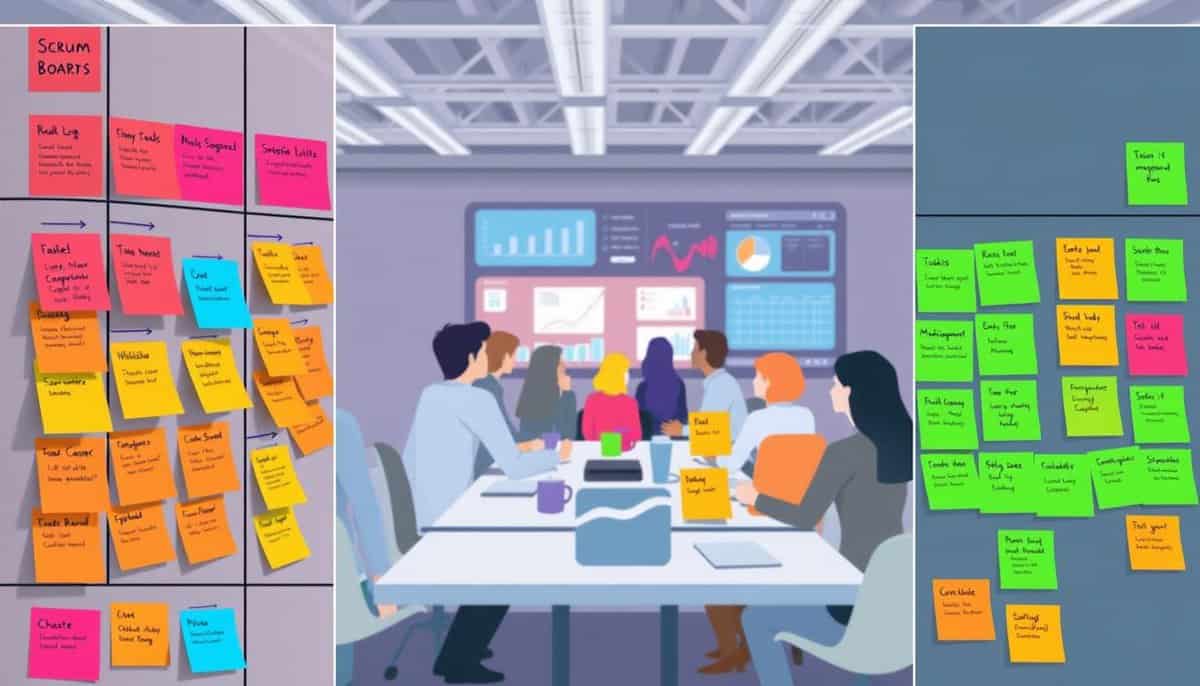
Você sabia que mais de 70% dos projetos ágeis modernos utilizam Scrum? Trata-se de uma abordagem dinâmica voltada para a entrega rápida de produtos de alta qualidade. O Scrum inclui cinco etapas principais: início, planejamento, execução, revisão e lançamento. Cada etapa é estruturada para promover excelente trabalho em equipe, flexibilidade e aprimoramento contínuo de projetos complexos.
The Scrum method has changed how teams collaborate. By dividing big tasks into shorter sprints—usually 2 to 4 weeks—teams can focus on creating parts of the product that are ready to go. Also, with daily quick meetings and burndown charts, teams keep a clear and efficient check on their progress.
Principais conclusões
- A metodologia Scrum engloba cinco fases essenciais: iniciação, planejamento e estimativa, implementação, revisão e retrospectiva, e lançamento.
- As equipes Scrum trabalham em sprints de 2 a 4 semanas para entregar melhorias incrementais.
- Reuniões diárias de acompanhamento ajudam a manter a clareza e o foco entre os membros da equipe.
- Os gráficos de burndown acompanham o progresso em relação ao cronograma do projeto.
- O Scrum promove uma cultura de melhoria contínua e feedback do usuário.
Introdução à Metodologia Scrum
A metodologia Scrum é uma parte fundamental do desenvolvimento ágil, mudando a forma como as equipes lidam com projetos complexos. Ela se concentra no progresso passo a passo, na adaptabilidade e no trabalho em equipe. Esta introdução ao Scrum explica seus princípios básicos e como ele se encaixa no contexto do desenvolvimento ágil. gestão ágil de projetos.
O que é Scrum?
Scrum is a framework for managing complex projects, mainly in software development. It encourages open communication within teams, preventing misunderstandings and information blocks. Scrum is built on five core values: commitment, courage, focus, openness, and respect. This creates a culture of ongoing improvement and teamwork.
O núcleo do Scrum inclui três artefatos principais: Backlog do Produto, Backlog da Sprint e Incremento. Estes são vitais para o planejamento e a execução eficiente de projetos. O Backlog do Produto lista todas as tarefas, o Backlog da Sprint seleciona as tarefas para a próxima sprint e o Incremento representa o trabalho concluído.
As equipes Scrum, geralmente compostas por cerca de 10 pessoas, incluem três funções: Dono do Produto (Product Owner), Scrum Master e equipe de desenvolvimento. Essa equipe é pequena o suficiente para ser alimentada com duas pizzas. Ela inclui designers, testadores e desenvolvedores.
A importância da gestão ágil de projetos
Agile project management is key for constant improvement and delivering top-quality products. It differs from traditional methods by emphasizing flexibility and team suggestions to meet changing client needs. Scrum meets these needs through various events like Sprint Planning and Daily Scrum.
Com revisões frequentes, as equipes podem verificar seu progresso e fazer ajustes conforme necessário. Isso ajuda a manter os projetos dentro do orçamento e do prazo. A flexibilidade do Agile significa que as equipes Scrum podem alterar as prioridades das tarefas com base em novos requisitos do cliente. Isso leva a lançamentos de produtos mais regulares e melhores resultados do projeto.
“Scrum methodology enables teams to function more efficiently and maintain high standards of quality. Small steps and iterative practical approach are the keys to happier and more productive teams.”
O sucesso do Scrum reside na forma como organiza e direciona equipes em projetos complexos, mantendo-se adaptável. Como parte da gestão ágil de projetos, o Scrum contribui para a entrega de resultados de maior qualidade por meio de um processo colaborativo e definido.
Os benefícios da metodologia Scrum
O benefícios do Scrum Existem muitas, especialmente para a gestão de projetos moderna. Ela enfatiza o trabalho em equipe dentro da equipe scrum e se concentra em fazer progressos pequenos e constantes. Dessa forma, as organizações podem trabalhar com mais eficiência e estar preparadas para mudanças. As equipes usam sprints curtos, de uma a quatro semanas de duração, para manter a flexibilidade e se adaptar rapidamente a novos feedbacks ou mudanças. Esta seção aborda como o Scrum contribui para a flexibilidade, o trabalho em equipe e a criação de produtos melhores.
Maior flexibilidade e adaptabilidade
O principal benefício do Scrum é tornar as equipes mais flexíveis e preparadas para mudanças. As equipes trabalham com sprints curtos, de duas a quatro semanas, para lidar rapidamente com mudanças e incorporar novos feedbacks. Esse método mantém a equipe Scrum alinhada com os objetivos e necessidades em constante evolução do projeto, garantindo que o produto final atenda às expectativas do cliente. Além disso, com revisões e análises retrospectivas regulares dos sprints, as equipes podem promover melhorias contínuas, facilitando ajustes e correções de rumo quando necessário.
Colaboração de equipe aprimorada
O Scrum realmente se concentra em melhorar o trabalho em equipe. Reuniões diárias de acompanhamento, com duração máxima de 15 minutos, ajudam a manter todos alinhados e a identificar quaisquer problemas. Dessa forma, os problemas são vistos e resolvidos rapidamente. As diversas habilidades da equipe levam a uma melhor resolução de problemas, tudo graças ao foco do Scrum em trabalhar em estreita colaboração. Uma boa comunicação é fundamental no Scrum, criando um ambiente de equipe eficiente e de apoio.
Qualidade do produto aprimorada
A abordagem iterativa e passo a passo do framework Scrum leva a uma melhoria na qualidade do produto. Através de verificações regulares, como revisões de sprint e retrospectivas, a equipe consegue visualizar o progresso e identificar o que precisa ser aprimorado. Ao focar na conclusão de segmentos do produto, priorizando a funcionalidade em detrimento do processo, o resultado são clientes mais satisfeitos. Além disso, como as equipes se autogerenciam, há um maior senso de responsabilidade e um impulso maior para inovar, colocando a qualidade e a criatividade em primeiro plano.
Understanding Roles and Responsibilities
In Scrum, defined roles and responsibilities are key for success. The roles—product owner, scrum master, and development team—work together. They ensure smooth work and continuous improvement.
The Role of the Product Owner
The product owner is crucial in managing the product backlog. This list includes features, bug fixes, and enhancements. They handle release management and talk to stakeholders. Their goal is to make sure the product meets business goals.
The Role of the Scrum Master
O scrum master helps the team use Scrum well. They focus on being open, using real data, and letting the team organize itself. They ensure the team follows Scrum values. They also run daily scrum meetings to keep everyone informed and in sync.
The Role of the Development Team
The development team includes engineers, designers, writers, and programmers. They work together to make great product pieces. The Scrum methodology suggests having 10 or fewer people for the best communication and results. The team decides how they work, aiming to get better with every sprint.
- Transparency: daily meetings make the team’s work clear to all.
- Self-organization: team members can decide on their work.
- Collaboration: working closely ensures quality product pieces are made.
Knowing the scrum roles is vital for using Scrum well. Each role has its duties. Together, they make the workflow smooth and deliver value to the customers.
Planning a Timeline and Setting Objectives
Effective Scrum planning is vital for teams aiming to deliver top-quality products on time. It begins with a detailed and ranked product backlog, managed by the Product Owner. To succeed in release planning, Scrum teams work closely. This makes sure every task is clear and manageable.
The Importance of Product Backlog
A good product backlog is key to successful sprint planning. It’s an organized list of everything needed in the product. The 14th State of Agile report shows structured backlog refinement helps agile success. About 58% of Agile users say it helps manage changing priorities with a dynamic product backlog. Doing regular backlog reviews before sprint planning keeps it healthy and up-to-date.

Effective Sprint Planning
Sprint planning prepares the team for upcoming work, setting clear goals and choosing backlog items. These meetings are kept short, 2-3 hours, to keep everyone focused. In these sessions, the Development Team, Product Owner, and Scrum Master pick tasks together. Everyone’s opinion matters. Around 47% of companies find structured release planning key to Scrum project success.
The Scrum process includes Sprint Planning, Daily Scrum, Sprint Review, and Sprint Retrospective. These help the team make significant progress and deliver value. The Scrum Guide says the Scrum Master is crucial in promoting these practices. They make sure sprint planning meets team and stakeholder expectations.
Here’s a short analysis of different Scrum elements:
| Elemento | Contribution to Success | Detalhes |
|---|---|---|
| Product backlog | Alto | Prioritized list key to effective task planning and management across sprints. |
| Sprint planning | Critical | Gets the team on the same page, defines targets, and spots potential problems. |
| Role of Scrum Master | Significant | Leads Scrum events, coaches the team, and ensures Scrum principles are followed. |
In conclusion, blending effective sprint planning with a well-managed product backlog boosts productivity and value delivery. Successful Scrum teams follow these methods, staying agile and responsive.
How to Run Sprints
Sprints last between two to four weeks. They’re key for teams to deliver quality work quickly. The aim is to adjust to new changes smoothly. To do this, planning, daily meetings, and tracking progress with a burndown chart are essential.
Daily Standup Meetings
Daily standups keep the team aligned and productive. These meetings are quick, no more than 15 minutes. Team members update each other on their progress, any challenges, and the day’s goals. Staying focused in these meetings is crucial to stay on track.

- Each team member answers three key questions: What did you do yesterday? What will you do today?
- Are there any impediments in your way?
- It’s important to foster a transparent environment where team members can openly share their challenges.
Maintaining a Burndown Chart
A burndown chart is vital to see your sprint’s progress. It shows work left vs. time remaining. Keeping it updated helps catch any delays early. This ensures the team can make needed adjustments quickly.
- Regularly update the burndown chart to reflect completed tasks and remaining workload.
- Use the chart to facilitate discussions during daily standups and sprint reviews.
- Leverage insights from the burndown chart to adjust workloads and priorities as needed.
| Aspecto | Descrição |
|---|---|
| Daily Standup Meeting | Fosters team alignment and quick resolution of issues. |
| Running Sprints | Facilitates high-quality work within set timeframes. |
| Burndown Chart | Visual tool for tracking work progress against time. |
The Scrum Framework in Practice
Putting Scrum to work in a company means fitting it to the team’s needs. If you’re new to agile, starting off right is key. This includes setting clear roles, providing training, and running a pilot project.
Since 1995, the Scrum framework has grown to help manage complex projects. It includes roles like Product Owner, Scrum Master, and Developers. They run sprints, daily meetings, reviews, and retrospectives to boost productivity and work together better.
Scrum stands on three main ideas: transparency, inspection, and adaptation. It uses short sprints, often a month or less, for work. This allows for ongoing updates, better flexibility, and improved task management.
| Scrum Framework Elements | Descrição |
|---|---|
| Roles | Product Owner, Scrum Master, Developers |
| Eventos | Sprint Planning, Daily Scrum, Sprint Review, Retrospective |
| Artifacts | Product Backlog, Sprint Backlog, Product Increment |
| Pillars | Transparency, Inspection, Adaptation |
| Values | Focus, Courage, Openness, Commitment, Respect |
Scrum isn’t just for software anymore. It’s used in marketing, product management, and more. Its success in many fields comes from focusing on teamwork, accountability, and feedback. Professional Scrum Master training ranks highly at 4.9 out of 5 for making teams more effective.
The Scrum process stresses ongoing growth. Sprint retrospectives review the good and the bad, aiming to improve next time. This builds team spirit and keeps the project management approach flexible and open to changes.
Reviewing and Adjusting
Reviewing and adjusting the work process is key in the Scrum method. It helps the team stay on track with goals, use feedback, and get better at what they do. It includes sprint reviews, retrospectives, and grooming the backlog.
Conducting Sprint Reviews
Sprint reviews are set meetings that last up to four hours for a month-long sprint. They may be shorter for shorter sprints. In these meetings, the team looks at what they have done. They update the product backlog with new items for the coming sprint.
They talk about what backlog items they finished. They share what went right, what was hard, and what they should do next. These discussions help tackle new changes and plan together for the future.
Essential Sprint Retrospectives
After each sprint, teams hold a retrospective. It’s a time to look back and find ways to do better. This meeting aims to tweak the development process, fix slowdowns, and improve team work. By looking at successes, failures, and potential improvements, teams can make quick changes.
Starting with the most important changes helps make a big difference. It shows the team’s commitment to being open and respectful, values important in Scrum.
Product Backlog Grooming
Backlog grooming keeps the product backlog in tune with project goals and open to feedback. Regular grooming meetings set priorities based on new chances. This makes sure the backlog is understandable and ready to go.
Good grooming practices include creating clear Definitions of Ready (DoR) and Done (DoD). This mirrors the team’s growth and learning. Thus, it helps with better sprint planning and doing.
Release Phase: Completing the Product
O Scrum release phase is the final step after many sprints. It makes sure the product is ready for the market. This is done by careful evaluation and strict checking.
Final Testing and Integration
The team does a lot of tests on the product during the final stage. They include unit tests, integration tests, and user tests. They make sure every part works right. Proper integration makes all parts work well together, which is key.
- Unit testing: testing each part for correct performance.
- Integration testing: checking how different parts work together.
- User acceptance testing: making sure the product fits user needs.
Delivering the Final Product
It is vital to have a smooth product delivery process. After final tests show the product is ready, the focus shifts to the market launch. This process includes:
- Packaging and documenting the product for use.
- Using feedback to make delivery better.
- Working with stakeholders to meet all delivery needs.
Delivering the product well is crucial. It needs good planning and teamwork. The product owner, dev team, and testers manage this important step.
| Scrum Process | Atividades principais | Outcomes |
|---|---|---|
| Final Testing | Unit, Integration, User Acceptance Testing | Validated Functionality |
| Product Delivery | Packaging, Documentation, Coordination | Ready for Market Launch |
Common Challenges in Scrum
Scrum offers a strong framework for managing agile projects. However, teams often bump into common challenges. Tackling these issues wisely is key to Scrum’s success and keeps projects moving forward.
Handling Scope Creep
Scope creep is a big challenge in Scrum. It happens when new tasks or features keep getting added. To handle this, stick to sprint goals and review any backlog changes carefully. It’s also important to talk clearly with stakeholders about how new features can affect the sprint. This keeps everyone on the same page and avoids surprises.
Ensuring Consistent Team Communication
Good communication is crucial in Scrum, but it’s hard to achieve, especially in big teams. Daily stand-ups are meant to be short but can run long. This can hurt productivity. Using tools like Asynchronous Planning Poker helps keep estimation sessions efficient. It lets team members share their thoughts in their own time, making sure all voices are heard.
Dealing with Deadlines
Meeting deadlines is a common issue for Scrum teams. Unrealistic timelines can cause stress and lower the quality of the product. It’s important to plan sprints carefully and prioritize tasks. Setting aside time for urgent tasks or bugs helps keep things smooth. A realistic plan helps ease the stress of deadlines.
Perguntas frequentes
O que é a metodologia Scrum?
Scrum é uma estrutura para gerenciamento de projetos, frequentemente usada no desenvolvimento de software. Ela promove a colaboração em equipe em tarefas complexas. O processo é flexível e se adapta bem a mudanças.
Qual a importância da gestão ágil de projetos?
A gestão ágil de projetos, como o Scrum, foca no crescimento contínuo e na flexibilidade. Ela valoriza a contribuição da equipe e visa entregar produtos de alta qualidade. Essa abordagem ajuda as equipes a se adaptarem rapidamente às mudanças e a atingirem seus objetivos.
Quais são os principais benefícios da metodologia Scrum?
O Scrum oferece muitas vantagens. Ele melhora a flexibilidade e a colaboração da equipe. As equipes se reúnem diariamente e revisam seu trabalho regularmente, o que leva a produtos melhores.
Quais são as funções de um Product Owner no Scrum?
O Product Owner orienta a visão do projeto. Ele prioriza as tarefas por importância e mantém o backlog do produto organizado. Isso garante que o projeto permaneça no caminho certo.
O que faz um Scrum Master?
O Scrum Master apoia a equipe promovendo as práticas do Scrum e de metodologias ágeis. Ele ajuda a resolver problemas que possam atrasar o trabalho da equipe.
Qual é o papel da Equipe de Desenvolvimento?
A equipe de desenvolvimento se concentra em concluir tarefas dentro dos sprints. Eles trabalham em estreita colaboração para garantir que cada incremento do produto seja de alta qualidade.
O que é um backlog de produto e por que ele é importante?
O backlog do produto é uma lista de tarefas que a equipe precisa realizar. Essa lista é priorizada pelo Product Owner. Ela ajuda a planejar sprints e a manter o projeto dentro do cronograma.
O que está envolvido em um planejamento de sprint eficaz?
No planejamento de sprint, as equipes selecionam tarefas do backlog para trabalhar. Elas planejam as próximas semanas e definem metas específicas para a sprint.
O que são reuniões diárias de acompanhamento (daily standup meetings)?
As reuniões diárias de acompanhamento são encontros curtos onde a equipe compartilha atualizações. Eles discutem quaisquer desafios e planejam o dia. Isso mantém todos alinhados e focados.
Como um gráfico de burndown ajuda no Scrum?
Um gráfico de burndown mostra o trabalho restante ao longo do tempo. Ele mantém a equipe ciente do seu progresso em relação às metas da sprint. Essa transparência ajuda a equipe a manter-se dentro do cronograma.
O que é o framework Scrum na prática?
Usar o Scrum significa treinar a equipe, definir funções e começar com um projeto piloto. Às vezes, ajustes são necessários para atender às necessidades da organização.
O que são revisões de sprint e por que elas são importantes?
As revisões de sprint envolvem o compartilhamento do progresso com as partes interessadas. Elas são essenciais para obter feedback e fazer atualizações antes do início da próxima sprint.
Por que as retrospectivas de sprint são essenciais?
As retrospectivas de sprint permitem que a equipe avalie sua sprint. Elas encontram maneiras de melhorar e planejar sprints futuras. Isso é crucial para a melhoria contínua.
O que é o refinamento do backlog do produto?
O refinamento do backlog consiste em atualizar e redefinir as prioridades do backlog. Isso mantém a lista relevante para os objetivos do projeto e adaptável a mudanças.
O que envolve a fase de lançamento no Scrum?
A fase de lançamento consiste na preparação final para a entrega. Inclui testes e integração para garantir que o produto atenda aos padrões de qualidade antes do lançamento.
Como as equipes podem lidar com o aumento de escopo no Scrum?
As equipes gerenciam o escopo descontrolado mantendo um backlog claro, definindo objetivos claros e conversando regularmente com as partes interessadas. O refinamento regular do escopo ajuda na adaptação às mudanças.
Como as equipes podem gerenciar prazos apertados no Scrum?
Gerenciar prazos apertados envolve priorizar tarefas, definir metas alcançáveis no planejamento de sprints e usar ferramentas como gráficos de burndown. Reuniões diárias ajudam a monitorar o progresso.
Glossário de termos utilizados
User Interface (UI): a system that enables interaction between users and software applications, encompassing visual elements, controls, and overall layout to facilitate user tasks and enhance experience.