Product Design, Manufacturing & Innovation Resources
Lar » Ponto de orvalho

Ponto de orvalho

1800
  • John Dalton
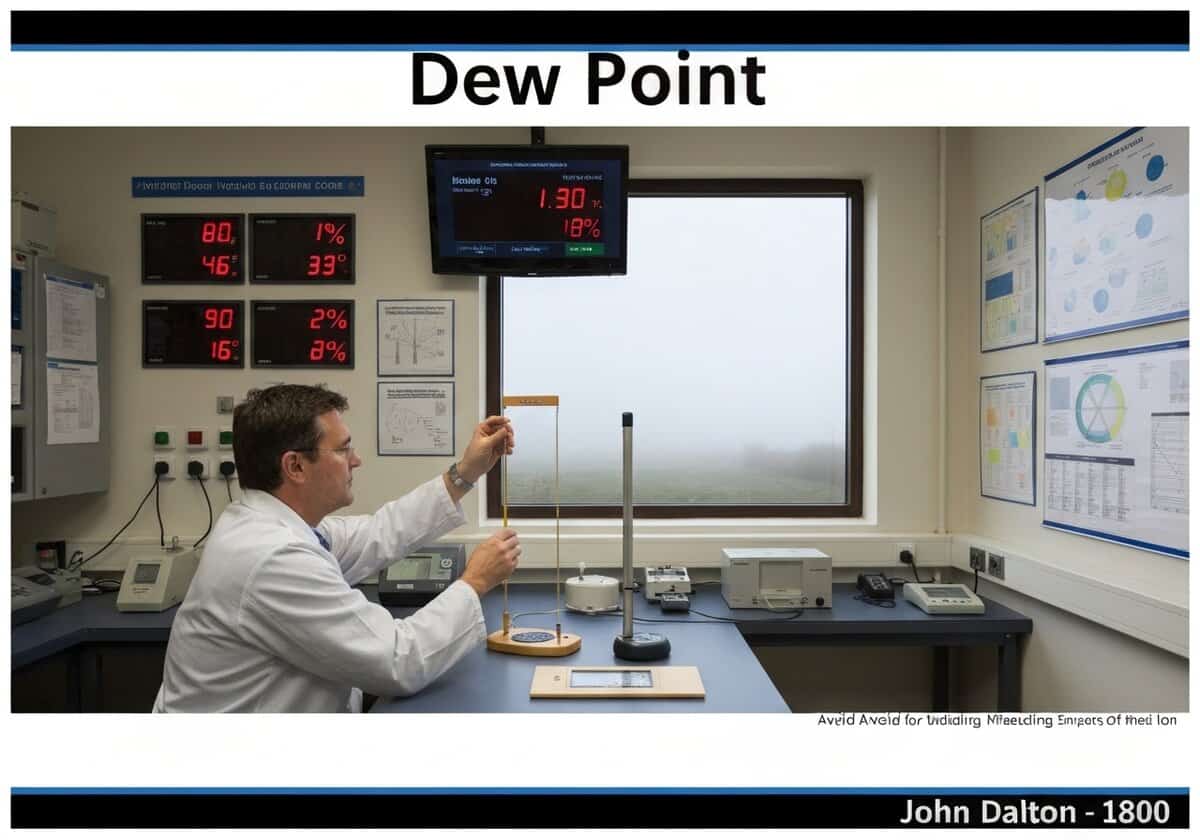
Laboratório meteorológico que mede o ponto de orvalho com higrômetro e visor digital.

(Imagem gerada apenas para fins ilustrativos)

O ponto de orvalho é a temperatura à qual o ar deve ser resfriado, a pressão e teor de água constantes, para que fique saturado de vapor de água. Nessa temperatura, a umidade relativa é de 100%. Se o ar esfriar ainda mais, o vapor de água se condensará formando água líquida (orvalho) ou se depositará como geada se a temperatura estiver abaixo de zero.

The dew point is a direct measure of the absolute amount of moisture in the air. Unlike umidade relativa, which is temperature-dependent, the dew point remains constant as long as no water vapor is added or removed from the air parcel. When the air temperature and dew point temperature are equal, the air is saturated, and the relative humidity is 100%. The larger the difference between the air temperature and the dew point, the lower the relative humidity.

For instance, if the air temperature is 30°C and the dew point is 15°C, the air is relatively dry. If the temperature drops to 15°C overnight, dew will begin to form on surfaces. This concept is critical in many fields. In aviação, pilots use the dew point to calculate the cloud base height and predict the likelihood of carburetor icing. In construction, understanding the dew point within wall cavities is essential to prevent moisture buildup, which can lead to mold and structural damage. The dew point is also a better indicator of human comfort than relative humidity at high temperatures, as it reflects the actual amount of moisture that can inhibit sweat evaporation.

UNESCO Nomenclature: 2508
Meteorologia

Tipo

Sistema abstrato

Interrupção

Substancial

Uso

Uso generalizado

Precursores

  • understanding of water’s phase changes (evaporation, condensation)
  • Lei de Dalton das pressões parciais
  • desenvolvimento de termômetros precisos
  • conceito de pressão de vapor

Aplicações

  • Previsão da formação de nevoeiro e geada na aviação e na agricultura.
  • Projeto de sistema HVAC para evitar condensação em superfícies
  • sistemas de ar comprimido para evitar danos causados ​​pela umidade
  • previsão meteorológica
  • Determinar os níveis de conforto humano (pontos de orvalho altos causam sensação de abafamento)

Patentes:

NA

Ideias de Inovação Potencial

  • smart window technology that automatically defogs based on indoor/outdoor dew point differential
  • predictive maintenance algorithms for industrial equipment susceptible to corrosion from condensation
  • personal weather stations that provide hyper-local frost warnings for gardeners
  • advanced climate models incorporating dew point advection for improved fog forecasting
  • building insulation materials with integrated sensors to monitor for interstitial condensation
  • vestível health monitors that use skin temperature and dew point to assess thermal stress
  • automated irrigação systems that adjust watering schedules based on dew point to minimize fungal growth
  • aircraft de-icing systems that activate proactively based on predicted dew point and temperature profiles
  • food storage units that dynamically control temperature to stay above the dew point of the enclosed air
  • software for architects to model and prevent moisture problems in building designs
Related to: dew point, saturation, condensation, temperature, relative humidity, meteorology, umidade absoluta, water vapor, frost point, comfort index.

Contexto histórico

Ponto de orvalho

1800
1838
1872
1910
1940
1940
1946
1650
1800
1852
1900
1912
1940
1940
1950

(Caso a data seja desconhecida ou irrelevante, por exemplo, "mecânica dos fluidos", é fornecida uma estimativa aproximada de seu surgimento notável)

10º ano aniversário

Imagens em tamanho real e downloads estão disponíveis apenas, 100% gratuitos, para membros registrados.