Química da formação da chuva ácida
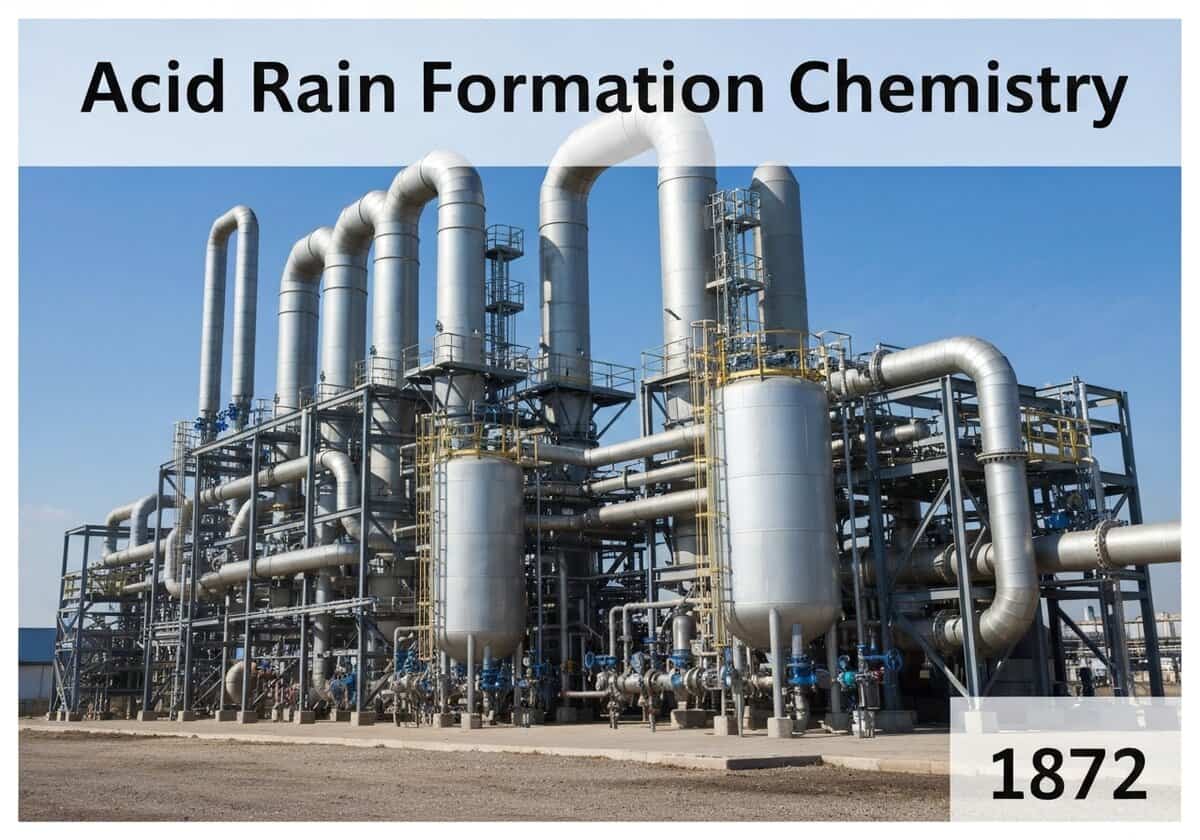
A chuva ácida resulta da reação do dióxido de enxofre (SO2) e dos óxidos de nitrogênio (NOx) atmosféricos com água, oxigênio e outras substâncias químicas. O SO2 é oxidado a ácido sulfúrico (H2SO4) e o NOx forma ácido nítrico (HNO3). Essas reações, frequentemente catalisadas pela luz solar, produzem compostos altamente ácidos que se depositam na Terra por via úmida ou seca, prejudicando os ecossistemas.
The primary precursors to acid rain are sulfur dioxide (SO2) and nitrogen oxides (NOx), which are released into the atmosphere primarily from the burning of fossil fuels in power plants and vehicles. Once in the atmosphere, these gases undergo complex chemical transformations. For sulfur dioxide, the process can be summarized in two main steps. First, SO2 is oxidized to sulfur trioxide (SO3): [latex]2SO_2(g) + O_2(g) \\rightarrow 2SO_3(g)[/latex]. This reaction can be slow in the gas phase but is significantly accelerated on the surface of atmospheric particles or in water droplets, where catalisadores like iron and manganese are present. Subsequently, sulfur trioxide reacts rapidly with water to form sulfuric acid: [latex]SO_3(g) + H_2O(l) \\rightarrow H_2SO_4(aq)[/latex].
Similarly, nitrogen oxides, primarily nitric oxide (NO) and nitrogen dioxide (NO2), contribute to acid rain formation. NO is typically emitted and is then oxidized in the atmosphere to NO2: [latex]2NO(g) + O_2(g) \\rightarrow 2NO_2(g)[/latex]. Nitrogen dioxide then reacts with hydroxyl radicals (OH) to form nitric acid: [latex]NO_2(g) + OH(g) \\rightarrow HNO_3(g)[/latex]. These strong acids, sulfuric and nitric, dissolve in atmospheric water droplets (clouds, fog, rain, snow) and lower the pH of the precipitation, often to levels between 4.2 and 4.4, which is significantly more acidic than natural rain (pH ~5.6). This acidified precipitation has widespread environmental impacts, including the acidification of lakes and streams, damage to forests and crops, and the corrosão of buildings and statues.
UNESCO Nomenclature: 2501
Ciências atmosféricas
Precursores
- descoberta de elementos químicos como enxofre, nitrogênio e oxigênio
- Compreensão de ácidos, bases e pH por químicos como Svante Arrhenius
- Desenvolvimento de processos industriais durante a revolução industrial que liberaram grandes quantidades de SO2 e NOx
- O trabalho de Antoine Lavoisier sobre combustão e o papel do oxigênio
Aplicações
- development of flue-gas desulfurization (scrubber) tecnologias for power plants
- calagem de lagos e solos para neutralizar a acidez
- tratados internacionais para reduzir a poluição transfronteiriça (por exemplo, convenção sobre poluição atmosférica transfronteiriça de longo alcance)
- catalytic converters in vehicles to reduce nox emissions
Ideias de Inovação Potencial
- genetically engineered microbes for biorremediação of acidified soils
- smart revestimento materials for buildings that neutralize acid deposition on contact
- real-time atmospheric acidity sensors for drone-based environmental monitoring
- advanced catalysts for converting so2 and nox into harmless substances at lower temperatures
- circuito fechado industrial systems that capture and reuse sulfur and nitrogen compounds
- development of crops with enhanced resistance to acidic soil conditions
- ai-powered models to predict acid rain hotspots based on weather patterns and emission data
- portable water testing kits to allow citizen scientists to monitor local water body acidity
- solar-powered atmospheric water condensers that filter out acidic components
- educational virtual reality simulations demonstrating the effects of acid rain on ecosystems
Relacionado a: chuva ácida, dióxido de enxofre, óxidos de nitrogênio, ácido sulfúrico, ácido nítrico, química atmosférica, deposição úmida, poluição ambiental, combustíveis fósseis, pH.