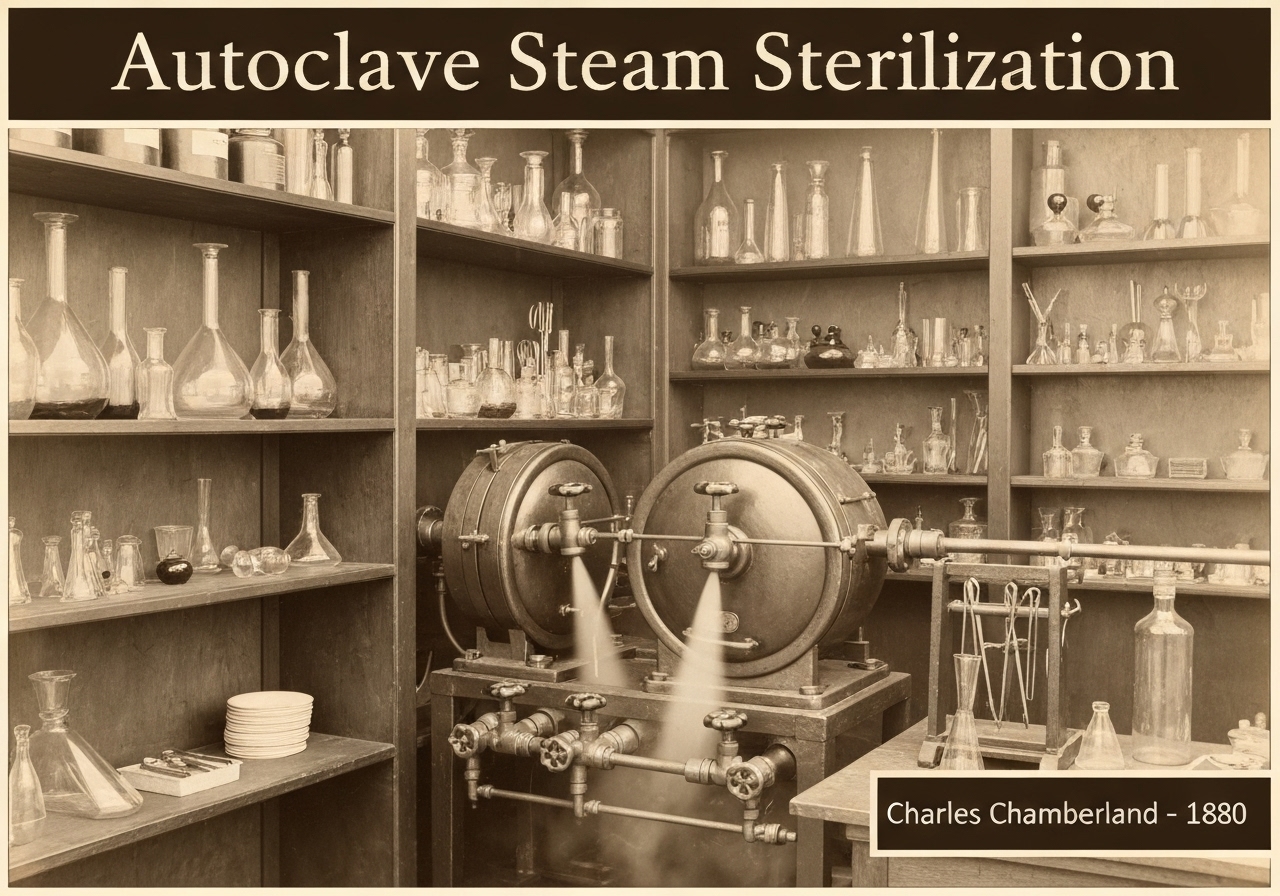
에이 방법 고온의 고압 포화 증기를 사용하여 장비와 물품을 멸균합니다. 일반적인 멸균 과정은 대기압보다 높은 100kPa(15psi)의 압력에서 121°C(250°F)입니다. 압력 15분 동안. 이러한 열과 습기의 조합은 단백질과 효소를 효과적으로 변성시켜, 내성이 강한 세균 포자를 포함한 모든 미생물을 사멸시킵니다.
(설명을 위한 생성된 이미지입니다)
에이 방법 고온의 고압 포화 증기를 사용하여 장비와 물품을 멸균합니다. 일반적인 멸균 과정은 대기압보다 높은 100kPa(15psi)의 압력에서 121°C(250°F)입니다. 압력 15분 동안. 이러한 열과 습기의 조합은 단백질과 효소를 효과적으로 변성시켜, 내성이 강한 세균 포자를 포함한 모든 미생물을 사멸시킵니다.
The autoclave’s effectiveness stems from the principles of thermodynamics and microbiology. Unlike dry heat, which kills microorganisms through slow oxidation, moist heat from saturated steam is far more efficient. The steam transfers heat energy rapidly and upon contact with a cooler surface, it condenses, releasing its latent heat of vaporization. This process causes a rapid and irreversible coagulation and denaturation of essential proteins, enzymes, and nucleic acids within the microbial cells, leading to their death. The increased pressure inside the autoclave serves a critical purpose: it raises the boiling point of water. At standard atmospheric pressure, water boils at 100 °C, a temperature insufficient to reliably kill bacterial endospores, which are highly resistant dormant structures. By increasing the pressure to approximately 15 psi (100 kPa) above atmospheric pressure, the boiling point is elevated to 121 °C. This higher temperature, combined with the penetrating power of steam, ensures the destruction of even the most resilient spores, such as those from Geobacillus stearothermophilus, which is often used as a biological indicator to validate autoclave performance. The typical 15-minute cycle time at 121 °C is a standard derived from thermal death time studies, providing a significant safety margin to achieve a high sterility assurance level (SAL). The process is not suitable for heat-sensitive materials like plastics or delicate electronics, which would be damaged by the high temperatures and pressure.
역사적으로 오토클레이브는 1679년 드니 파팽이 발명한 압력솥인 '증기 소화기'의 직계 후손입니다. 그러나 미생물학 분야에 오토클레이브를 적용한 것은 1879년 루이 파스퇴르의 협력자였던 샤를 샹베르랑에 의해 개척되었습니다. 파스퇴르 연구실에서 일하던 샹베르랑은 급성장하는 세균학 분야를 지원하고 질병의 세균설을 입증하기 위해 배양액과 장비를 멸균할 수 있는 믿을 만한 방법의 필요성을 인식했습니다. 그의 발명품은 모든 형태의 미생물을 제거할 수 있는 최초의 강력한 도구를 제공하여 실험 생물학, 의학, 외과에 혁명을 일으켰습니다. 오토클레이브를 통해 무균 배양액을 제조할 수 있게 되었고, 순수 세균 배양을 분리하고 연구할 수 있게 되었는데, 이는 로버트 코흐가 확립한 현대 미생물학의 초석이 되었습니다. 오토클레이브가 임상에 도입되면서 수술 부위 감염이 획기적으로 감소하고 복잡한 수술이 더욱 안전해졌으며, 전 세계 병원에서 없어서는 안 될 필수 도구가 되었습니다.
현재 하루 4만 건이 넘는 봇 트래픽을 차단하기 위해 이 콘텐츠는 커뮤니티 회원만 이용할 수 있습니다.
> 로그인 < 또는 >등록 < 이 콘텐츠를 비롯한 모든 제한된 콘텐츠와 도구는 (100% 무료로) 이용할 수 있습니다.
오토클레이브 증기 멸균
(날짜를 알 수 없거나 관련이 없는 경우, 예를 들어 "유체역학"의 경우, 주목할 만한 등장 시기를 대략적으로 추정하여 제공합니다.)
고화질 이미지 및 다운로드는 등록된 회원에게만 100% 무료로 제공됩니다.
> 로그인 <