Product Design, Manufacturing & Innovation Resources
집 » 베이지안 추론

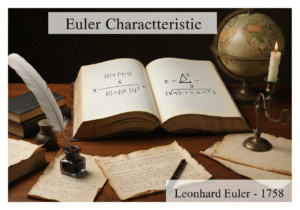
베이지안 추론

1812
  • Pierre-Simon Laplace
19세기 학자가 나무 책상 앞에 앉아 양피지를 펼쳐 놓고 베이지안 추론을 계산하고 있다.

(설명을 위한 생성된 이미지입니다)

Bayesian inference is a statistical method where Bayes’ theorem is used to update the probability for a hypothesis as more evidence or information becomes available. It is a central tenet of Bayesian statistics. The core idea is expressed as: posterior probability is proportional to the product of the prior probability and the likelihood, [latex]p(\theta|D) \propto p(D|\theta)p(\theta)[/latex], where [latex]\theta[/latex] is the parameter and D is the data.

Bayesian inference treats model parameters as random variables about which we can have beliefs. The process begins with a ‘prior’ probability distribution, [latex]p(\theta)[/latex], which encapsulates our knowledge or uncertainty about a parameter [latex]\theta[/latex] before observing any data. When data [latex]D[/latex] is collected, its probability of occurring given the parameter, known as the ‘likelihood’ [latex]p(D|\theta)[/latex], is calculated. Bayes’ theorem then combines the prior and the likelihood to produce the ‘posterior’ distribution, [latex]p(\theta|D)[/latex]. This posterior distribution represents our updated knowledge about the parameter after accounting for the data.

This approach fundamentally differs from frequentist inference, which assumes parameters are fixed, unknown constants and calculates the probability of data given these parameters. Bayesian inference, in contrast, provides a probability distribution for the parameters themselves, which allows for direct probabilistic statements about them, such as ‘there is a 95% probability that the parameter lies in this range.’ This interpretability is a key advantage. The main historical challenge was computational; calculating the posterior often requires solving complex integrals, a problem largely overcome in the late 20th century with the advent of powerful computers and 알고리즘 좋다 MCMC.

UNESCO Nomenclature: 1208
통계

유형

추상 시스템

분열

기초적인

용법

널리 사용됨

전구체

  • 베이즈 정리
  • 확률론
  • RA 피셔의 가능도 이론 발전

응용 프로그램

  • 과학 모델에서의 매개변수 추정
  • A/B testing in web development and marketing
  • 생물학에서의 계통수 재구성
  • 복잡계에서의 불확실성 정량화
  • 이미지 재구성 및 신호 처리
  • 인공지능 및 전문가 시스템

특허:

NA

잠재적 혁신 아이디어

  • Automated drug discovery that updates models of molecular effectiveness with each new experimental result
  • Self-improving robotics that update 모터 control parameters based on trial-and-error experience
  • Personalized education software that updates its model of a student’s knowledge to tailor curriculum in real-time
  • Supply chain logistics that continuously update demand forecasts based on sales data and external factors
  • Cognitive models in psychology that are updated with behavioral experiment data
  • Real-time fraud detection systems that update a user’s risk profile with every transaction
  • Smart agriculture systems that update crop yield models based on soil sensor and weather data
  • AI art generators that refine their style based on user feedback and ratings
  • Space debris tracking systems that update orbital predictions with new radar observations
  • Epidemiological models that update disease spread forecasts in real-time during an outbreak
관련 개념: 베이지안 추론, 사후 분포, 사전 분포, 가능도 함수, 통계적 모델링, 매개변수 추정, 불확실성, 증거, 신념 업데이트, MCMC.

역사적 맥락

베이지안 추론

1758
1777
1799
1812
1822
1827
1829
1750
1763-12-23
1780
1805
1822
1822
1828
1848

(날짜를 알 수 없거나 관련이 없는 경우, 예를 들어 "유체역학"의 경우, 주목할 만한 등장 시기를 대략적으로 추정하여 제공합니다.)

10년차 기념일

고화질 이미지 및 다운로드는 등록된 회원에게만 100% 무료로 제공됩니다.

> 로그인 <