Product Design, Manufacturing & Innovation Resources
집 » 란데 g-팩터

란데 g-팩터

1921
  • Alfred Landé
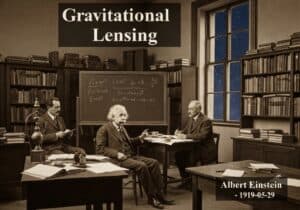
양자역학 연구를 위해 분광기를 분석하는 과학자가 있는 실험실 장면.

(설명을 위한 생성된 이미지입니다)

The Landé g-factor ([latex]g_J[/latex]) is a dimensionless proportionality constant that relates an atom’s total magnetic moment to its total angular momentum in the weak-field limit. It is crucial for quantitatively explaining the anomalous Zeeman effect. Its value is given by the formula: [latex]g_J = 1 + \frac{J(J+1) + S(S+1) – L(L+1)}{2J(J+1)}[/latex], where L, S, and J are the quantum numbers.
The Landé g-factor was introduced by Alfred Landé in 1921, even before the concept of electron spin was fully formulated, as an empirical way to fit the experimental data of the anomalous 지먼 효과. Its theoretical justification came later with the development of quantum mechanics. The formula arises from the vector model of the atom, where the orbital ([latex]\vec{L}[/latex]) and spin ([latex]\vec{S}[/latex]) angular momenta are considered to precess rapidly around their resultant total angular momentum vector ([latex]\vec{J}[/latex]) due to spin-orbit coupling. The interaction with a weak external magnetic field is much slower. Therefore, the field effectively interacts with the time-averaged 자기 모멘트, which is the projection of the total magnetic moment ([latex]\vec{\mu}_L + \vec{\mu}_S[/latex]) onto the direction of [latex]\vec{J}[/latex].

The g-factor essentially accounts for the different ratios of magnetic moment to angular momentum for orbital motion ([latex]g_L=1[/latex]) and spin ([latex]g_S \approx 2[/latex]). When [latex]S=0[/latex], then [latex]J=L[/latex], and the formula correctly gives [latex]g_J=1[/latex], corresponding to the normal 제만 effect. When [latex]L=0[/latex], then [latex]J=S[/latex], and the formula gives [latex]g_J=2[/latex] (using [latex]g_S=2[/latex] instead of 1 in the derivation), corresponding to pure spin systems as in electron spin resonance. For all other cases, [latex]g_J[/latex] takes on a rational value between 1 and 2, quantifying the complex interplay between spin and orbital contributions to the atom’s magnetism.

UNESCO Nomenclature: 2209
역학

유형

이론적 개념

분열

기초적인

용법

널리 사용됨

전구체

  • 원자의 벡터 모델
  • 스핀-궤도 결합의 개념
  • 정량적 설명이 필요한 이상 제만 효과에 대한 실험 데이터
  • 보어-솜머펠트 모델에서의 각운동량 양자화

응용 프로그램

  • 비정상적인 제만 분할 패턴의 정량적 예측 분광학
  • electron spin resonance (esr) and 핵자기공명 (nmr) 분석
  • 재료의 자기 감수율 및 기타 자기적 특성 계산
  • 원자 상태를 이용한 양자 정보 처리
  • 실험 데이터를 이용한 원자 용어 기호 결정

특허:

NA

잠재적 혁신 아이디어

  • materials with engineered landé g-factors for creating highly sensitive magnetic field sensors
  • spintronic transistors whose switching behavior is controlled by tuning the g-factor with an electric field
  • a new class of quantum bits (qubits) with g-factors engineered to be insensitive to magnetic field noise
  • pharmaceuticals designed to bind to metal ions in enzymes and alter their g-factor, providing a new therapeutic mechanism
  • a method for measuring gravitational fields by detecting minute changes in the landé g-factor of atoms
  • synthetic molecules with precisely tailored g-factors for use as calibration standards in esr spectroscopy
  • a quantum simulation platform that uses atoms with tunable g-factors to model complex magnetic materials
  • a diagnostic technique in materials science that maps the local g-factor across a surface to detect defects
  • an advanced 암호화 method where information is encoded in the precise g-factor of custom-designed quantum dots
  • a proposed test of fundamental physics by searching for time-variations of the landé g-factor
관련 개념: 란데 g-인자, g-인자, 이상 제만 효과, 각운동량, 양자수, 스핀-궤도 결합, 자기 모멘트, 분광학, 원자 물리학, 벡터 모델.

역사적 맥락

란데 g-팩터

1919-05-29
1920
1920
1921
1924
1924
1925
1918
1920
1920
1921
1922
1924
1925
1926

(날짜를 알 수 없거나 관련이 없는 경우, 예를 들어 "유체역학"의 경우, 주목할 만한 등장 시기를 대략적으로 추정하여 제공합니다.)

10년차 기념일

고화질 이미지 및 다운로드는 등록된 회원에게만 100% 무료로 제공됩니다.

> 로그인 <