Sequestro del carbonio oceanico
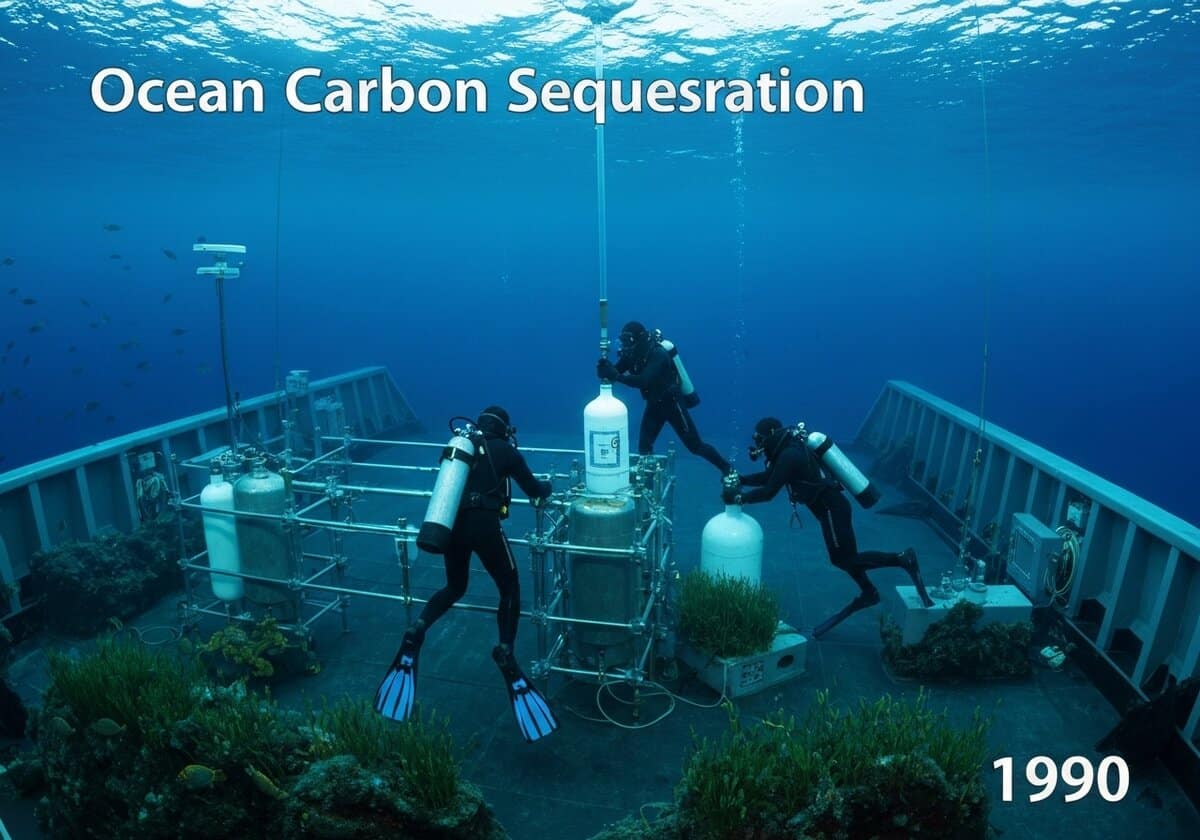
Implica la cattura della CO2 e il suo stoccaggio nelle profondità dell’oceano, che è il più grande deposito di carbonio del pianeta.
The ocean naturally absorbs vast quantities of atmospheric CO2 through two primary mechanisms: the ‘solubility pump’ and the ‘biological pump’. The solubility pump involves CO2 dissolving in cold, dense surface water at high latitudes, which then sinks and circulates in the deep ocean for centuries. The biological pump involves marine organisms, primarily phytoplankton, converting CO2 into organic matter through photosynthesis. When these organisms die, a fraction of their carbon sinks to the deep ocean.
Ocean sequestration proposals aim to accelerate these processes. Direct injection involves pumping compressed CO2 to depths of 1,000-3,000 meters. At these depths, the high pressure causes the CO2 to become a liquid denser than seawater, theoretically forming stable pools on the ocean floor. However, this would create zones of extreme acidity, lethal to most marine life.
Ocean fertilization, particularly iron fertilization, involves adding micronutrients like iron to parts of the ocean to trigger massive phytoplankton blooms. The hypothesis is that this would increase the strength of the biological pump. However, experiments have shown mixed results regarding how much carbon actually reaches the deep ocean, and there are major concerns about altering the base of the marine food web and potentially creating anoxic ‘dead zones’. Due to these profound environmental risks and legal uncertainties under international treaties like the London Convention/Protocol, large-scale ocean sequestration is not currently pursued.
UNESCO Nomenclature: 2508
– Oceanography
Tipo
Environmental Engineering Process
Interruzione
Incrementale
Utilizzo
Concettuale/Teorico
Precursori
- discovery of the ocean’s role as a major carbon sink
- understanding of the marine biological and solubility pumps
- development of deep-sea submersibles and remote-operated vehicles (ROVs)
- research on the limiting role of micronutrients (like iron) in marine productivity
- advances in chemical oceanography and carbon cycle modeling
Applicazioni
- research experiments to study the fate of CO2 in deep-sea environments
- models for understanding the global carbon cycle and ocean chemistry
- proposals for geoengineering, though largely prohibited by international agreements
Idee e potenziali innovazioni
A causa dell'eliminazione del traffico generato dai bot, che attualmente supera i 40.000 al giorno, questo contenuto è riservato ai membri della community.
> Accedi O > Registrati L'accesso a questo contenuto, così come a tutti gli altri contenuti e strumenti riservati, è (100% gratuito).
Related to: ocean sequestration, direct injection, ocean fertilization, biological pump, solubility pump, ocean acidification, marine ecosystems, iron fertilization, carbon cycle, geoengineering.