Product Design, Manufacturing & Innovation Resources
Casa » Design for the Environment (DfE)

Design for the Environment (DfE)

1992
  • United States Environmental Protection Agency (EPA)
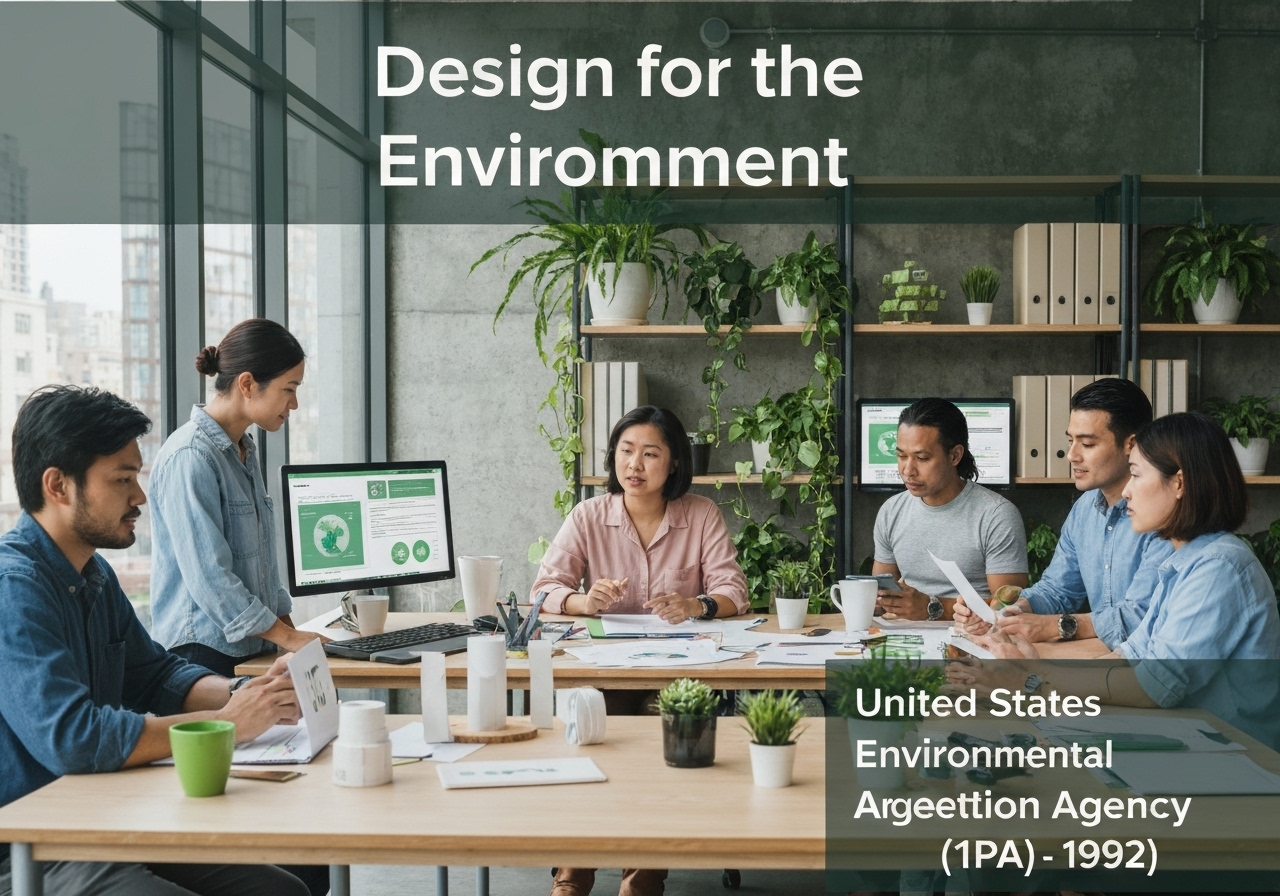
Ingegneri ambientali che collaborano alla progettazione ecologica in un ufficio moderno.

(Immagine generata a solo scopo illustrativo)

Design per l'ambiente (DfE), noto anche come ecodesign, is a proactive approach to product and process development that minimizes environmental and human health impacts across the entire ciclo di vita del prodotto. Integra le considerazioni ambientali nelle prime fasi di progettazione, accanto a fattori tradizionali come il costo e le prestazioni, per prevenire l'inquinamento e conservare le risorse fin dall'inizio.
DfE emerged from the realization that end-of-pipe pollution controls were inefficient and costly. Instead of treating waste after its creation, DfE focuses on prevention by making smarter choices during design. This holistic approach employs life-cycle thinking, evaluating everything from raw material extraction (‘cradle’) to manufacturing, use, and final disposal (‘grave’). Key principles include selecting low-impact, non-toxic, and recycled materials; minimizing overall material and energy usage during production and operation; and designing for longevity, repairability, and disassembly. By considering a product’s end-of-life at its beginning, DfE facilitates recycling, remanufacturing, and safe decomposition, forming a cornerstone of the circular economy. The novelty of DfE was its fundamental shift from a reactive to a proactive and systemic view of environmental protection within industry, embedding sustainability as a core criterion of innovation and quality, rather than an afterthought or a regulatory burden. It transformed environmental management from a compliance issue into a strategic business opportunity.

UNESCO Nomenclature: 3308
- Ingegneria ambientale

Tipo

Sistema astratto

Interruzione

Sostanziale

Utilizzo

Uso diffuso

Precursori

  • the environmental movement of the 1960s and 1970s
  • the concept of pollution prevention (p2)
  • early life cycle assessment (lca) methodologies
  • il rapporto sui "limiti alla crescita" (1972)
  • il rapporto brundtland "il nostro futuro comune" (1987) definisce lo sviluppo sostenibile

Applicazioni

  • epa safer choice label
  • epeat (electronic product environmental assessment tool)
  • cradle to cradle certification
  • circular economy business models
  • sustainable supply chain management

Brevetti:

NA

Idee e potenziali innovazioni

A causa dell'eliminazione del traffico generato dai bot, che attualmente supera i 40.000 al giorno, questo contenuto è riservato ai membri della community.
> Accedi O > Registrati L'accesso a questo contenuto, così come a tutti gli altri contenuti e strumenti riservati, è (100% gratuito).

Related to: design for the environment, DfE, ecodesign, sustainable design, life cycle assessment, green design, circular economy, pollution prevention, product stewardship, industrial ecology.

Contesto storico

Design for the Environment (DfE)

1990
1990
1990
1992
1992
1993-07-22
1996
1990
1990
1990
1991
1992
1993
1994
1997

(se la data è sconosciuta o non rilevante, ad esempio "meccanica dei fluidi", viene fornita una stima approssimativa della sua notevole comparsa)

Invenzioni, innovazioni e principi tecnici correlati

Le immagini a grandezza naturale e i download sono disponibili, 100% gratuitamente, solo per i membri registrati.

> Login <