Product Design, Manufacturing & Innovation Resources

Design Fiction

Design Fiction

Design Fiction

Objectif :

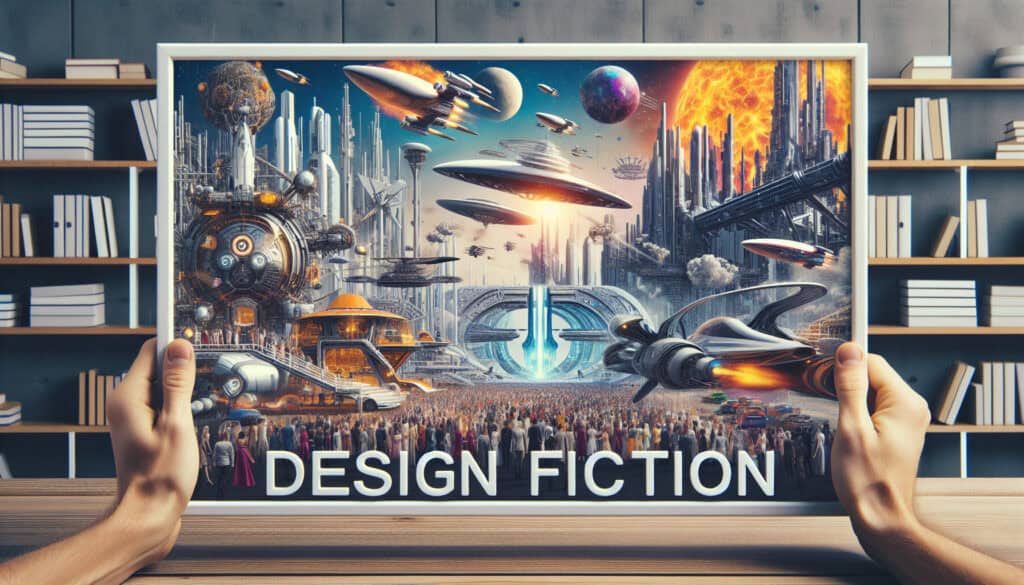
Une pratique de conception qui crée des prototypes spéculatifs, souvent diégétiques (des prototypes qui existent dans un monde fictif) pour explorer et critiquer des futurs possibles.

Comment il est utilisé :

Avantages

Inconvénients

Catégories :

Idéal pour :

Design Fiction facilitates a unique approach to envisioning future scenarios by crafting tangible representations of concepts that may not yet exist. Within industries such as technology, automotive, healthcare, and urban planning, these speculative artifacts—ranging from prototypes and service blueprints to videos and narratives—serve as tools to engage diverse stakeholders in meaningful discussions about the societal impacts of innovations. This methodology is effective during the early stages of project development, where brainstorming sessions benefit from stimulating imagination beyond the constraints of current technologies. Participants often include designers, engineers, futurists, sociologists, and end-users, each bringing their own perspectives to the table, enriching the narrative and encouraging interdisciplinary collaboration. For example, in the context of healthcare, design fiction can help illuminate the implications of artificial intelligence on patient care by visualizing scenarios in which AI-driven tools either improve or complicate interactions between patients and providers. Such initiatives enable organizations to critically assess not only the potential benefits but also the ethical dilemmas that may arise from their innovations. This proactive consideration promotes responsible design practices that prioritize human values and societal needs, transforming abstract ideas into relatable contexts that spark dialogue about possible futures.

Principales étapes de cette méthodologie

  1. Identify emerging technologies or trends relevant to the design context.
  2. Envision potential future scenarios where these technologies integrate into everyday life.
  3. Create speculative artifacts that represent the envisioned future, such as products, interfaces, or experiences.
  4. Develop narratives or storylines that provide context around the artifacts and scenarios.
  5. Facilitate discussions with stakeholders around the implications of the created scenarios and artifacts.
  6. Iterate on the design based on feedback and insights gained during discussions.
  7. Refine the artifacts and narratives to deepen engagement and understanding of future possibilities.

Conseils de pro

  • Develop a comprehensive narrative framework that contextualizes speculative artifacts within plausible future scenarios, allowing for richer exploration of implications.
  • Engage multidisciplinary teams early in the design fiction process, leveraging diverse expertise to uncover unexpected ethical and social dimensions.
  • Create iterative prototypes of artifacts that can evolve based on audience feedback, enhancing relevance and fostering deeper engagement in discussions.

Lire et comparer plusieurs méthodologies, nous recommandons le

> Référentiel méthodologique étendu  <
ainsi que plus de 400 autres méthodologies.

Vos commentaires sur cette méthodologie ou des informations supplémentaires sont les bienvenus sur le site web de la Commission européenne. section des commentaires ci-dessous ↓ , ainsi que toute idée ou lien en rapport avec l'ingénierie.

Contexte historique

1950
1955
1956
1960
1960
1960
1960
1950
1950
1955
1958
1960
1960
1960
1960

(si la date est inconnue ou non pertinente, par exemple « mécanique des fluides », une estimation arrondie de son émergence notable est fournie)


Les images en pleine résolution et les téléchargements sont uniquement disponibles, et 100% gratuits, pour les membres inscrits.