Product Design, Manufacturing & Innovation Resources

Méthode du chemin critique (CPM)

Critical Path Method

Méthode du chemin critique (CPM)

Objectif :

Technique de gestion de projet utilisée pour identifier la séquence de tâches critiques qui détermine la durée minimale d'un projet et la flexibilité (flottement ou relâche) des tâches non critiques.

Comment il est utilisé :

Avantages

Inconvénients

Catégories :

Idéal pour :

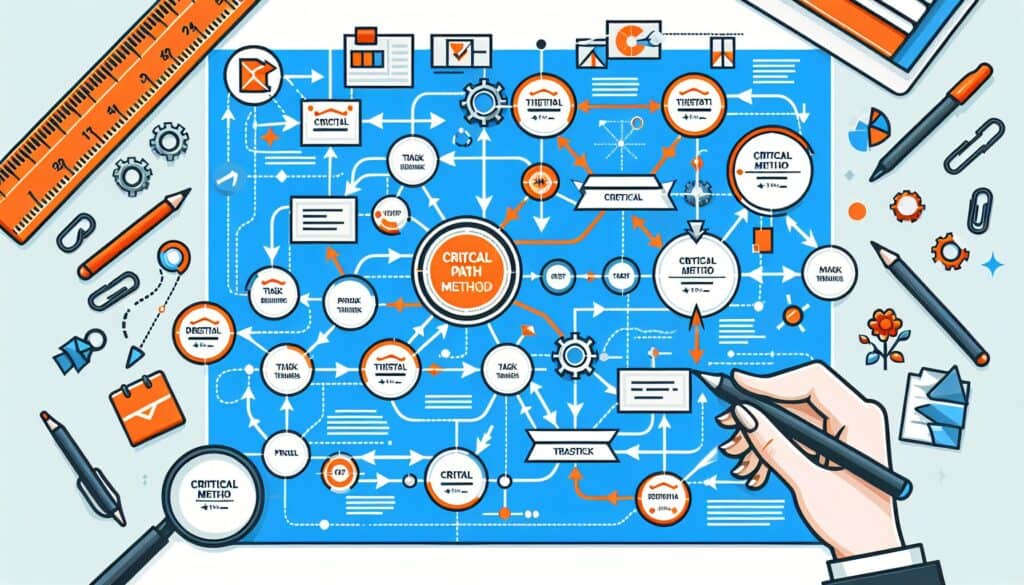
The Critical Path Method (CPM) is effectively utilized across various industry sectors including construction, aerospace, software development, and manufacturing, where projects consist of numerous interconnected tasks requiring regimented timelines. In construction, CPM is pivotal during the planning phase, allowing project managers to accurately estimate the time required for different segments, assess resource allocations, and plan for potential delays by mapping dependencies among tasks such as excavation, foundation work, and structural framing. In software engineering, teams might apply CPM during the development lifecycle, especially in stages involving extensive testing and deployment processes, where sequencing tasks like coding, testing, and implementation can significantly affect delivery timelines. Stakeholders involved in these initiatives typically include project managers, engineers, product designers, and stakeholders from different departments who contribute to various project phases. The methodology necessitates collaboration and communication among these participants to ensure that they are aware of dependencies that may not be immediately apparent. Tools such as Gantt charts or project management software are often used in conjunction with CPM to visualize timelines and dependencies, enhancing understanding and coordination among team members. With its ability to clarify task priorities and management focus, CPM provides an effective framework for mitigating risks related to project scheduling and execution.

Principales étapes de cette méthodologie

  1. Break down the project into individual tasks by identifying all necessary activities.
  2. Estimate the duration of each task based on previous experience or expert judgment.
  3. Identify dependencies between tasks, noting which tasks must be completed before others can start.
  4. Create a network diagram representing tasks and their dependencies.
  5. Calculate the earliest start and finish times for each task.
  6. Determine the latest start and finish times for each task without delaying the project.
  7. Identify the critical path, which includes tasks with zero float and the longest total duration.
  8. Allocate resources effectively based on identified critical tasks and their scheduling needs.
  9. Monitor progress regularly against the critical path to manage potential delays swiftly.

Conseils de pro

  • Utilize software tools to automate the CPM calculations and visualize task dependencies, improving accuracy and efficiency.
  • Regularly update the project schedule as tasks progress, adjusting dependencies and durations to reflect real-time changes and mitigate risks.
  • Conduct a thorough risk analysis on tasks along the critical path to identify potential bottlenecks and implement mitigation strategies proactively.

Lire et comparer plusieurs méthodologies, nous recommandons le

> Référentiel méthodologique étendu  <
ainsi que plus de 400 autres méthodologies.

Vos commentaires sur cette méthodologie ou des informations supplémentaires sont les bienvenus sur le site web de la Commission européenne. section des commentaires ci-dessous ↓ , ainsi que toute idée ou lien en rapport avec l'ingénierie.

Contexte historique

1950
1955
1956
1960
1960
1960
1960
1950
1950
1955
1958
1960
1960
1960
1960

(si la date est inconnue ou non pertinente, par exemple « mécanique des fluides », une estimation arrondie de son émergence notable est fournie)


Articles Similaires

Les images en pleine résolution et les téléchargements sont uniquement disponibles, et 100% gratuits, pour les membres inscrits.