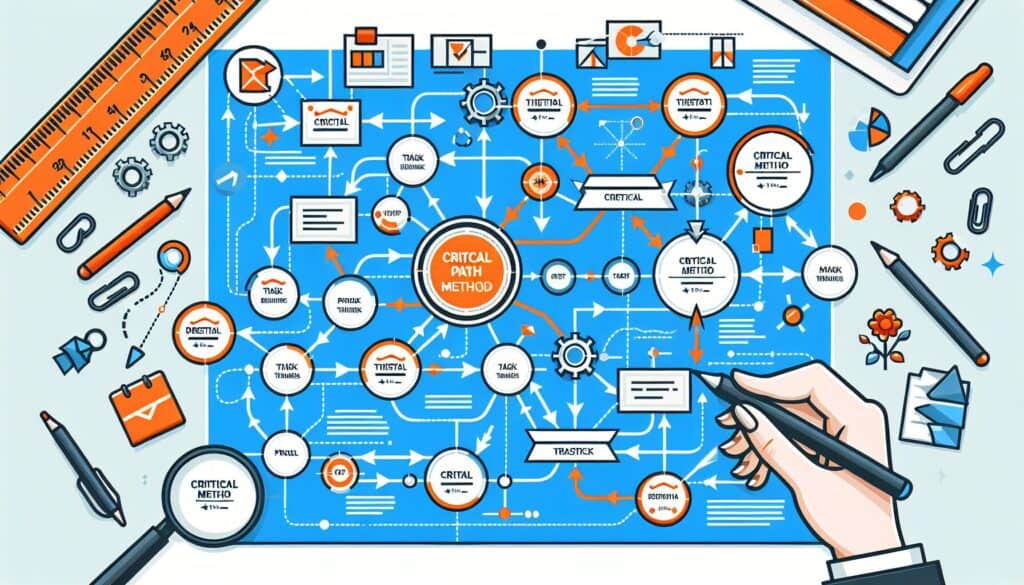
The Critical Path Method (CPM) is effectively utilized across various industry sectors including construction, aerospace, software development, and manufacturing, where projects consist of numerous interconnected tasks requiring regimented timelines. In construction, CPM is pivotal during the planning phase, allowing project managers to accurately estimate the time required for different segments, assess resource allocations, and plan for potential delays by mapping dependencies among tasks such as excavation, foundation work, and structural framing. In software engineering, teams might apply CPM during the development lifecycle, especially in stages involving extensive testing and deployment processes, where sequencing tasks like coding, testing, and implementation can significantly affect delivery timelines. Stakeholders involved in these initiatives typically include project managers, engineers, product designers, and stakeholders from different departments who contribute to various project phases. The methodology necessitates collaboration and communication among these participants to ensure that they are aware of dependencies that may not be immediately apparent. Tools such as
Gantt charts or project management software are often used in conjunction with CPM to visualize timelines and dependencies, enhancing understanding and coordination among team members. With its ability to clarify task priorities and management focus, CPM provides an effective framework for mitigating risks related to project scheduling and execution.
To read and compare several methodologies, we recommend the
> Extensive Methodologies Repository <
together with the 400+ other methodologies.
Your comments on this methodology or additional info are welcome on the comment section below ↓ , so as any engineering-related ideas or links.