Esterilización por irradiación gamma
This method uses alta energía photons emitted from a radioisotope source, typically Cobalt-60, to sterilize products. The gamma rays pass through materials, creating free radicals and causing irreparable damage to microbiano DNA, leading to cell death. It is a ‘cold’ process suitable for heat-sensitive items and can be performed on products already in their final sealed packaging.
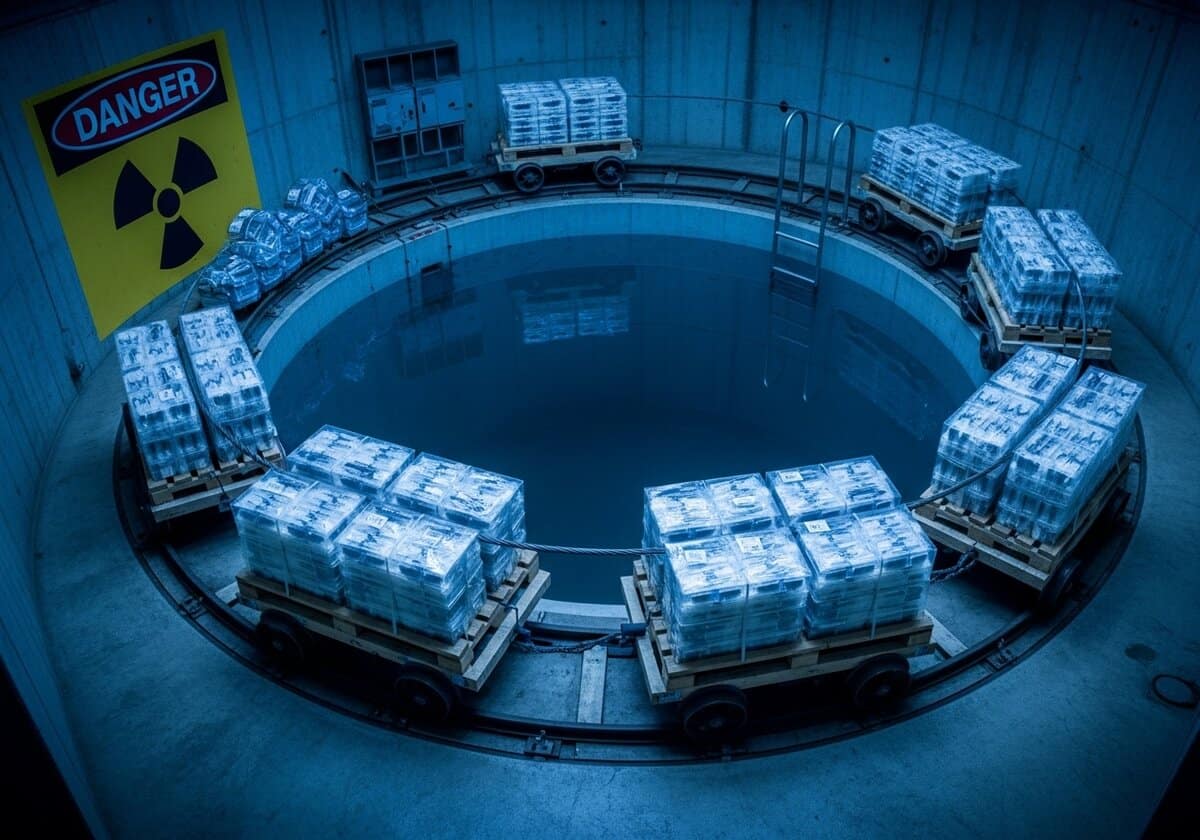
Gamma irradiation sterilization is a form of ionizing radiation processing. The process utilizes gamma rays, which are a type of electromagnetic radiation with very short wavelengths and high energy, similar to X-rays but typically more energetic. The most common source for industrial sterilization is the radioisotope Cobalt-60 (⁶⁰Co). This isotope is produced in nuclear reactors and decays, emitting high-energy gamma photons. Products to be sterilized are placed on a conveyor system and passed through a heavily shielded concrete chamber (an irradiator) where they are exposed to the gamma radiation field for a specific duration. The key principle of its sterilizing action is the transfer of energy to the molecules within the microorganisms. When gamma photons pass through matter, they cause ionization by stripping electrons from atoms, creating highly reactive species such as free radicals (e.g., hydroxyl radicals from water). These free radicals indiscriminately attack and damage critical cellular components, with the most significant target being the microbiano DNA. The radiation can cause single- and double-strand breaks in the DNA backbone, rendering the microorganism unable to replicate or perform vital cellular functions, leading to its death. A major advantage of gamma radiation is its high penetrating power, allowing it to sterilize products that are already sealed in their final packaging, thus preventing recontamination. This is known as terminal sterilization. The process is ‘cold,’ generating very little heat, which makes it suitable for heat-sensitive materials like plastics, pharmaceuticals, and biological tissues. The dose of radiation delivered is measured in kiloGrays (kGy), and a typical dose for sterilizing medical devices is 25 kGy, which is sufficient to achieve a [latex]10^{-6}[/latex] SAL.
The scientific foundation for this technology was laid by the discovery of radioactivity by Henri Becquerel in 1896 and the subsequent work on radiation’s biological effects. The potential for using ionizing radiation to kill microorganisms was recognized in the early 20th century. However, it wasn’t until the post-World War II era, with the development of nuclear reactors capable of producing large quantities of radioisotopes like Cobalt-60, that industrial-scale gamma sterilization became economically and practically feasible. The first commercial gamma irradiator for medical products was built in the late 1950s. This technology revolutionized the medical supply industry by enabling the reliable, large-scale terminal sterilization of pre-packaged, single-use devices like syringes, sutures, and catheters, which are now ubiquitous in healthcare.
UNESCO Nomenclature: 2210
– Nuclear physics
Precursores
- Descubrimiento de la radiactividad por Henri Becquerel
- Aislamiento del radio por Marie y Pierre Curie
- understanding of ionizing radiation’s effects on biological matter
- Desarrollo de reactores nucleares para producir isótopos como el cobalto-60
Aplicaciones
- esterilización de suministros médicos desechables (guantes, jeringas)
- Irradiación de alimentos para prolongar la vida útil y eliminar patógenos
- descontaminación de cosméticos y productos farmacéuticos
- esterilización de injertos de tejido para trasplante
Ideas para posibles innovaciones
- Irradiadores gamma portátiles de baja dosis para la esterilización en el punto de atención de instrumentos médicos específicos
- Desarrollo de productos químicos sensibilizadores a la radiación que puedan aplicarse a productos para reducir la dosis gamma requerida, preservando así la integridad del material.
- Uso de radiación gamma para descomponer priones, las proteínas infecciosas responsables de enfermedades como la enfermedad de Creutzfeldt-Jakob.
- Integración de fuentes gamma en sistemas de gestión de residuos para esterilizar y neutralizar residuos biológicos peligrosos
- Instalaciones de irradiación gamma alimentadas por radioisótopos de última generación más seguros o fuentes de máquinas de rayos X avanzadas
- development of ‘smart’ dosimeters that provide a high-resolution map of the radiation dose received by a complex product
- using gamma irradiation to create novel polymer materials with enhanced properties through radiation-induced cross-linking
- Esterilización de alimentos impresos en 3D para misiones espaciales de larga duración
- Combinando la irradiación gamma con el envasado en atmósfera modificada para prolongar aún más la vida útil de los productos frescos.
- Servicios de esterilización gamma a pedido que utilizan camiones irradiadores móviles para necesidades agrícolas o de respuesta a emergencias.
Related to: gamma irradiation, sterilization, cobalt-60, ionizing radiation, medical devices, food irradiation, dna damage, free radicals, terminal sterilization, cold process.